







Regency Inlaid Caddy
A regency inlaid caddy brings tactile warmth and refined proportion to a room, offering a tangible connection to the elegant domestic rituals of the nineteenth century.
Regency Inlaid Caddy
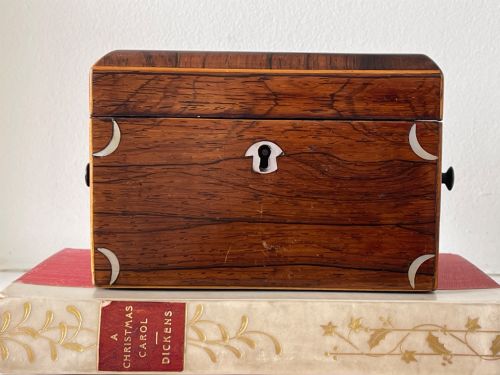
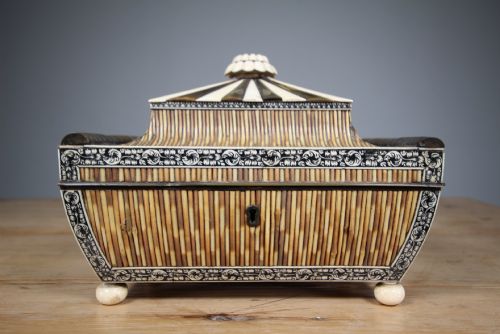
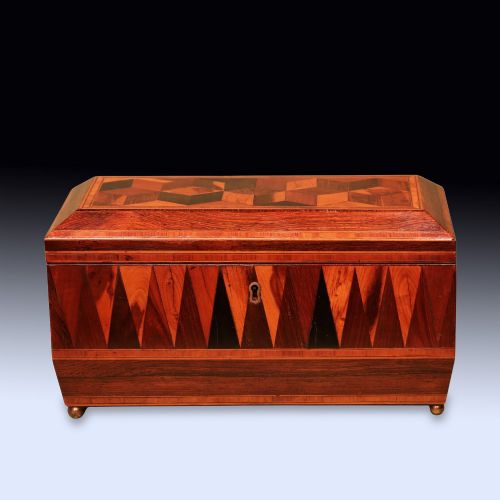
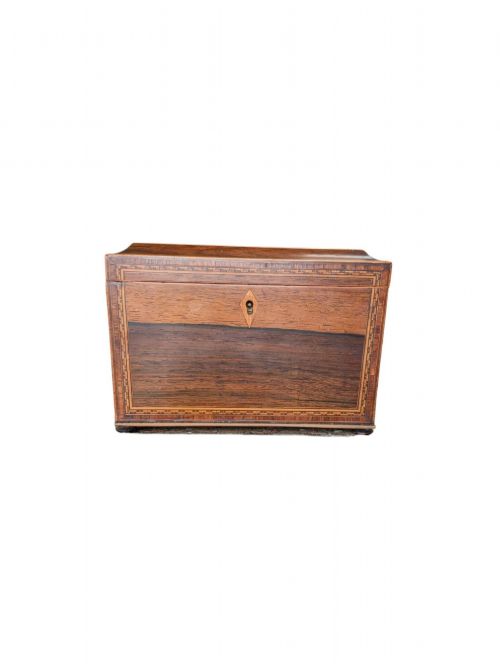
A regency inlaid caddy is a small, carefully constructed container designed for storing tea leaves, which were once a prized and costly commodity in British households. These pieces emerge predominantly from the Regency, Georgian, and nineteenth-century periods, capturing a distinct architectural elegance through sarcophagus and rectangular forms.
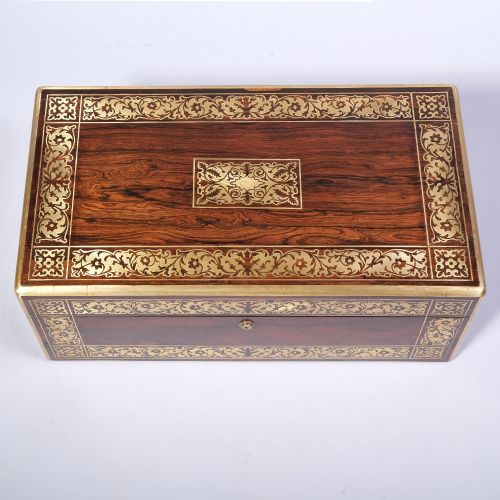
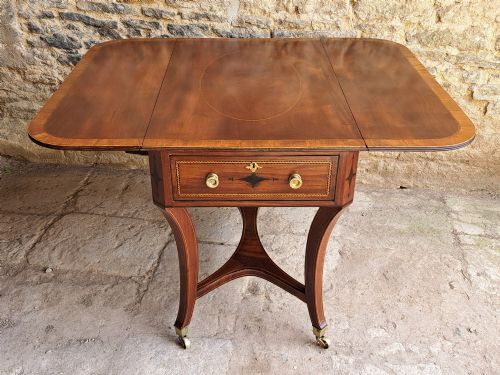
Buyers seeking a regency inlaid caddy will most frequently encounter rosewood and mahogany examples embellished with contrasting stringing, brass, or lighter wood veneers. While tea caddies form the core of what is available, related decorative boxes and occasional tea caddy tables also appear within the selection.
The aesthetic of a regency inlaid caddy draws heavily on classical restraint combined with decorative surface detail, utilising geometric stringing, parquetry, and pictorial marquetry. Such objects functioned both as practical kitchen storage containers and as decorative desk accessories displayed in polite drawing rooms.
Materials and Construction
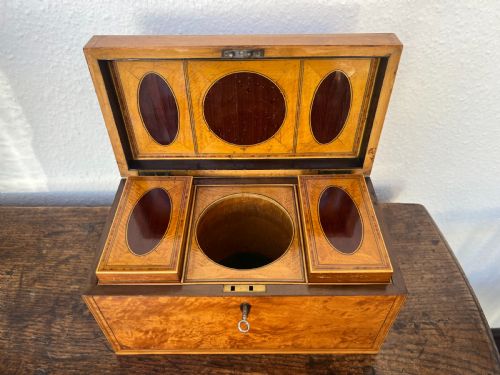
Cabinetmakers constructed the carcass of a regency inlaid caddy from dense native hardwoods such as mahogany or exotic imports like rosewood, overlaid with fine veneers of satinwood, amboyna, or burr yew. These timber surfaces received detailed decoration through contrasting stringing and banding executed in boxwood, ebony, and bone.
Surface ornamentation frequently incorporated precision metalwork, with brass inlay set flush into the timber lid and panels, alongside mother of pearl accents. Artisans also employed specialist techniques such as Tunbridge Ware mosaic work to build intricate geometric or pictorial tile designs across the exterior.
Regency Inlaid Caddy Retail Price Guide 2026
Typical asking prices for regency inlaid caddy among the pieces listed under this phrase on Sellingantiques today, from the lower quarter to the upper quarter. They describe what is for sale here now, not the wider market.
Listings feature woods such as rosewood, mahogany, satinwood, amboyna, and burr yew, alongside decorative elements in brass, bone, and mother of pearl.
Judging Quality
The standard of a regency inlaid caddy rests on the crispness of its marquetry and the precision with which stringing and brass inlays sit flush against the primary timber. Superior examples display harmonious grain selection in woods like rosewood and satinwood, where natural figuring complements rather than competes with the geometric decoration.
Internal architecture strongly dictates the standing of a piece, separating basic storage from high-status items equipped with original lidded canisters, glass sugar bowls, and working locks with matching keys. The subtlety of proportions, the integrity of edge mouldings, and the neatness of dovetail joinery in the internal compartments reflect the underlying skill of the cabinetmaker.
The Regency Inlaid Caddy Glossary
- Sarcophagus form
- A distinct architectural box shape featuring a sloped lid and a tapered body reminiscent of a stone coffin, popular for high-end tea caddies during the Regency era.
- Stringing
- A thin, linear inlay of contrasting wood or light-coloured material set into the surface of furniture and boxes to create decorative borders.
- Tunbridge Ware
- A type of decorative woodwork produced in Kent consisting of thousands of tiny coloured wood blocks assembled to form intricate mosaic patterns.
- Parquetry
- A geometric mosaic of wood pieces used for decorative surfaces on floors and box lids, akin to miniature marquetry without pictorial subjects.
- Teapoy
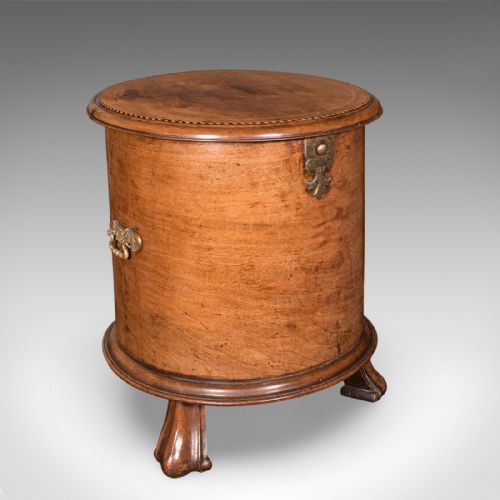
- A small table designed specifically to support a tea caddy, often featuring a pillar and claw foot or a fitted interior for canisters.
Regency Inlaid Caddy: Frequently Asked Questions
What was a tea caddy used for?
A tea caddy served as a secure, lockable container for storing loose tea leaves when tea was an expensive and heavily taxed commodity. The word derives from catty, a traditional unit of weight used in the East India trade.
Inside, these boxes typically featured divided compartments or fitted canisters to keep different tea varieties separated and fresh. Wealthy households kept the caddy locked in the parlour, with the mistress of the house retaining the key to dispense the leaves personally.
How do I care for a rosewood tea caddy?
Maintain a rosewood tea caddy by keeping it away from direct sunlight and steady sources of artificial heat to prevent the delicate veneers and boxwood stringing from drying and lifting. Dust the surfaces gently with a dry, soft cloth rather than applying modern commercial polishes.
Humidity control is essential for antique timbers and intricate brass or mother of pearl inlay to prevent the wood from expanding and loosening the adhesive beneath the decoration. Periodically checking the indoor climate ensures the wood remains stable over time.
How can I tell a Regency caddy from a Victorian one?
Regency caddies, produced roughly between the late eighteenth century and the eighteen-thirties, typically favour classical architectural proportions, sharp geometric brass stringing, and rich rosewood or mahogany veneers. The construction prioritises restraint and clean lines influenced by neoclassical design.
Victorian pieces that followed often display heavier ornamentation, more varied and crowded mother of pearl inlay, or altered interior layouts. The overall form shifted from strict architectural sarcophagus shapes toward domed or highly curved profiles as tastes evolved.
Were all tea caddies made of wood?
While the vast majority of surviving examples are constructed from timbers such as mahogany, rosewood, and satinwood, makers also utilised alternative luxury materials. Tortoiseshell, papier-mâché, and occasionally silver or ceramic appeared in high-status drawing rooms.
Even within wooden boxes, the interior fittings often incorporated glass mixing bowls, pewter, or bone handles on the inner canister lids. The choice of material reflected both the wealth of the original owner and the specific decorative trends of the manufacturing period.