

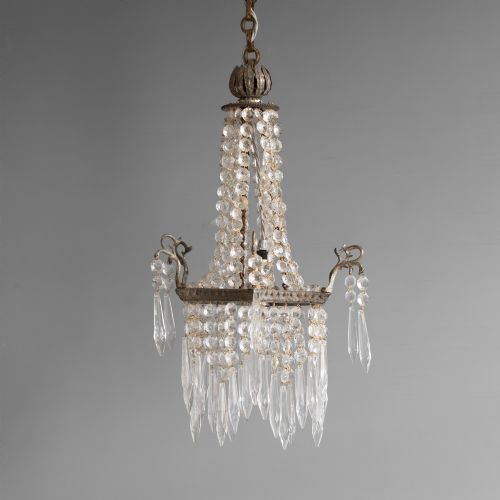


Regency Hanging Light
A regency hanging light brings classical proportion and overhead illumination to a room, spanning the lantern and chandelier forms.
Regency Hanging Light
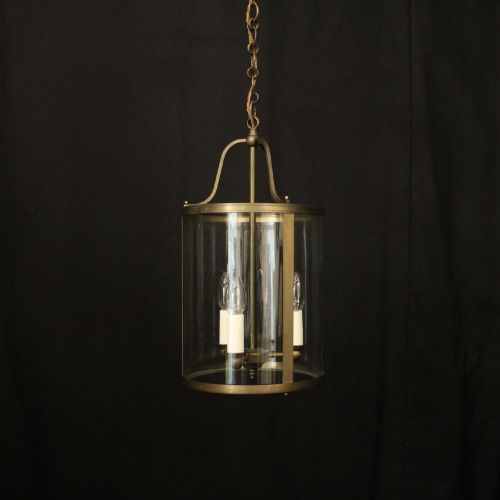
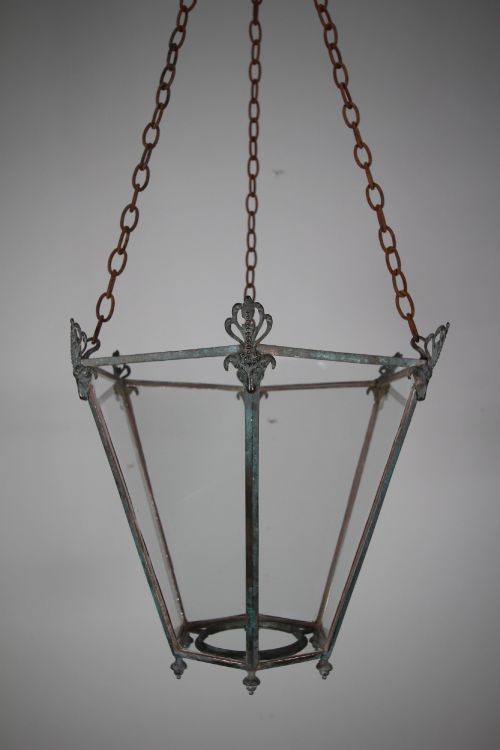
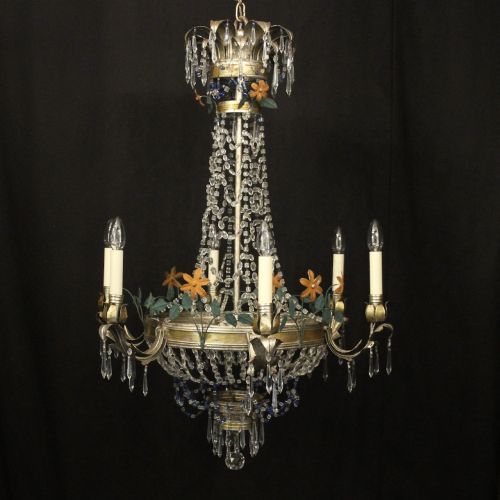
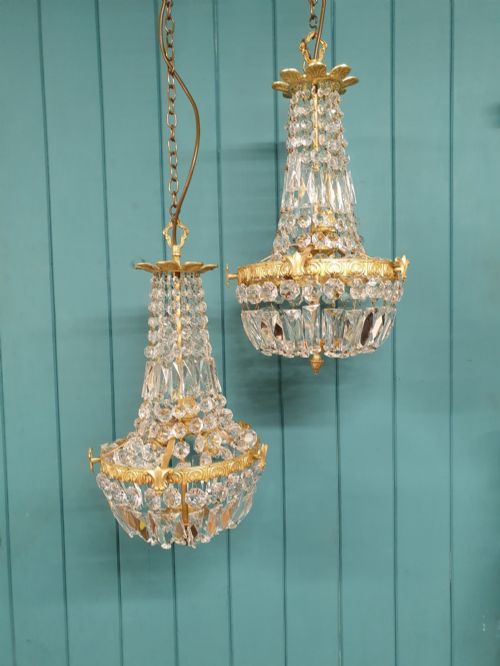
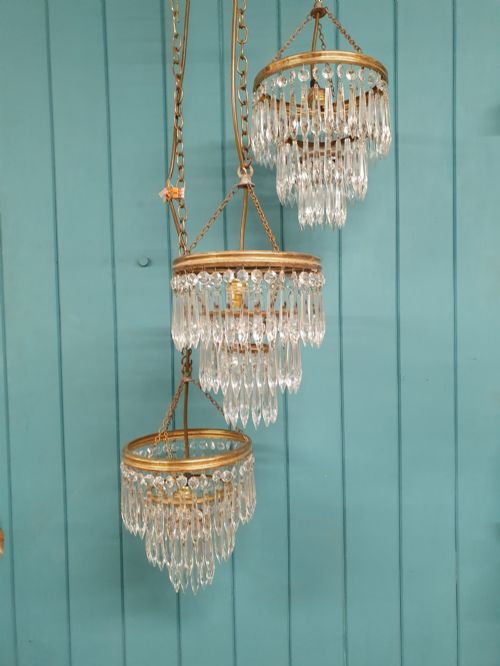
A regency hanging light encompasses both hall lanterns and chandeliers, originating across the nineteenth century alongside later revivals. Buyers seeking this phrase encounter fixtures defined by classical styling, such as tent and waterfall configurations or convex brass frames.
The selections on this page range from early nineteenth century examples to twentieth century interpretations. Common forms include single light hall lanterns, multi-branch chandeliers, and bell jar designs suspended from ceilings.
Periods represented stretch from the Georgian and Regency eras through the Victorian period, Edwardian years, and into the twentieth century. These fixtures serve primarily as overhead illumination for corridors, reception rooms, and stairwells.
Materials and construction
Construction relies heavily on metals such as brass, bronze, gilt bronze, copper, and silver gilt. These metals form the structural frames, bezels, and decorative mounts of lanterns and chandeliers.
Glass elements include hand-blown glass, frosted glass, and cut glass crystal shaped into bell jars, bowls, shades, and dangling beads. Metal components are paired with glass prisms and drops to refract and distribute light from the burners or bulbs.
Regency Hanging Light Retail Price Guide 2026
Typical asking prices for regency hanging light among the pieces listed under this phrase on Sellingantiques today, from the lower quarter to the upper quarter. They describe what is for sale here now, not the wider market.
The listings span the nineteenth and twentieth centuries, utilising brass, bronze, copper, hand-blown glass, and cut crystal.
Judging quality in hanging lights
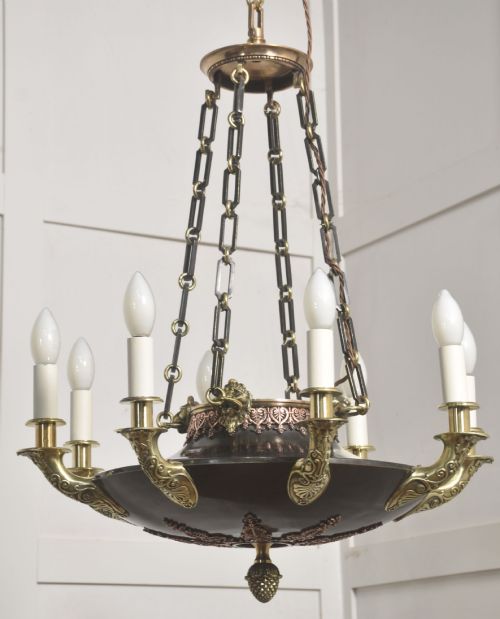
Quality rests in the crispness of the metal casting and the precision of the glass cutting. Finer pieces demonstrate careful hand-finishing on mounts like rams heads or classical foliage, whereas simpler examples rely on plain spun or pressed metal.
The clarity and weight of the glass or crystal elements distinguish superior lighting. Hand-blown bell jars and sharp diamond-cut crystals catch and reflect light with greater depth than standard pressed glass.
The Regency Hanging Light Glossary
- Tent and waterfall
- A chandelier configuration where upper tiers of glass drops form a tent shape above a lower cascading waterfall of beads.
- Bell jar lantern
- A hanging light enclosed in a rounded, bell-shaped glass jar suspended by a metal frame.
- Hall lantern
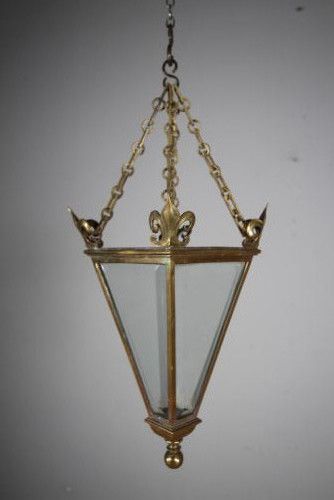
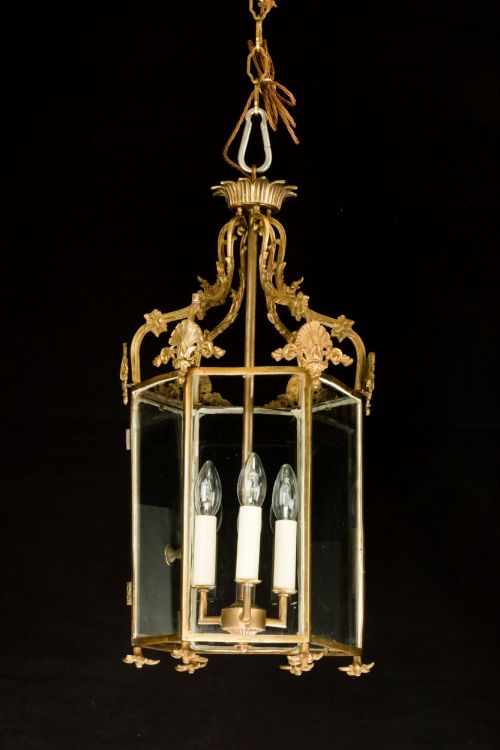
- A ceiling-hung light fixture designed specifically for entrance halls and corridors, often featuring glazed panels.
- Gilt bronze
- Bronze coated with a thin layer of gold, providing a durable and decorative metallic finish.
- Spill holder
- A small container designed to hold wooden spills used for lighting fires or candles.
Regency Hanging Light: Frequently Asked Questions
Where should a hanging lantern be placed?
These fixtures suit entrance halls, stairwells, and high-ceilinged rooms where overhead clearance allows for suspended lighting. Their enclosed or multi-branched designs distribute ambient light effectively in transitional spaces.
Position them centrally to allow the brass frames and glass drops to draw the eye upwards without obstructing passage.
Are these lights electrified?
Many surviving antique fixtures have been adapted for modern electrical wiring over their lifespan. Conversions allow them to function safely with contemporary domestic power supplies.
Buyers should examine the internal wiring and lampholders of each specific piece to determine its current electrical setup.
What maintenance do glass and crystal lights need?
Dust and grime accumulate on glass drops and metal frames over time, dulling their reflective quality. Regular gentle dusting helps maintain the clarity of the crystal.
For a deeper clean, individual glass components can be washed carefully with mild soapy water while still attached or after removal.