




Regency Gueridon Table
A regency gueridon table brings unmistakable classical presence to a room, offering a circular surface supported by a central pillar or tripod base.
Regency Gueridon Table
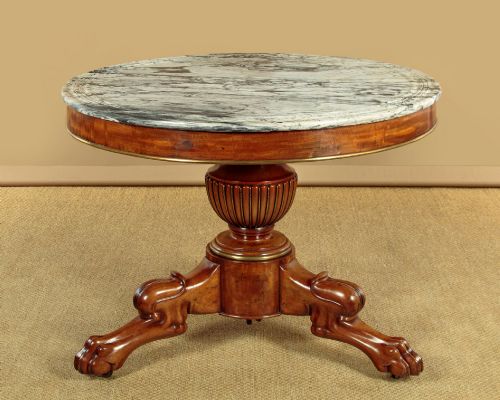
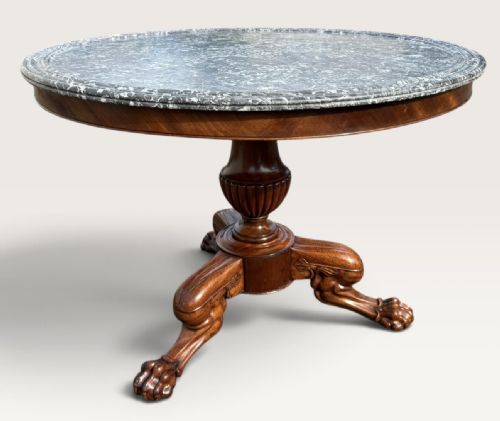
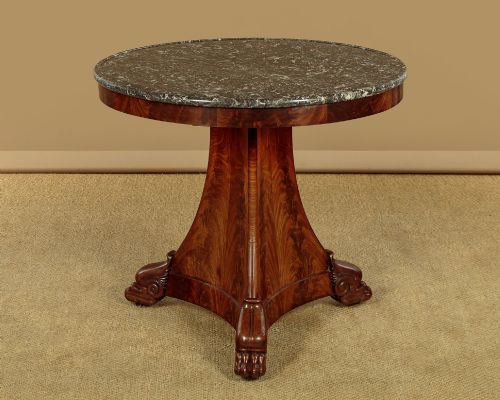
A regency gueridon table typically takes the form of a circular centre table designed to stand free in a room rather than against a wall. The pieces appearing here span the nineteenth century and later revivals, reflecting classical French Empire and British Regency design principles.
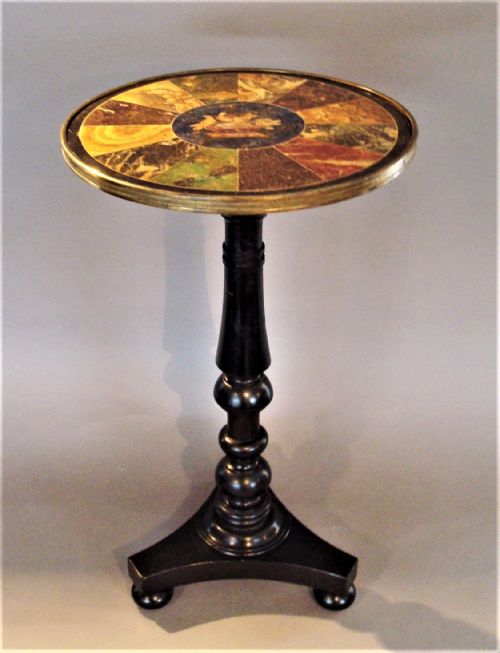
The primary forms found in this category include compact centre tables, occasional tables, and lamp tables featuring prominent marble or timber tops. These tables function both as decorative focal points and practical surfaces for lamps or objects.
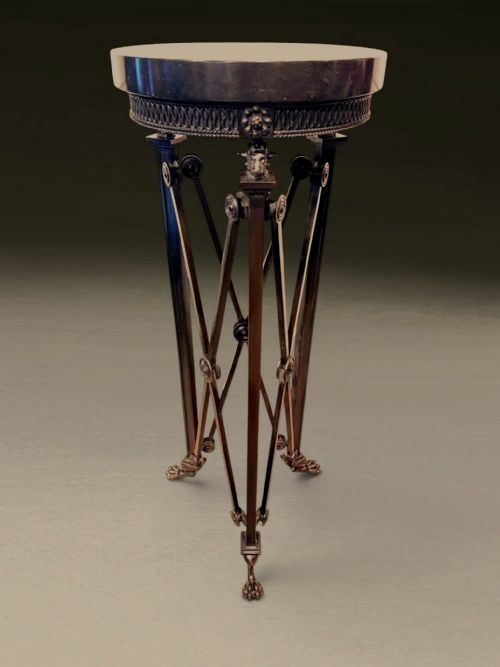
Makers working in the Regency style drew heavily on ancient Roman and Greek motifs, translating them into tripod stands, pedestal bases, and circular tops. While many examples adhere strictly to early nineteenth-century manufacture, subsequent revivals from the twentieth century also appear.
How they were made
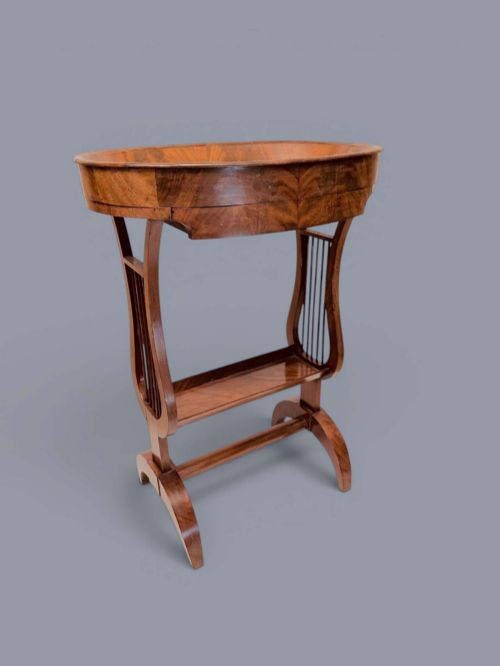
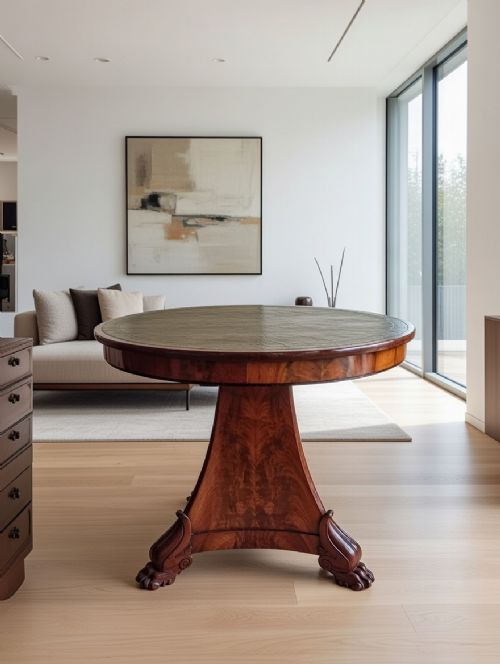
Cabinetmakers constructed these tables using dense timbers such as mahogany and flame mahogany, often selecting veneers to create striking surface patterns across the circular tops. Structural stability relied upon sturdy pillar supports and tripod or platform bases.
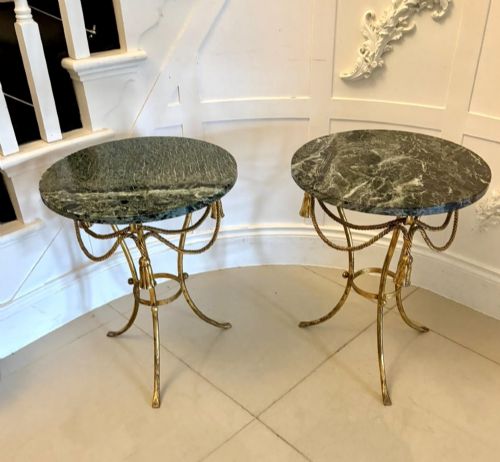
Metal ornamentation played a crucial role in the decorative vocabulary, incorporating cast brass, ormolu, and gilt metal mounts around the bases and table rims. Verde marble and white marble inserts provided durable, contrasting surfaces that required precise stone-cutting techniques.
Regency Gueridon Table Retail Price Guide 2026
Typical asking prices for regency gueridon table among the pieces listed under this phrase on Sellingantiques today, from the lower quarter to the upper quarter. They describe what is for sale here now, not the wider market.
Listings in this category span the nineteenth century up to the twentieth century, featuring mahogany, marble, brass, and bronze.
What varies in quality
The refinement of the timber selection and the crispness of the carved or cast mounts largely determine the distinction between average and exceptional examples. Superior pieces display carefully matched veneer grains and finely chased brass work that integrates seamlessly with the timber.
Proportion and structural integrity dictate the overall success of the piece, particularly where tripod legs meet the central column. Tables that maintain balanced weight distribution and harmonious scale demonstrate a higher level of workshop competence.
The Regency Gueridon Table Glossary
- Gueridon
- A small circular table, originally introduced in France during the seventeenth century. The form evolved to serve as a centre table or lamp stand.
- Ormolu
- Gilt bronze mounted onto furniture or decorative objects. This technique involves applying a layer of gold to a bronze base.
- Verde Marble
- A dark green decorative stone with white or light veining. It appears frequently as a contrasting top on classical tables.
- Flame Mahogany
- Timber cut from the fork of the mahogany tree to produce a flickering, rippled grain pattern. Cabinetmakers prized this for visible table surfaces.
Regency Gueridon Table: Frequently Asked Questions
Where should I place a gueridon table?
These circular tables work best as freestanding centrepieces in a hallway, library, or drawing room where people can walk around them. Their compact footprint also makes them suitable as lamp tables beside seating.
Because the design often incorporates a central pillar rather than four corner legs, chairs can be tucked neatly nearby without obstructing the view of the base.
How do I care for a marble top?
Marble surfaces require wiping with a soft, damp cloth and neutral soap to prevent staining from acidic liquids like wine or citrus juice. Avoid abrasive cleaners that can dull the polished finish over time.
Using coasters and placemats helps protect both marble and polished timber surfaces from rings and scratches during daily use.
Are these tables sturdy enough for daily use?
Tripod bases and pillar supports provide solid construction when the joints remain tight and well-maintained. They easily support lamps, books, and decorative objects.
Heavy downward pressure near the outer edge of a tripod table should be avoided to maintain balance and prevent tipping.
How do I distinguish Regency from revival pieces?
Original pieces from the early nineteenth century exhibit construction methods, timber ageing, and hand-cut joinery consistent with the period. Examining the underside and interior components often reveals period-specific tool marks.
Revival pieces, such as those from the twentieth century, typically show more uniform machine-sawn timber and different fastening hardware while replicating the classical style.