



Regency Glass Centrepiece
A regency glass centrepiece commands the middle of a formal table, catching candle flame through heavy cut crystal and bronze mounts.
Regency Glass Centrepiece
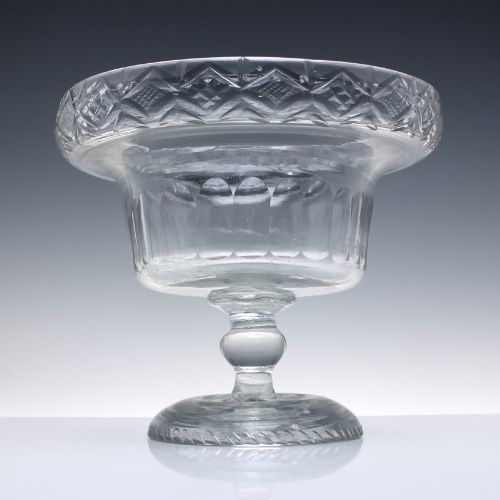
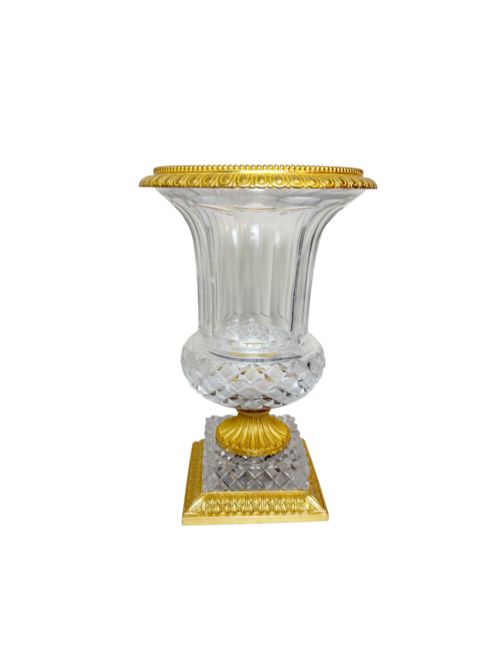
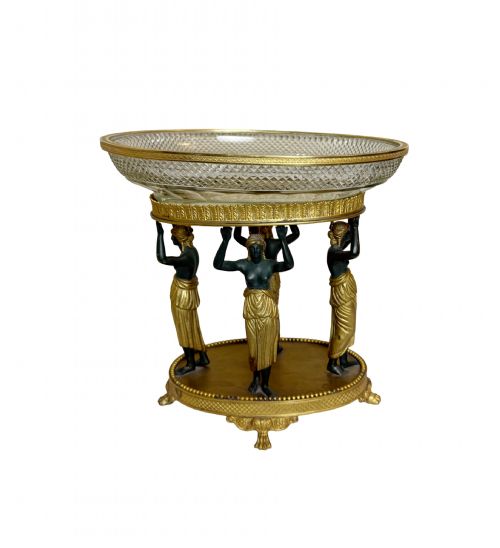
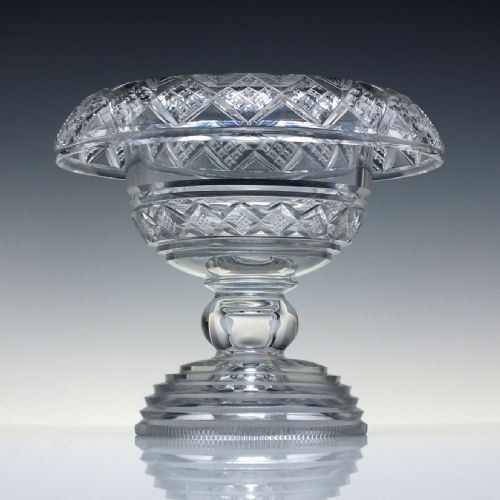
A regency glass centrepiece brings together a deep glass bowl or vessel with substantial metallic mounts, often raised on a pedestal or plateau mirror. When you search for a regency glass centrepiece, you encounter heavy lead crystal bowls, pedestal comports, and urn-shaped vases decorated with gilt or patinated bronze.
The pieces on this page span the Georgian and Victorian eras, reaching from the early nineteenth century through to later 1890 and 1900 examples. Alongside grand standing bowls, the selection includes cruet sets and plateau mirrors that serve a similar decorative function on the dining table.
Irish cutting and traditional English hand-blown techniques define the glasswork, whilst French Empire and Victorian influences appear in the metal mounts. You are most likely to meet footed crystal bowls and pedestal comports featuring deep hobnail patterns or precise geometric facets.
Materials and construction
The primary material is heavy lead crystal or cut glass, shaped by hand-blowing before cold-cutting wheels carved deep facets, flutes, and hobnail patterns into the surface. This creates a dense, refractive material capable of supporting metal collars without cracking.
Gilt bronze, ormolu, and patinated bronze provide structural mounts, collars, and handles that secure the glass vessels. Old Sheffield plate and silver plate also appear in the metal components of epergnes and cruet sets, combining base metals with thin sheets of silver.
Regency Glass Centrepiece Retail Price Guide 2026
Typical asking prices for regency glass centrepiece among the pieces listed under this phrase on Sellingantiques today, from the lower quarter to the upper quarter. They describe what is for sale here now, not the wider market.
Listings feature items spanning the 19th Century, Georgian period, 1800, 1890, and 1900, constructed from cut glass, lead crystal, ormolu, and silver plate.
Assessing quality in antique glass and bronze
Quality rests upon the crispness of the glass cutting and the weight of the lead crystal. Sharp, clean facets that catch the light cleanly distinguish superior vessels from softer, shallower cutting.
The integration of the metal mounts dictates the refinement of the piece. Finely chased gilt bronze or ormolu that fits the contours of the glass precisely separates high-end workshop production from simpler assemblages.
The Regency Glass Centrepiece Glossary
- Centrepiece
- A large ornamental object placed in the middle of a dining table. These vessels held fruit, flowers, or sweetmeats during formal meals.
- Comport
- A shallow bowl raised on a high foot or pedestal. They are typically used for serving fruit or small confections.
- Ormolu
- Gilt bronze created by applying a mixture of mercury and gold leaf to bronze. The mercury is driven off by heat, leaving a durable golden finish.
- Hobnail pattern
- A decorative surface of raised, pyramidal diamond points cut into glass. It creates a tactile texture that maximises light refraction.
- Old Sheffield plate
- A composite material made by fusing a thin sheet of silver to a thicker copper core. It was the precursor to modern electroplating.
Regency Glass Centrepiece: Frequently Asked Questions
What is a regency glass centrepiece used for?
These large vessels originally held fruit, flowers, or decorative displays in the middle of a formal dining table. Their height and reflective surfaces made them focal points for candlelit dinner parties.
Today, they function as decorative objects on sideboards or large tables, where their cut crystal and bronze mounts catch natural light.
How do I date a glass centrepiece?
Dating relies on the style of the metal mounts, the weight and tone of the lead crystal, and the depth of the cutting. Georgian and Regency pieces often feature heavy, brilliant-cut lead crystal paired with classical bronze work.
Later Victorian and turn-of-the-century examples introduce broader floral motifs or alternative plating techniques like Old Sheffield plate.
What is the difference between cut glass and lead crystal?
Lead crystal contains a high percentage of lead oxide, which increases the weight, density, and refractive index of the material. This makes it softer for artisans to cut deep, sharp facets.
Standard cut glass lacks this high lead content, resulting in a lighter feel and slightly less brilliance when exposed to direct light.