

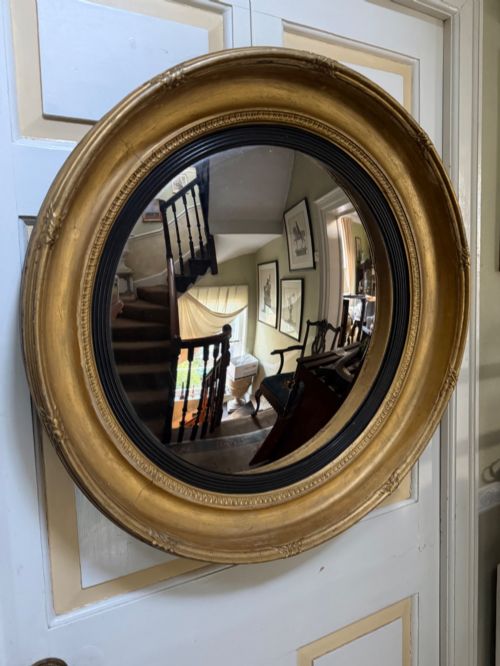
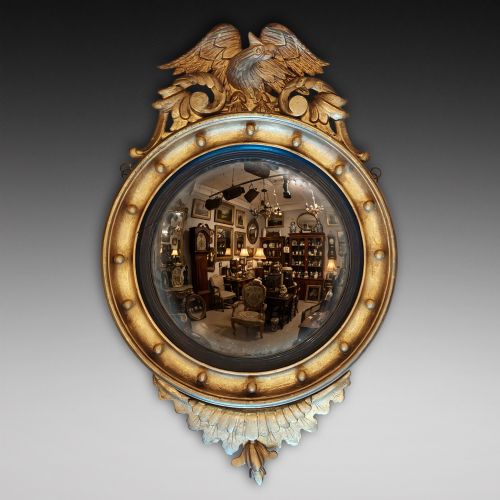
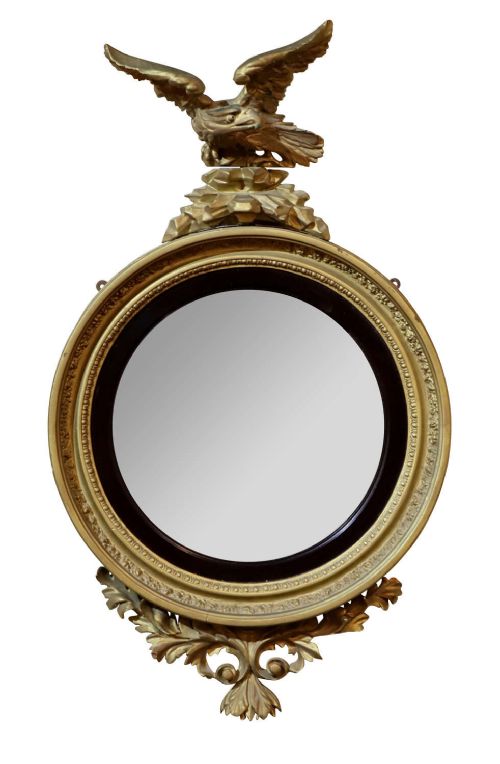
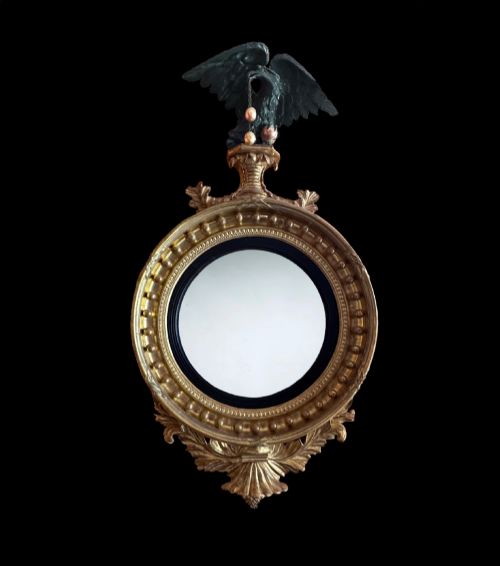
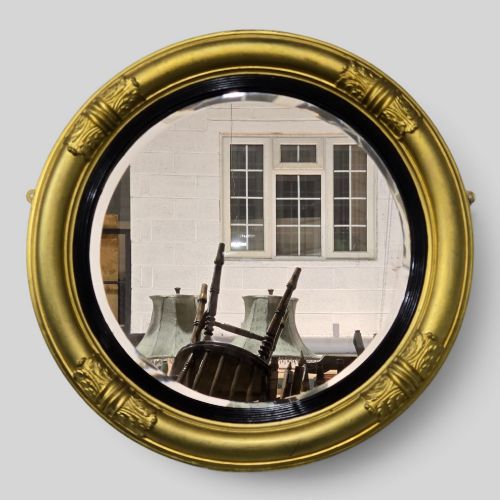


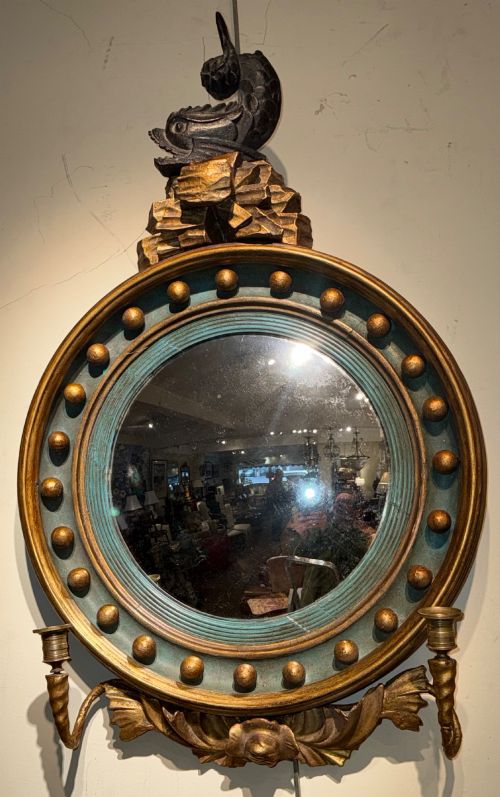

Regency Gilt Convex Mirror
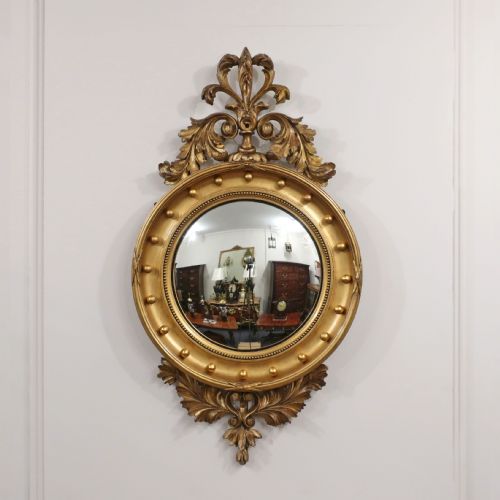
A regency gilt convex mirror gathers the whole room into a curved bowl of glass, pulling light and space into a single striking point.
Regency Gilt Convex Mirror
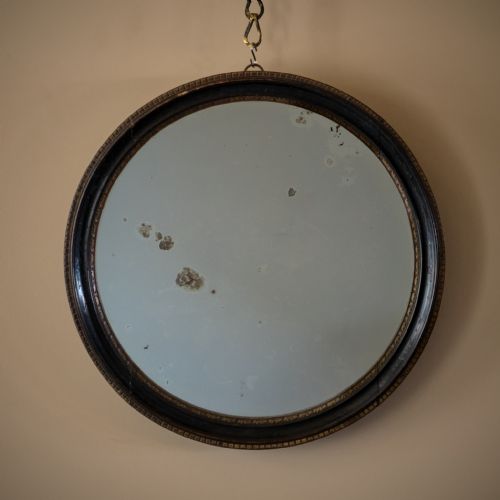
When you search for a regency gilt convex mirror, you encounter circular wall mirrors designed to distort reflections across an entire interior space. These pieces span periods from the Regency era through the nineteenth century and into later revivals, though genuine Regency examples remain the most sought-after form on this page.
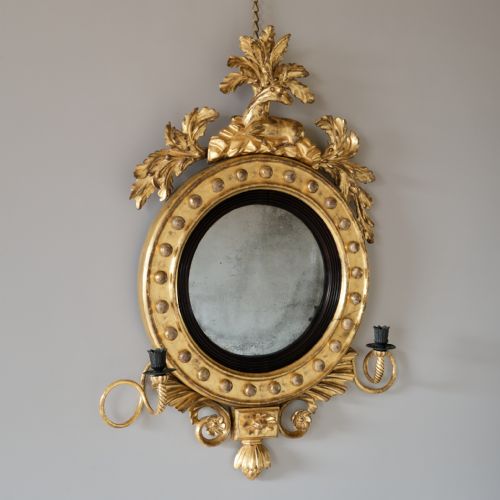
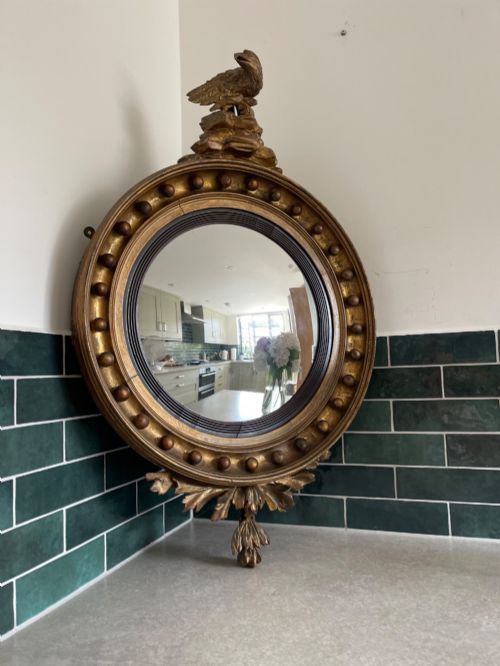
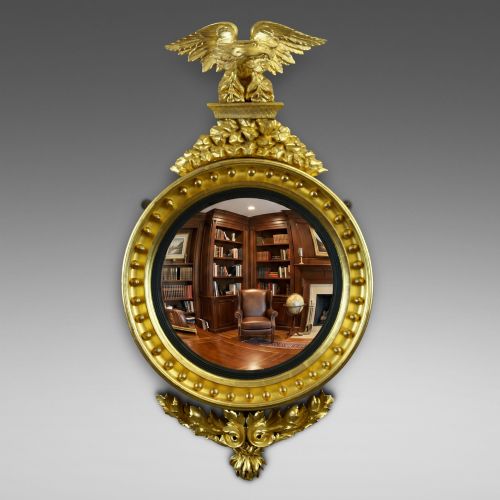
The most common forms take a circular shape framed in giltwood and gesso, frequently featuring detailed eagle surmounts or candle arms known as girandoles. Alongside period pieces, you will also find Victorian, Edwardian, and twentieth-century interpretations that maintain the classic round silhouette.
Makers constructed these wall mirrors to serve both practical illumination and decorative grandeur in principal rooms. Their distinctive spherical glass plates offer a wide-angle view of the surrounding interior, setting them apart from standard flat-glass looking glasses.
How They Were Made
Craftsmen shaped the circular frames from wood and built up intricate decorative details using layered gesso before applying gold leaf or paint. This combination allowed workshops to carve elaborate motifs like eagles and acanthus leaves with sharp relief.
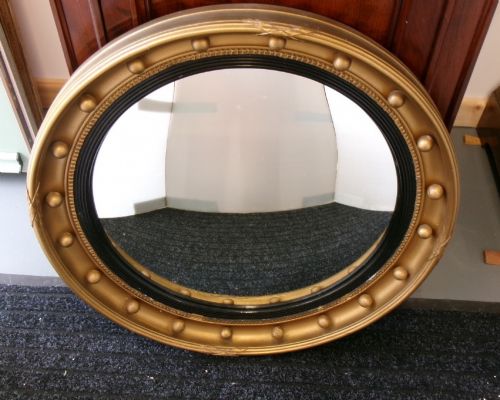
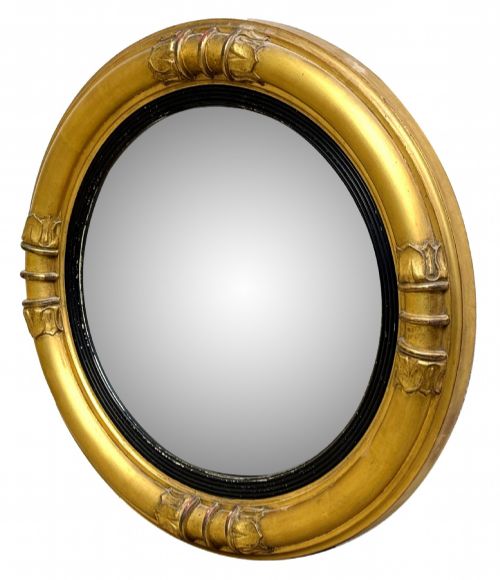
The distinctive curved mirror glass was blown or shaped to create the convex surface, then silvered behind the plate. Artisans often added an ebonised slip - a dark inner ring - between the glass and the outer gilt frame to provide visual depth.
Surmounts and candle branches were pegged or joined directly to the main timber body to support the weight of the composition. Gilding techniques relied on laying metal leaf over preparation layers, creating the bright reflective surfaces characteristic of these pieces.
Regency Gilt Convex Mirror Retail Price Guide 2026
Typical asking prices for regency gilt convex mirror among the pieces listed under this phrase on Sellingantiques today, from the lower quarter to the upper quarter. They describe what is for sale here now, not the wider market.
Materials recorded across current items include giltwood, ebonised wood, gesso, brass, and convex mirror glass.
What Varies in Quality
The crispness of the gesso carving and the depth of the gilding set the finest examples apart from later commercial production. High-quality pieces display sharply defined ornamentation on the eagle surmounts and frame bezels without soft edges or lost detail.
The condition and clarity of the original convex glass plate heavily influence the character of the piece. Superior examples retain their early silvering and smooth curvature, while lesser or later replacements can appear flat or overly dark.
Proportion and structural integrity define the balance of the overall design, from small pocket versions to massive wall-filling formats. Master carvers achieved a harmonious scale between the frame, the inner ebonised slip, and any attached girandole arms.
The Regency Gilt Convex Mirror Glossary
- Convex mirror
- A round looking glass with a curved surface that projects outwards to reflect a wide-angle view of the room. These objects are also historically known as butler's mirrors or sorcerer's mirrors.
- Giltwood
- Timber that has been coated with thin sheets of gold leaf over a prepared gesso ground. This technique creates a luminous metallic finish on the frame.
- Ebonised slip
- A dark, black-painted inner moulding positioned directly around the mirror glass. It creates a strong visual boundary that separates the reflection from the gilded outer frame.
- Girandole
- A wall mirror fitted with one or more branching arms for holding candles. The polished metal or glass surfaces amplify the candlelight across the interior.
- Surmount
- The decorative crest or ornament mounted at the very top of the mirror frame. Eagles and floral motifs are the most frequent subjects found on these upper mounts.
Regency Gilt Convex Mirror: Frequently Asked Questions
How do I hang a heavy convex mirror safely?
Because these pieces carry substantial weight from their wooden frames and glass plates, secure them directly into wall studs using heavy-duty fixings. Avoid relying solely on plaster walls or lightweight picture hooks.
Ensure the hanging wire or integrated metal brackets on the reverse are rated to support the entire load of the mirror safely.
What is a butler's mirror?
A butler's mirror is an alternative name for a convex wall glass, historically placed in dining rooms or service areas. This allowed staff to monitor the entire room discreetly from a single vantage point.
The wide-angle reflection provided practical oversight of large spaces during formal meals and gatherings.
Why does the glass look curved?
The spherical glass plate is intentionally blown or formed to bulge outward, gathering light from a full hundred-and-eighty-degree field. This optical design creates a miniature panoramic view of the entire interior within the frame.
Historical makers utilised this distortion to brighten dark corners and provide decorative interest in principal reception rooms.