



Regency Gilded Chandelier
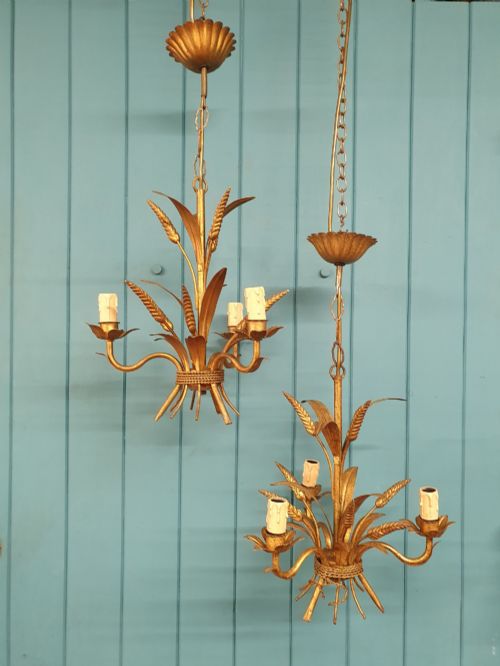
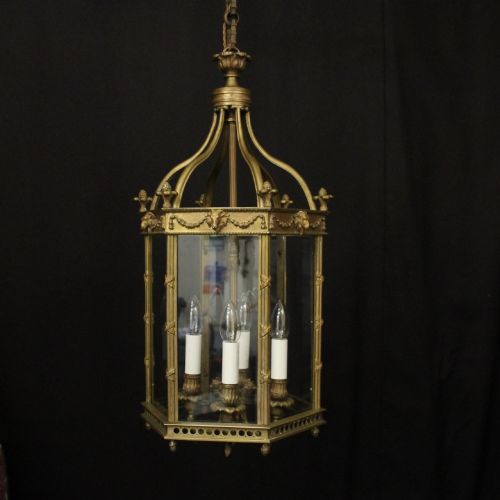
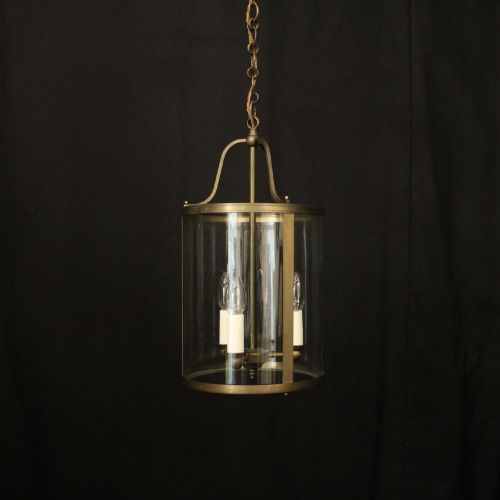
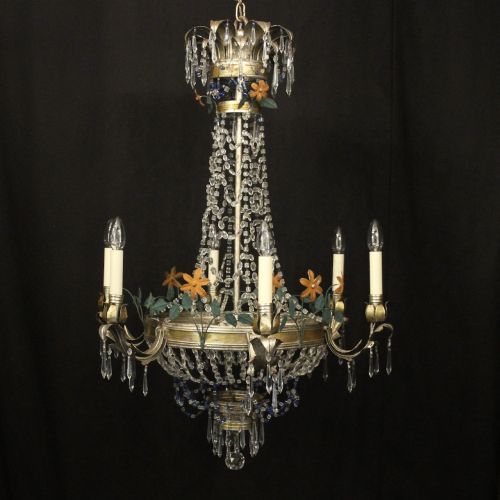
A regency gilded chandelier brings bright illumination and classic metallic warmth to a high-ceilinged room through crystal drops and gilt frames.
Regency Gilded Chandelier
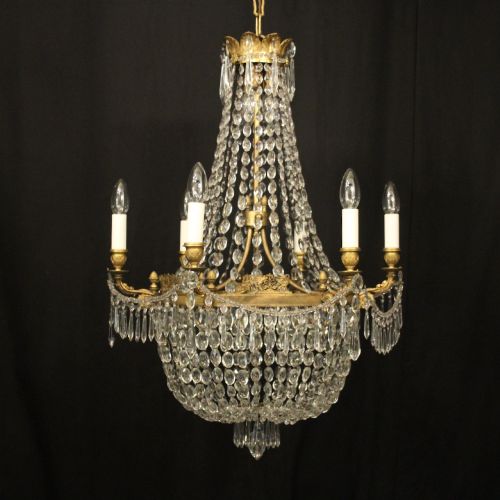
A regency gilded chandelier is an elaborate ceiling light designed to catch and refract light using cut crystal drops, glass panes, and polished metal frames. These fixtures provide overhead illumination while adding a distinct sense of period character to an interior space.
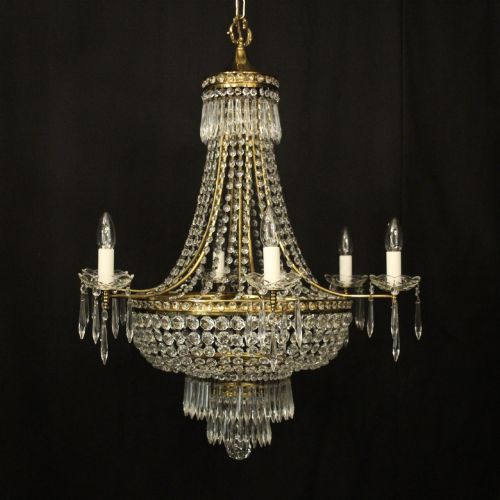
The pieces available on this page span several decades, incorporating styles from French Empire and French Rococo to English Neoclassical. Buyers will encounter both grand multi-light fixtures with tent and waterfall configurations and simpler two-tier designs.
Origins represented in these listings include both English and French workshops, utilising brass, bronze, and metal substrates finished with gilding. They arrive in forms ranging from compact twelve-inch glass arrangements to sixteen-light showpieces.
How they were made
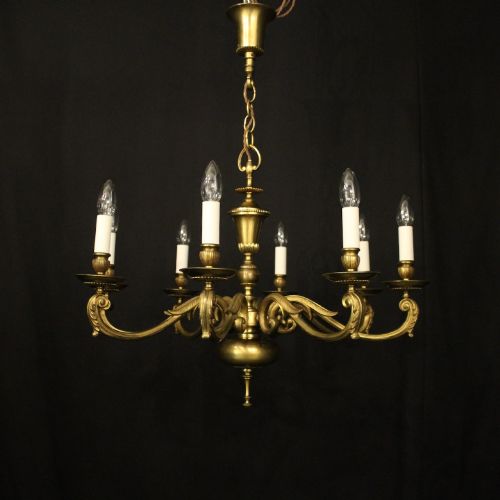
Metal frames form the structural core, utilising brass, bronze, and gilded metal that are cast or forged into arms and mounts. These metallic elements receive a gilt finish to produce a warm reflective surface that complements the hanging elements.
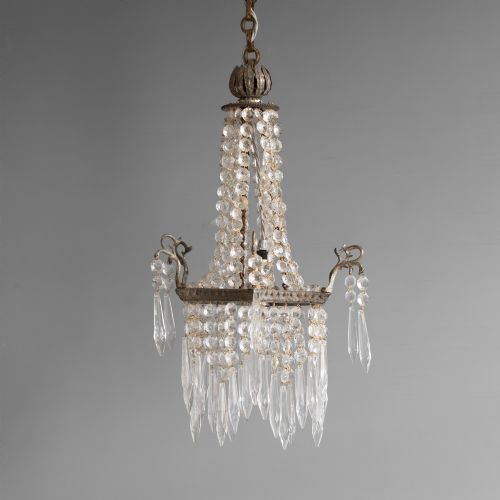
Crystal and glass components are hand-cut and shaped into beads, prisms, and drops before being wired onto the frame in tent and waterfall configurations. Precision in cutting these glass elements dictates how effectively the fixture disperses light across a room.
Regency Gilded Chandelier Retail Price Guide 2026
Typical asking prices for regency gilded chandelier among the pieces listed under this phrase on Sellingantiques today, from the lower quarter to the upper quarter. They describe what is for sale here now, not the wider market.
Many a dinner party has been silently judged by the hidden tinkle of a breeze catching a crystal chandelier.
What varies in quality
The refinement of the cast metal mounts and the depth of the gilding set the baseline for a fixture's visual weight and presence. Finer examples display crisp casting detail on the bronze or brass arms rather than soft, rounded edges.
The clarity and cut of the crystal components determine how brilliantly the light refracts through the room. Superior pieces employ heavy cut glass and crystal that scatter light cleanly, whereas simpler or later interpretations rely on plainer glass.
The Regency Gilded Chandelier Glossary
- Gilt bronze
- Bronze metal treated with a thin layer of gold or gold-coloured finish to create a permanent metallic sheen. This material resists tarnishing while maintaining a rich decorative surface.
- Tent and waterfall
- A specific arrangement where strings of crystal beads form an upper tent shape that drops down into a cascading waterfall of glass pendants. It maximises the surface area for light refraction.
- Cut crystal
- Glass with a high lead content that has been faceted by grinding and polishing to enhance brilliance. These cuts create sharp prismatic effects when illumination passes through them.
- Neoclassical
- A style drawing inspiration from classical antiquity, featuring symmetrical forms and restrained ornamentation. It provides structured elegance without excessive surface clutter.
- Two tier
- A vertical chandelier construction featuring two distinct horizontal rings of lights arranged one above the other. This layout increases illumination capacity for larger spaces.
Regency Gilded Chandelier: Frequently Asked Questions
Where should I hang a chandelier?
These fixtures suit rooms with generous ceiling heights where the hanging drop can be fully appreciated without obstruction. They work effectively suspended above a principal dining table or centred in a spacious reception room.
Ensure the clearance beneath the fixture allows adequate walking space for guests. Positioning them away from high-traffic doorways protects the hanging crystal elements from accidental contact.
How do I clean a crystal chandelier?
Maintenance involves gentle cleaning of individual glass drops and metal arms using specialised mild solutions applied with a soft cloth. This removes dust buildup that dampens the reflective quality of the cut crystal.
Take care not to twist or pull the wire connections holding the glass beads in place during the process. Regular dusting keeps the metal and glass components bright without requiring full disassembly.
What rooms suit French styles best?
French Empire and Rococo designs integrate well into rooms featuring period architectural details like cornicing and ceiling medallions. Their ornate gilt frames and cascading crystal drops complement traditional interior palettes.
Balancing these decorative fixtures with simpler wall finishes prevents the space from feeling overcrowded. They serve as a natural focal point in drawing rooms and traditional dining spaces.
How do I determine the period?
Dating relies on examining the construction methods of the metal armature, the wiring style, and the cut of the glass. Earlier pieces utilise hand-cast bronze and distinct hand-cut crystal drops characteristic of nineteenth-century production.
Later interpretations from the twentieth century often display standardised fixings and machine-cut glass elements. Comparing these technical details against known period styles helps clarify the age of the fixture.