



Regency Genre Painting
Regency genre painting captures everyday domestic scenes and human character studies from the early nineteenth century.
Regency Genre Painting
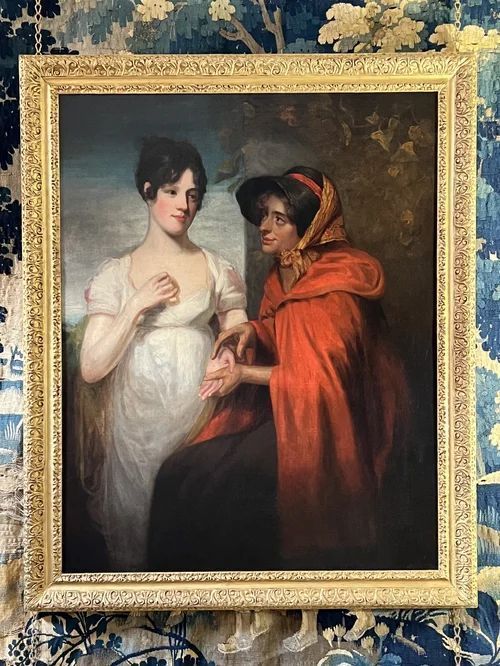
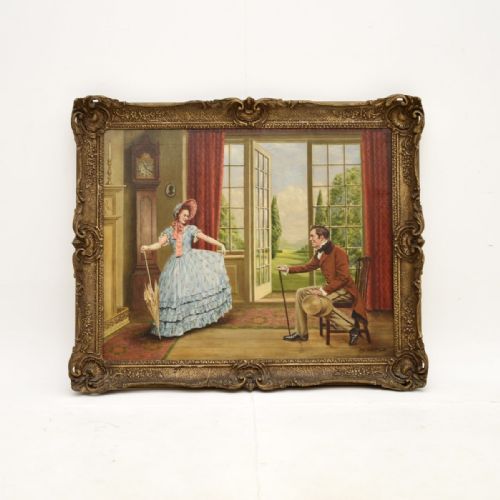
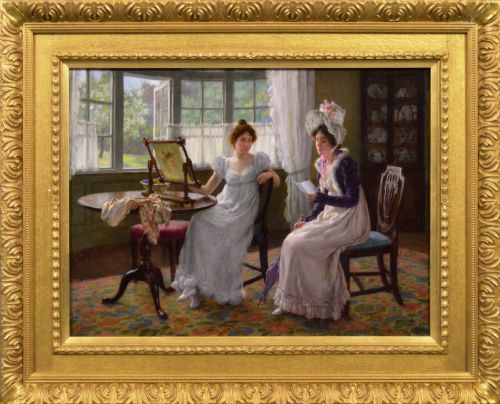
A regency genre painting portrays scenes of daily life, domestic interiors, and social interactions rather than grand historical or mythological narratives. These works depict figures engaged in ordinary pursuits, from cottage life to polite indoor gatherings.
The pieces found in this category span the nineteenth century, with specific examples drawing on Georgian and Victorian painting traditions. Collectors encounter works executed in oil on canvas and watercolour on paper.
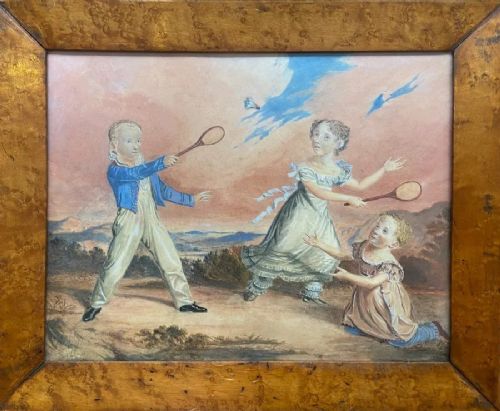
The subjects range from quiet domestic moments, such as a gentleman's shaving ritual interrupted or a game of battledore and shuttlecock, to outdoor cottage scenes and fortune-telling.
How they were made
Artists painted these works primarily using oil paint on canvas or watercolour applied to paper, mounted within framed artwork configurations. Some compositions also utilise chrystoleum techniques for a glazed finish.
Framing often incorporates wood, gesso, and gold leaf elements to complement the period aesthetic of the canvas or paper support.
Regency Genre Painting Retail Price Guide 2026
Typical asking prices for regency genre painting among the pieces listed under this phrase on Sellingantiques today, from the lower quarter to the upper quarter. They describe what is for sale here now, not the wider market.
The selection includes works from the nineteenth century utilising oil paint, watercolour, canvas, and paper.
What varies in quality
The distinction in quality rests upon the artist's ability to render facial expression, garment texture, and interior light within the scene. Finer works demonstrate confident brushwork and a balanced composition that brings narrative clarity to the human interaction.
The choice of medium and the preservation of the original canvas, paper, and pigment condition also influence the standing of an individual piece.
John Opie R A·Alfred Lyndon Grace·Henry Travis·George Kilburne·Charles Haigh Wood·John Augustus Atkinson·Rolinda Sharples·Walter Dendy Sadler·Henry Singleton RA
The Regency Genre Painting Glossary
- Genre painting
- Artwork depicting scenes from everyday life, ordinary people, and domestic interiors. These paintings focus on narrative and character rather than formal portraits.
- Chrystoleum
- A method of applying a hand-coloured print to glass and melting away the paper backing before painting the reverse. This technique creates a glossy, layered appearance popular in the nineteenth century.
- Watercolour
- A painting method where fine pigments are suspended in a water-based solution on paper. Artists utilised this for detailed, luminous works.
- Gesso
- A plaster-like mixture applied to wooden frames as a base for moulding and gilding. It provides a smooth surface for the application of gold leaf.
Regency Genre Painting: Frequently Asked Questions
What is a regency genre painting?
A regency genre painting depicts everyday domestic scenes, interiors, and human interactions from the early nineteenth century. These works focus on the daily lives and social moments of ordinary people.
Such paintings provide a visual record of period costume, interior decoration, and social customs through the observation of the artist.
How do I display these paintings?
These framed artworks suit traditional domestic spaces where their period character complements interior architecture. Proper placement avoids direct sunlight to protect pigments on canvas and paper.
Maintaining stable room humidity preserves both the wooden frames and the underlying support materials.
What materials were used?
Artists used oil paint on canvas and watercolour on paper to create these compositions. Frames were constructed from wood, finished with gesso, and often gilded with gold leaf.
Alternative techniques such as chrystoleum also appear among nineteenth-century examples.
How do I date these works?
Dating relies on stylistic markers, artist biographical records, and framing materials characteristic of the nineteenth century. Inscriptions on the reverse or labels often provide specific artist names and dates.
Comparative study of costume and interior design within the painted scene helps narrow the period of creation.