




Regency Desk Clock
A regency desk clock is a precision timepiece designed for library or table use, combining architectural cabinet work with fine mechanical movement.
Regency Desk Clock
A regency desk clock belongs to a class of timepieces spanning mantel clocks, bracket clocks, and library clocks produced during the Regency period and associated eras. These objects typically take the form of freestanding table clocks designed to sit on desks, brackets, or mantelpieces.
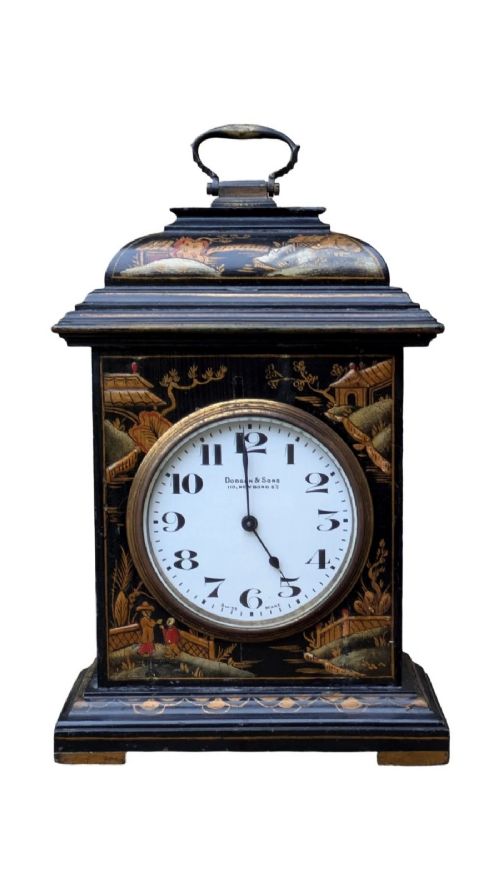
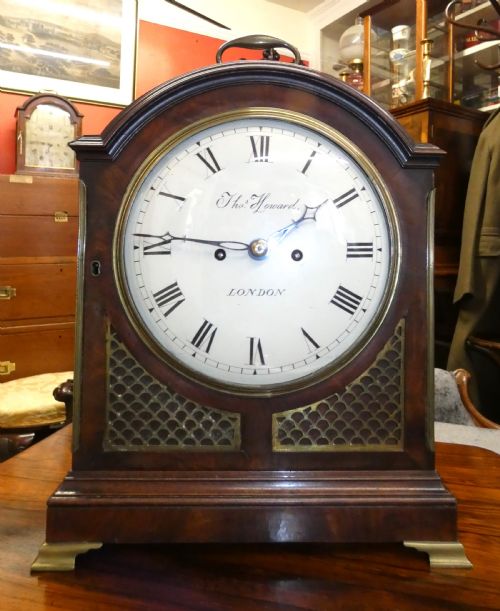
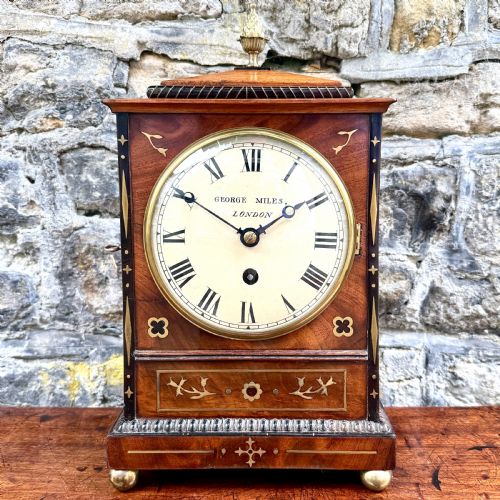
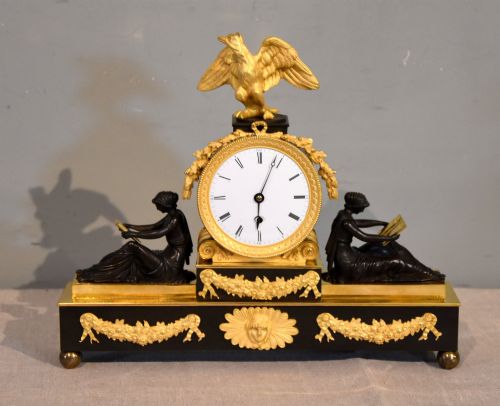
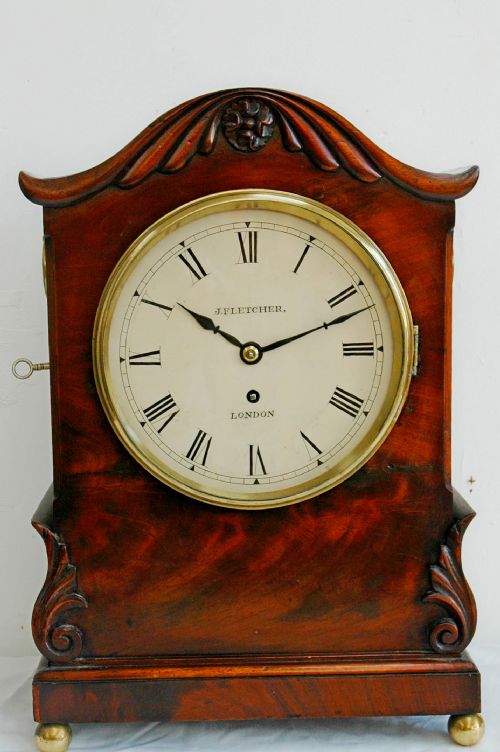
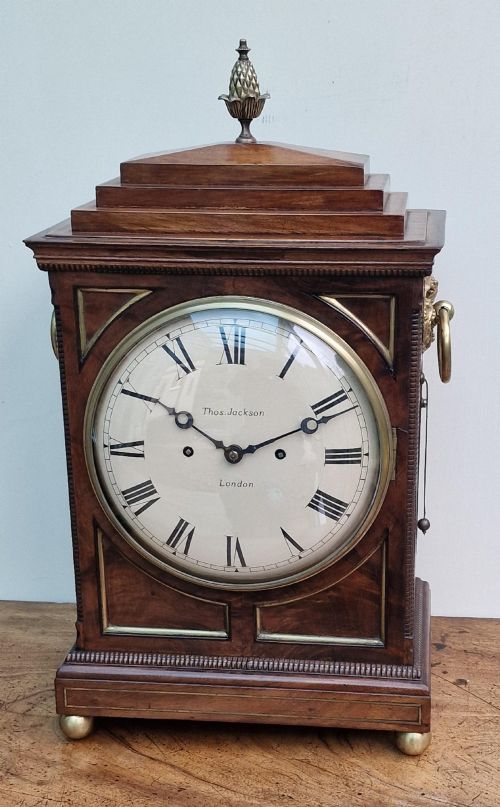
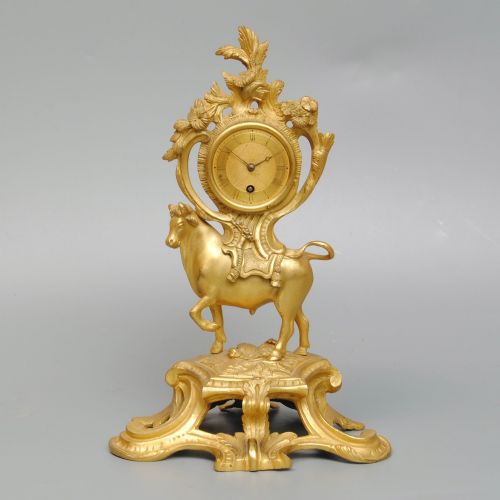
The most common examples on this page are housed in rich timber cases such as mahogany, rosewood, and pollard oak, often featuring brass inlay or distinct architectural shapes like lancet tops, pad tops, and chamfer tops. Alongside these timber bracket clocks, metal-cased pieces in ormolu, gilt bronze, and patinated bronze appear frequently.
While many examples date strictly to the Regency period and the wider nineteenth century, the selection also incorporates Georgian precursors and later nineteenth-century interpretations up to nineteen-ten. Makers from London feature prominently among the recorded items, alongside regional English horologists and continental workshops.
Materials and construction
Clockmakers of this era relied on dense cabinet timbers, primarily mahogany and rosewood, paired with cabinet brasswork and polished glass for dial covers and side panels. Timber cases were constructed with careful joinery to house heavy mechanical movements securely without warping.
Movements incorporate complex brass wheel trains driven by fusee mechanisms, utilising either single or double chain setups to maintain even power delivery as the mainspring unwinds. Many pieces integrate cast ormolu, gilt bronze, and patinated bronze mounts, chased with floral, animal, or figural motifs.
Regency Desk Clock Retail Price Guide 2026
Typical asking prices for regency desk clock among the pieces listed under this phrase on Sellingantiques today, from the lower quarter to the upper quarter. They describe what is for sale here now, not the wider market.
A bronze poodle dog guards one clock, while goats frolic beneath palm trees on another.
Factors determining quality
The distinction between ordinary and superior pieces rests on the crispness of the cabinet carving, the precision of brass inlay work, and the quality of the cast bronze mounts. Superior clock cases display tight timber grain, balanced proportions, and well-executed architectural details such as pierced fretwork sound frets.
On the mechanical side, quality is evident in the finishing of the movement plates, the inclusion of signed dials and engraved backplates, and the reliability of the fusee train. Clocks featuring specialised materials like pollard oak or alabaster, or unusual figural cases, represent more ambitious commissions.
Thomas Howard·Thomas Jackson·Bush of London·Viner London·John Barwise·Wilkinson Leicester·J Kingerley Manchester·Hampson and Son·Hessen Paris·Pennington of Camberwell·Budgen Croydon·Walker and Hall·William Hardy·Berguer of the Strand·McCabe London·Purvis of London·Plumbly and Tupman·James McCabe·Henry Berkeley Square·FB Adams London·Baetens London
The Regency Desk Clock Glossary
- Fusee
- A conical pulley used in mechanical clocks to equalize the diminishing power of the mainspring as it unwinds. This mechanism ensures consistent torque and therefore more accurate timekeeping.
- Bracket clock
- A portable clock traditionally designed to sit on a wall bracket or table. These spring-driven clocks usually feature a carrying handle on top of the timber case.
- Timepiece
- A clock that measures and indicates time without including a striking train for chiming the hours. They are valued for their mechanical simplicity and clean dial layouts.
- Ormolu
- Gilding technique involving the application of a finely ground high-carat gold-mercury amalgam to a bronze object. The mercury is driven off by heat, leaving a durable golden finish.
- Lancet top
- A clock case design featuring a pointed arch profile resembling a gothic lancet window. This silhouette was popular for mahogany and rosewood mantel clocks during the nineteenth century.
Regency Desk Clock: Frequently Asked Questions
What is a fusee movement?
A fusee movement uses a conical drum to regulate the pull of the mainspring. As the spring loses tension, the chain moves to a wider part of the cone to maintain steady power.
This clever mechanical device separates better quality timepieces from simpler spring-driven clocks and helps ensure consistent daily accuracy.
Where were these clocks placed?
These clocks were designed for placement on mantelpieces, library desks, and dedicated wall brackets. Their portable nature allowed owners to move them between rooms as needed.
Smaller library clocks were particularly useful for consulting time closely while working at a writing table.
Do these clocks strike the hours?
Some models are pure timepieces that only track the hours without striking, while others include complex striking trains. Bracket clocks frequently incorporate bells or gongs to sound the passing time.
Checking the dial layout and side panels will reveal whether the movement includes striking capabilities.