

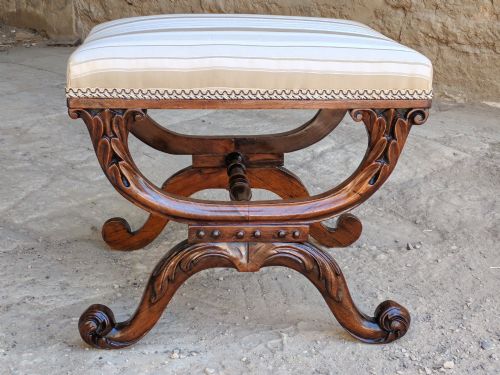
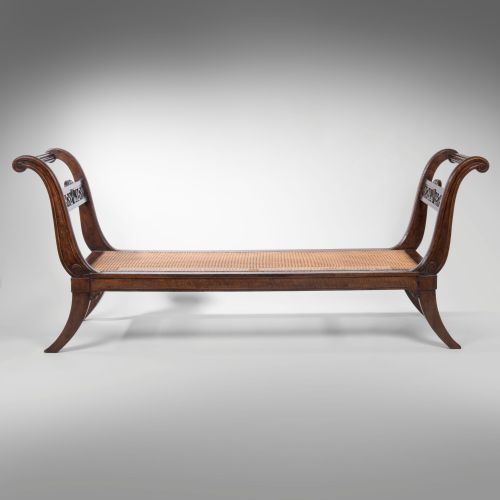


Regency Curule Bench
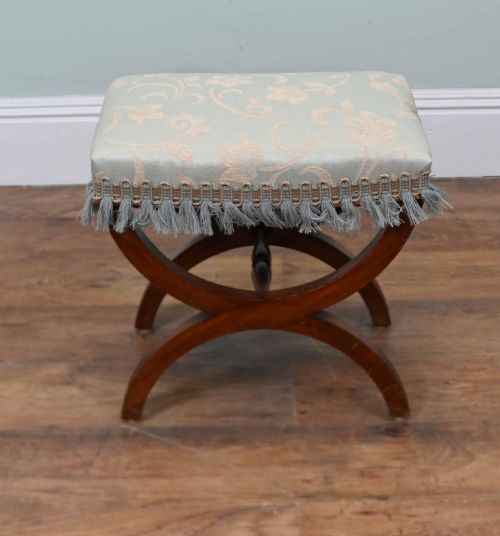
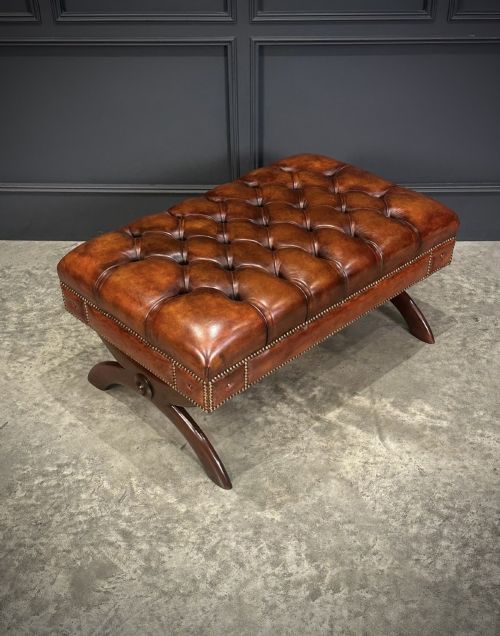
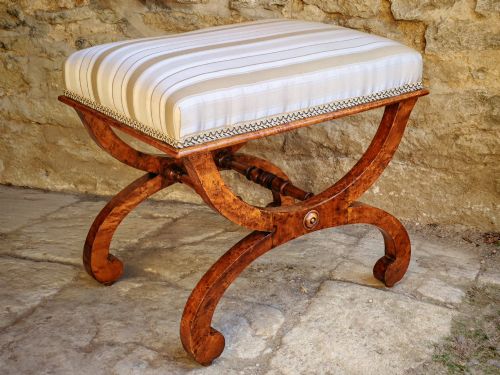
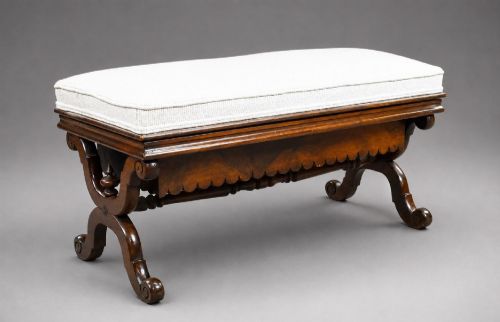
These regency curule bench examples offer sculptural X-frame seating rooted in classical design, bringing architectural elegance to any interior.
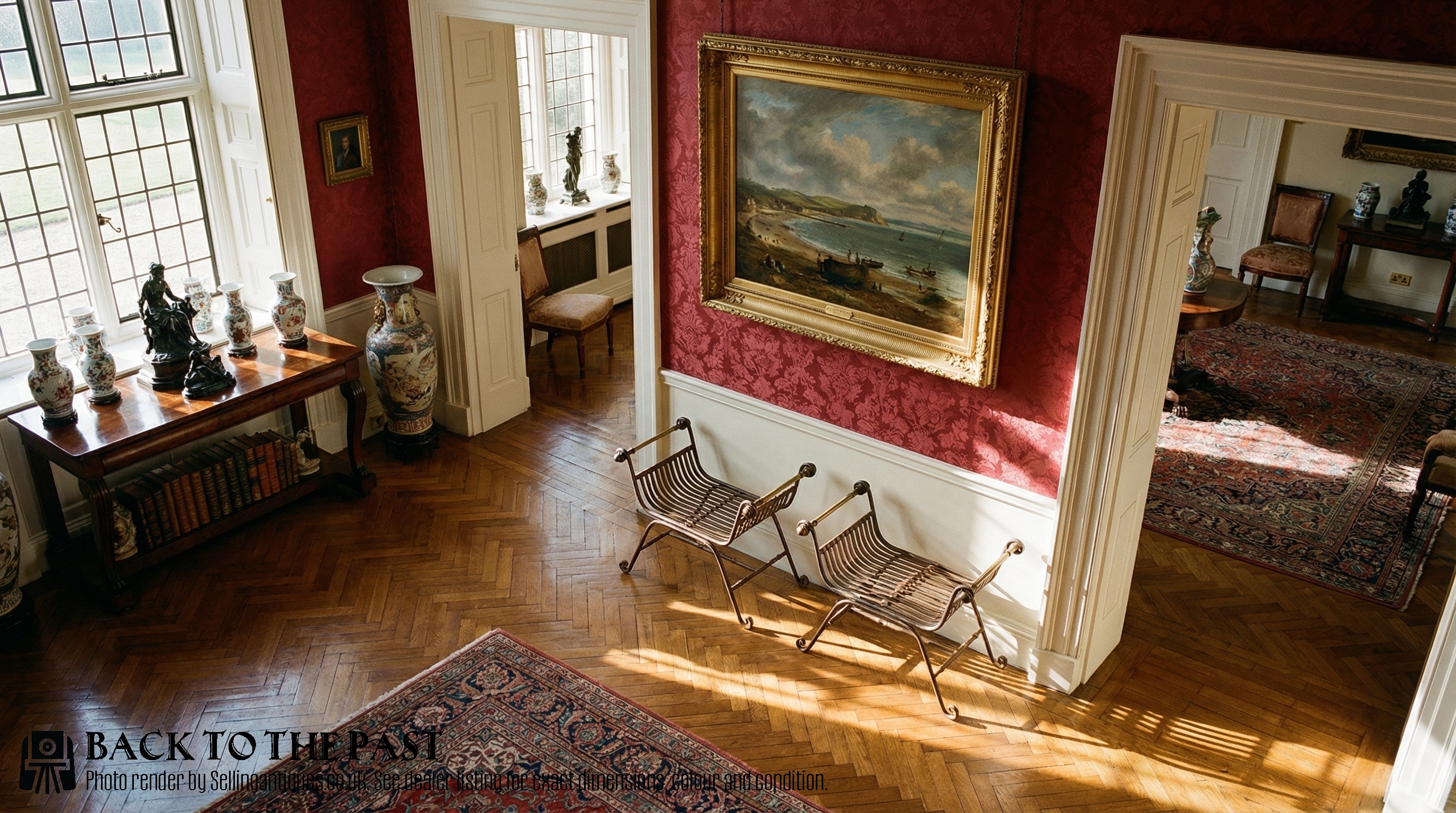
Regency Curule Bench
A regency curule bench takes the traditional X-frame geometry of antiquity and adapts it for seating within nineteenth-century interiors. These forms appear alongside related window seats, footstools, and ottomans that share the characteristic cross-frame architecture.
The pieces on this page span the Regency, Georgian, and wider nineteenth-century periods, showing how makers continually returned to classical forms. Mahogany, rosewood, and giltwood provide the primary structures for these X-frame forms, upholstered in fabrics and velvet.
Neoclassical and French Empire influences shape many of the surviving examples, alongside regional variants from Ireland and Italy. Buyers seeking this specific silhouette will encounter both low footstools and substantial window seats designed for principal rooms.
How they were made
Cabinetmakers constructed the foundational X-frame using dense timbers such as mahogany and rosewood, ensuring the intersecting members could support body weight. Giltwood and painted wood variants relied on detailed surface preparation, including gesso layers applied before gilding.
Upholstery completed the seating surface, utilising traditional stuffing techniques secured over webbing or sprung bases. Brass mounts and inlay details frequently accented the timber frames on pieces produced during the Regency and William IV eras.
Regency Curule Bench Retail Price Guide 2026
Typical asking prices for regency curule bench among the pieces listed under this phrase on Sellingantiques today, from the lower quarter to the upper quarter. They describe what is for sale here now, not the wider market.
Listings feature mahogany, rosewood, and giltwood structures paired with velvet and fabric upholstery across nineteenth-century periods.
What varies in quality
The success of a curule form depends upon the precision of the intersection where the X-frame members cross and lock together. Superior examples maintain crisp joinery that conceals internal stress while presenting balanced proportions from every viewing angle.
Material selection dictates the upper tier of execution, where dense figured timbers and refined carving elevate standard seating to architectural furniture. The quality of the surface finish, whether polished timber grain or applied gilding, distinguishes workshop standards.
Miles & Edwards
The Regency Curule Bench Glossary
- Curule
- An ancient Roman chair shape featuring crossed legs that form an X-form silhouette. This classical form inspired furniture designers throughout the Regency and neoclassical revivals.
- X-Frame
- A structural support system formed by two intersecting diagonal members resembling the letter X. It provides both structural rigidity and a distinct visual rhythm to benches and stools.
- Giltwood
- Timber that has been coated with a thin layer of gold leaf over a prepared gesso ground. This luxurious finish was favoured for formal seating in neoclassical interiors.
- Neoclassical
- A style spanning the eighteenth and nineteenth centuries that revived classical Greek and Roman motifs. It informs the clean lines and symmetrical geometry seen on these benches.
- Window Seat
- An elongated form of seating designed specifically to fit within the architectural recess of a window bay. These pieces often share the X-frame construction of curule benches.
Regency Curule Bench: Frequently Asked Questions
What is a curule bench?
A curule bench is a seat defined by its intersecting X-shaped legs, drawing inspiration from ancient Roman magistrate chairs. Nineteenth-century cabinetmakers revived this silhouette for domestic interiors.
These pieces function well as standalone accents, dressing stools, or window seating. Their open frames maintain visual space in a room while providing sturdy support.
Where did these benches go in a house?
Historically, these seats occupied prominent circulation spaces, drawing rooms, and long galleries where formal seating was required along walls. Window bays also accommodated low X-frame seats.
In modern rooms, they serve effectively at the foot of a bed, beneath a hallway mirror, or positioned near a fireplace. Their compact footprint allows them to fit where bulkier chairs would crowd the floor.
How do I date a nineteenth-century stool?
Dating relies upon examining timber species, joinery methods, and stylistic cues such as neoclassical motifs or Regency proportions. Rosewood and heavy mahogany point towards the early decades of the century.
Later Victorian revivals often introduce subtle shifts in turning, carving depth, and upholstery foundations. Comparing the structural framing with documented workshop pieces helps narrow the decade of production.
Are these seats comfortable to sit on?
Most surviving examples feature firm upholstered pads designed for upright sitting rather than lounging. Their primary historical role combined decorative presence with functional occasional seating.
Footstools and ottomans offer lower profiles intended for resting legs, while taller window seats provide standard chair-height seating. Upholstery firmness often reflects the traditional stuffing methods used during their period of origin.