
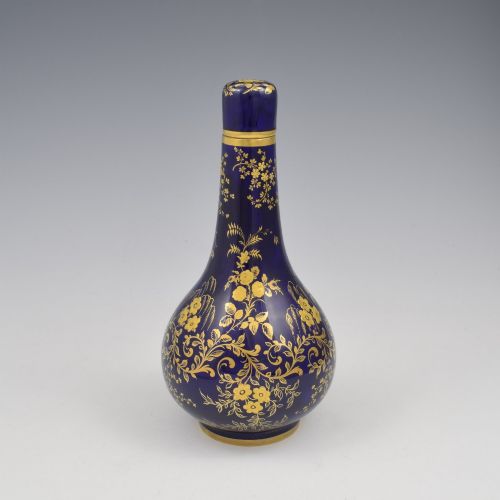

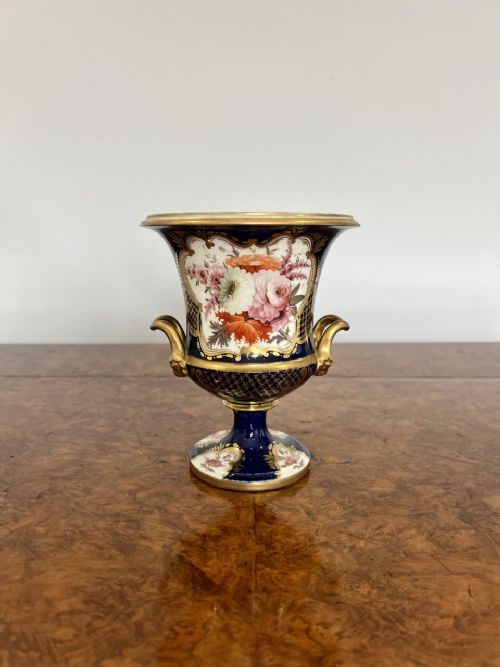


Regency Cobalt Blue Urns
Regency cobalt blue urns bring deep saturated colour and classical form to a room, driven by the rich ceramic arts of the early nineteenth century.
Regency Cobalt Blue Urns
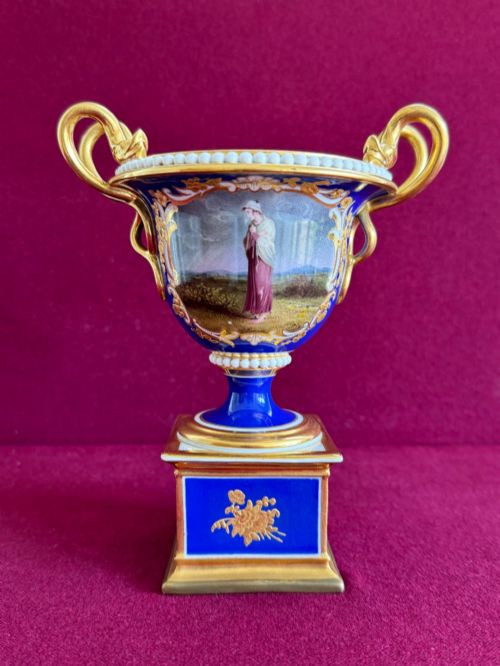
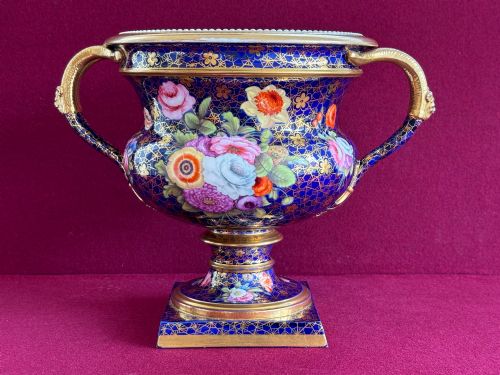
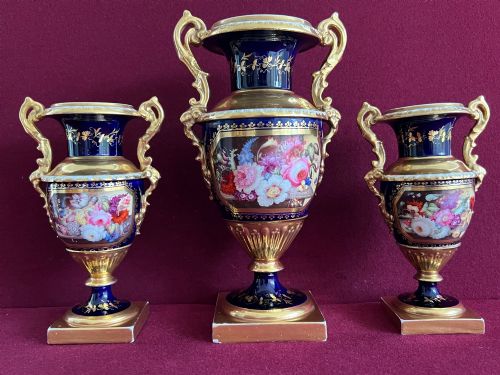
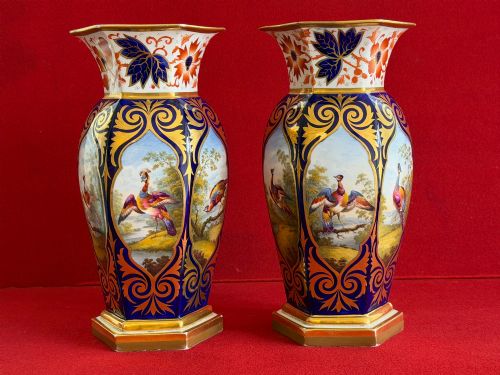
Regency cobalt blue urns encompass decorative vessels and vase garnitures produced primarily during the early nineteenth century and the wider nineteenth century. These items manifest in forms such as Campagna urns, Warwick vases, bottle vases, and potpourri vases.
The pieces appearing on this page originate from notable English factories and potteries of the period, including Worcester, Derby, Spode, Coalport, Masons, and Minton. Collectors encounter both individual display vessels and matched pairs or sets.
Makers utilised rich blue grounds, often described as mazarine or cobalt, combined with hand-painted details and gilding. These ceramics served both decorative functions in formal interiors and practical roles as rose water sprinklers or potpourri containers.
How they were made
Potters shaped these vessels using porcelain, china, ironstone, and ceramic bodies, firing them to achieve durable structures suitable for classical silhouettes. Factories applied deep blue glaze to the clay surface to establish the characteristic rich ground colour.
Artisans embellished the pieces using gold leaf, gilding, and hand-painted decoration, executed by skilled hands in workshops such as those of Thomas Lowe or Thomas Steel. Subsequent kiln firings fixed the metallic highlights and polychrome enamels to the glazed surface.
Listings feature porcelain, ironstone, and ceramic materials decorated with gold leaf, enamel, and rich blue glaze.
What varies in quality
Quality in these ceramics rests upon the crispness of the moulding and the ambition of the form, distinguishing standard production wares from monumental or highly sculptural vessels. Well-modelled handles, robust ironstone bodies, and balanced proportions set finer examples apart.
The precision and artistry of the hand-painted decoration and gilding determine the upper tier of the range. Pieces bearing named factory marks and documented artist contributions demonstrate superior execution.
Flight Barr and Barr·Derby Porcelain·Chamberlain Worcester·Spode·Coalport·Masons Ironstone·Minton Porcelain
The Regency Cobalt Blue Urns Glossary
- Campagna urn
- A bell-shaped classical urn with a flared lip and footed base, often utilised for neoclassical garden or interior decoration. This form became popular during the Regency period.
- Warwick vase
- A classical vase shape modelled after a famous Roman marble antique, featuring loop handles and a deep bowl. English porcelain and ironstone factories frequently reproduced this silhouette.
- Garniture
- A set of three or more matching vases or urns designed to be displayed together on a mantelpiece or sideboard. These sets frequently include a central vessel flanked by smaller matching pieces.
- Potpourri vase
- A decorative vessel featuring a pierced or perforated lid designed to diffuse scent from dried flower petals and spices. These containers combined ornamental ceramic form with domestic utility.
- Ironstone
- A dense, heavy ceramic paste patented in the early nineteenth century as a durable alternative to porcelain. Factories like Mason utilised this material for large and robust decorative vases.
Regency Cobalt Blue Urns: Frequently Asked Questions
How do I identify a Regency urn?
Look for classical neoclassical shapes such as Campagna or Warwick forms produced around the early nineteenth century. These vessels often feature rich cobalt grounds paired with gilt detailing.
Examine the base for factory marks or the characteristic paste and glaze of the period. Maker attribution helps confirm the precise date of manufacture.
Were these urns meant for flowers?
Many of these vessels served purely decorative functions on mantelpieces and sideboards as part of matched garniture sets. Specialised forms like rose water sprinklers and potpourri vases held specific domestic purposes.
While some larger urns could accommodate stems, their primary role in Regency interiors was sculptural ornamentation.
How should I clean porcelain urns?
Dust the surfaces gently with a soft, dry brush to remove particulate matter without disturbing fragile gilding. Avoid using liquid cleaners or chemical solutions on antique enamel and gold leaf.
Handle the vessels with care, supporting both the body and the base rather than lifting by handles or covers.
What is mazarine blue?
Mazarine blue refers to a deep, rich cobalt blue shade utilised on ceramics during the eighteenth and nineteenth centuries. This intense colour provided a striking background for gold leaf and polychrome enamel painting.
Factories employed this glaze to create high-contrast decorative effects on porcelain and ironstone bodies.