
Regency Circular Loo Table
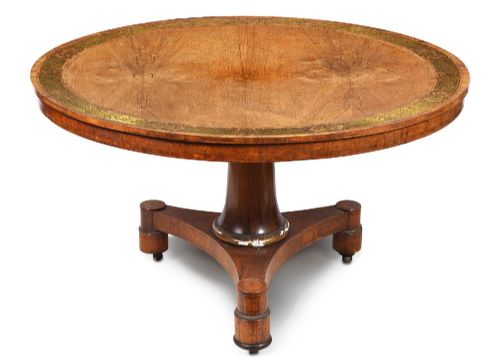
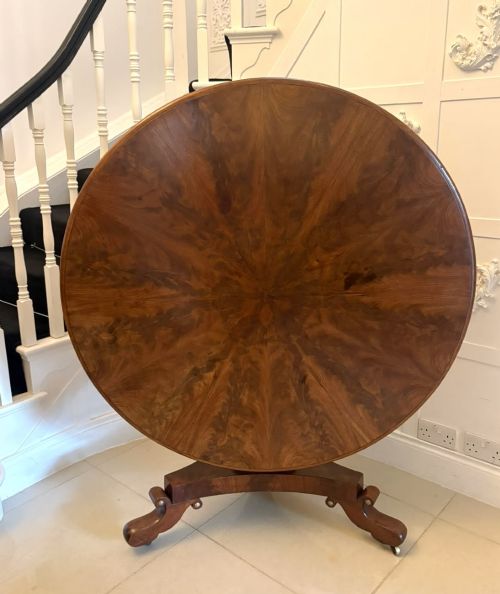
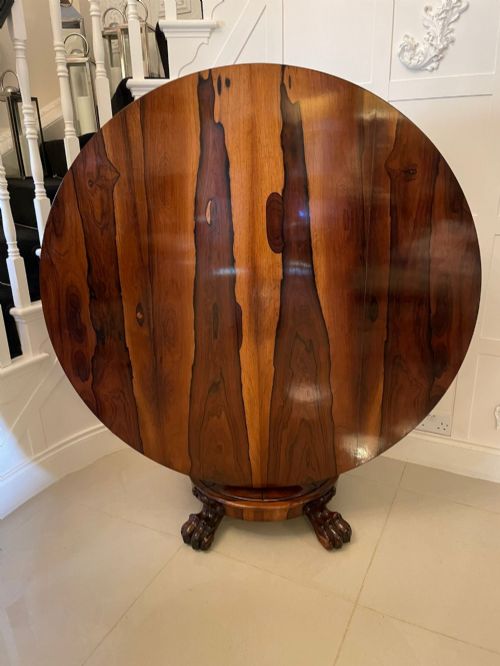
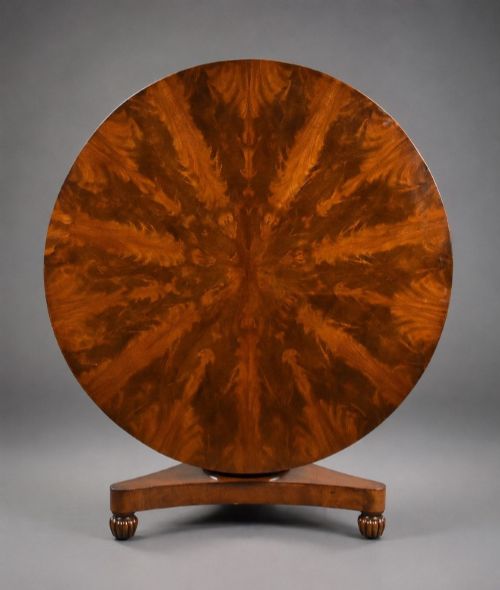
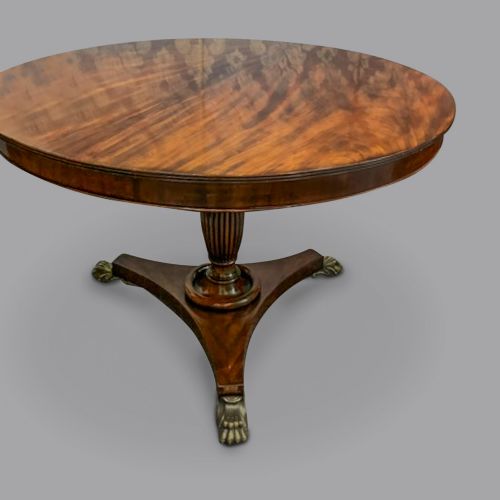
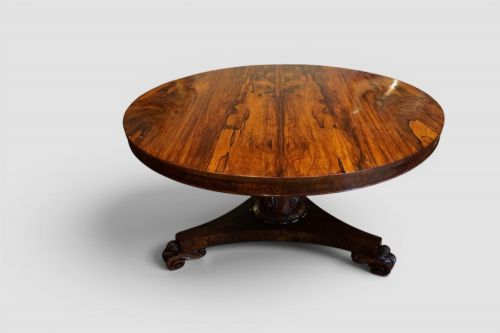
A regency circular loo table offers a grand pedestal base and a top designed to tilt upright when not in use.
Regency Circular Loo Table
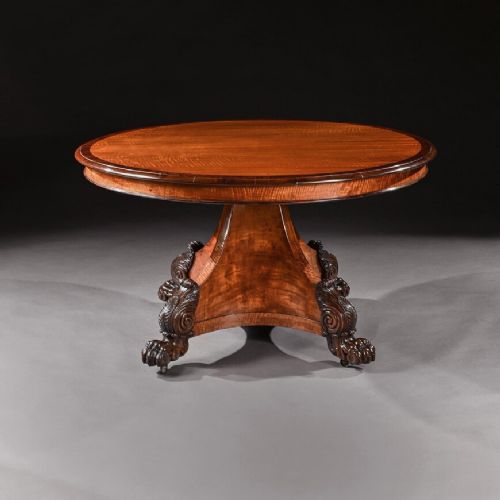
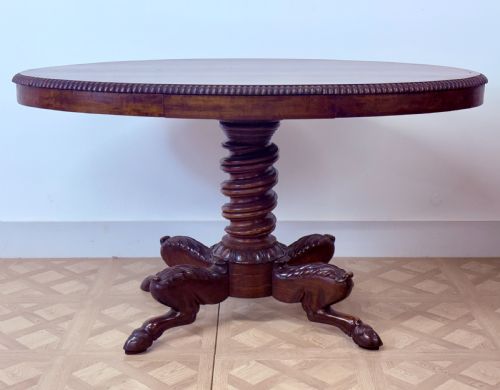
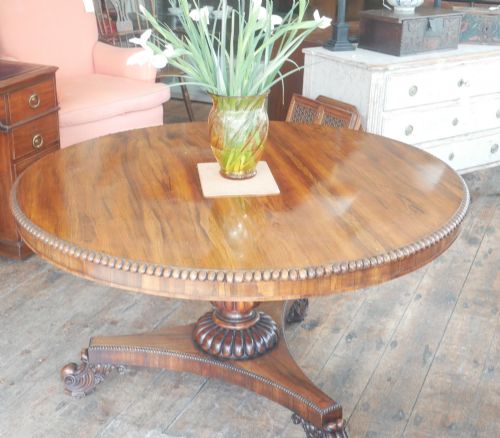
Most examples encountered on this page date from the nineteenth century, spanning the Regency, William IV and early Victorian periods. Mahogany and rosewood are the dominant timbers, often finished with striking veneer patterns.
Many of these tables incorporate tilt-top mechanisms, allowing the circular top to pivot vertically for storage against a wall. Examples range from modest pedestal breakfast tables to large six-seater dining formats.
Materials and construction
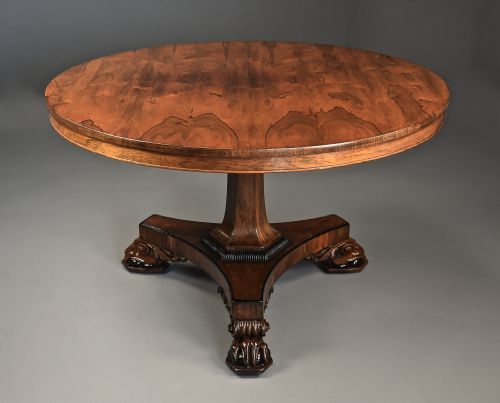
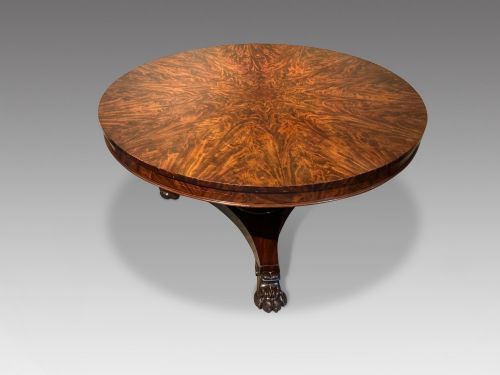
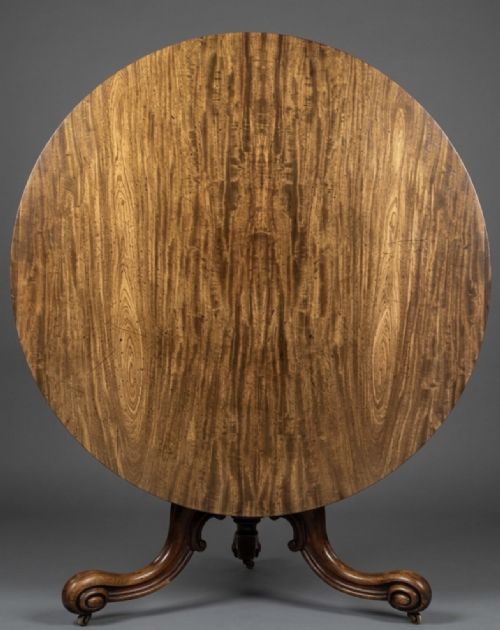
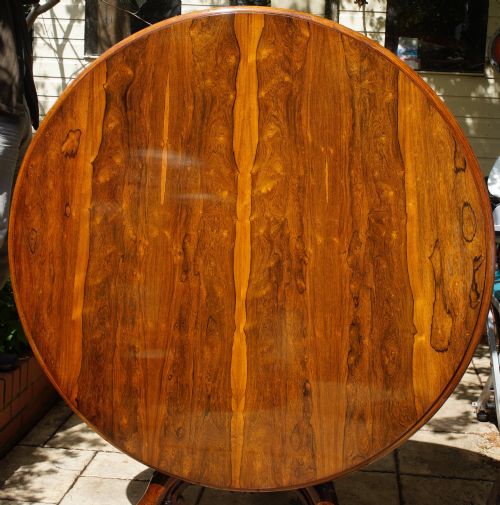
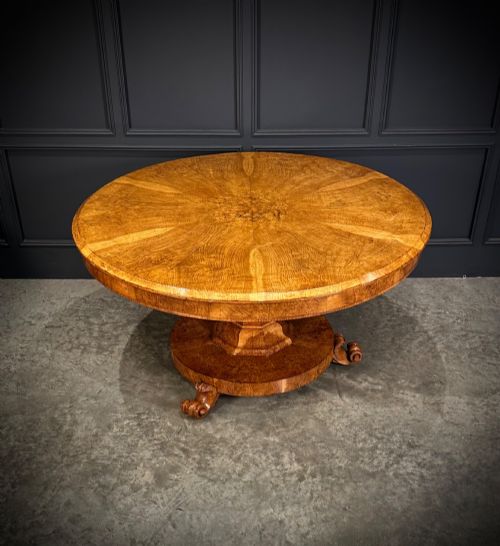
Cabinet makers utilised dense native and exotic timbers, applying fine veneers of flame mahogany, rosewood and burr walnut over stable secondary woods. Segmented tops and book-matched grain arrangements display the technical skill of the period workshop.
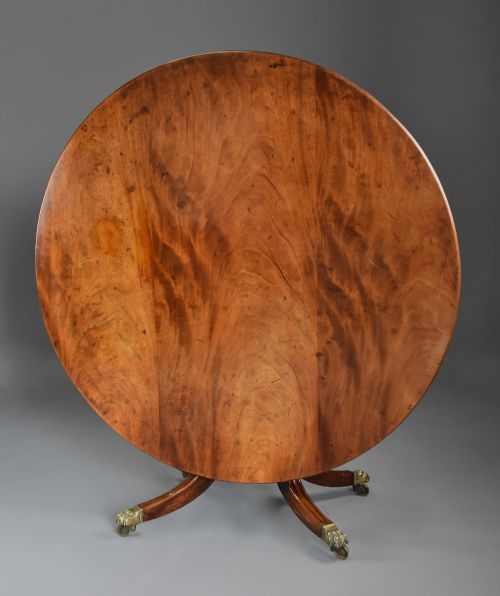
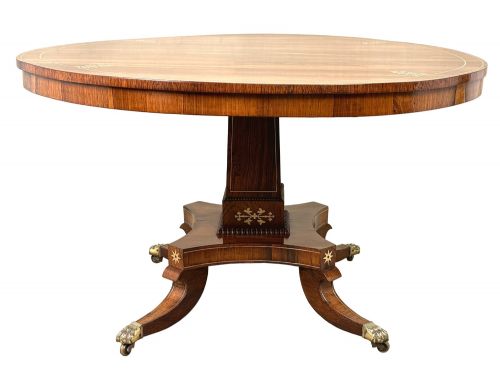
Pedestal supports often feature turned or carved pillars resting on platform bases with carved scroll feet, sometimes incorporating brass casters for mobility. Inlays of brass, alongside secondary timbers like oak, provide structural strength and decorative contrast.
Distinctions in quality
Quality rests in the selection of timber veneers and the crispness of architectural carving on the pillar and base. Superior pieces display continuous grain matching across segmented tops and sophisticated joinery in the tilting mechanism.
The integration of brass inlay, secret drawers or specific secondary woods separates standard production pieces from workshop-attributed examples. Proportion and stability during the tilt action also define a finer build.
Gillows·Walker-Lancaster·Peters of Genoa
The Regency Circular Loo Table Glossary
- Tilt-top
- A tabletop mechanism that allows the surface to pivot ninety degrees and lock vertically. This function enabled tables to be pushed against room perimeters when not in use.
- Veneer
- A thin layer of figured wood applied over a sound secondary timber base. Cabinet makers used this technique to display dramatic grain patterns like flame mahogany.
- Pedestal
- A central vertical support replacing traditional four-legged table designs. Regency versions often feature heavy turned pillars or triangular plinth bases.
- Brass inlay
- The practice of embedding fine brass strips or motifs directly into the timber surface. It appears on select Regency tables to accent borders and panel edges.
Regency Circular Loo Table: Frequently Asked Questions
What is a loo table?
A loo table is a large round dining and card table popular during the nineteenth century. The top often tilts on a central pivot to save space.
These pieces served flexible domestic functions, moving easily between dining rooms and drawing rooms as household needs required.
How do I spot a tilt top?
Look underneath the centre pillar for a brass or wooden catch mechanism. This release latch allows the tabletop to pivot upright.
When lowered, a secure block keeps the circular surface stable and level for daily use.
Are these tables good for dining?
Large circular tables easily accommodate multiple chairs without corner legs obstructing diners. The central pedestal provides ample leg room beneath the top.
To live with one, ensure the pillar base leaves sufficient clearance for seating arrangements around the perimeter.
How do I date these tables?
Dating relies on timber choices, pedestal shapes and secondary wood varieties. Regency and George III examples often feature lighter mahogany and brass details.
William IV and Victorian iterations typically show heavier rosewood construction with bold carved platform bases.