

Regency China Cup
A regency china cup brings the refined aesthetic of the early nineteenth century to the table through delicate porcelain forms and intricate handpainted details.
Regency China Cup
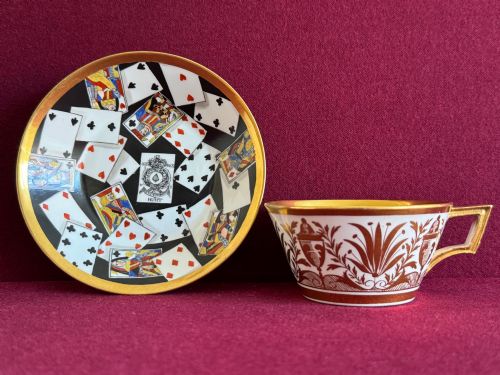
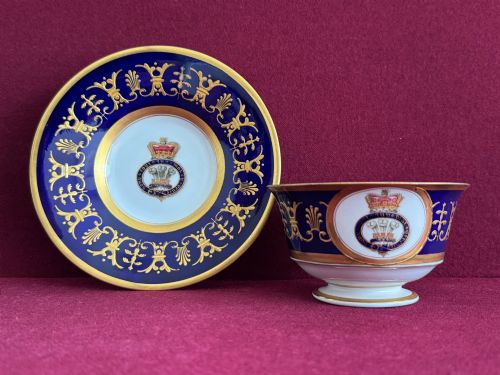
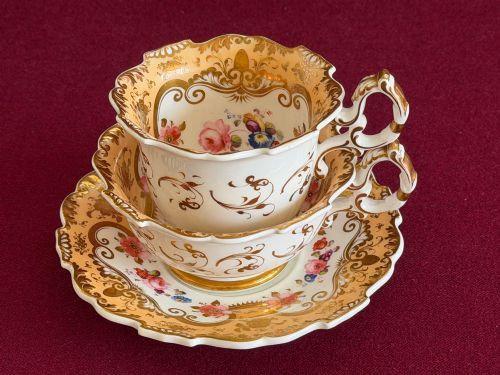
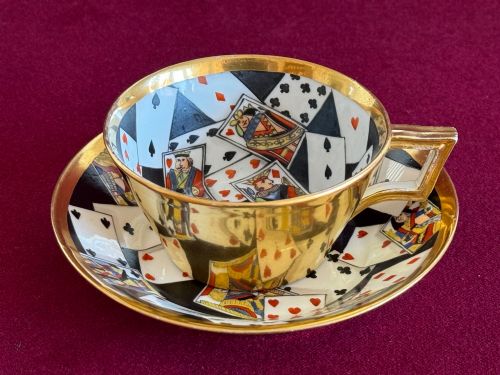
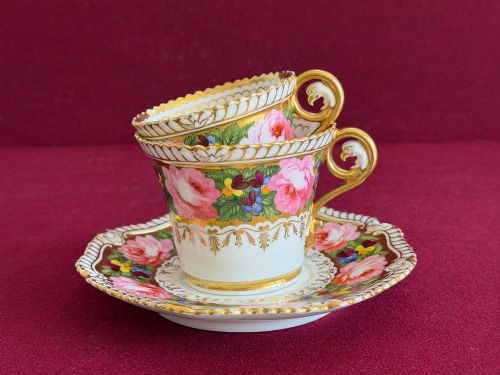
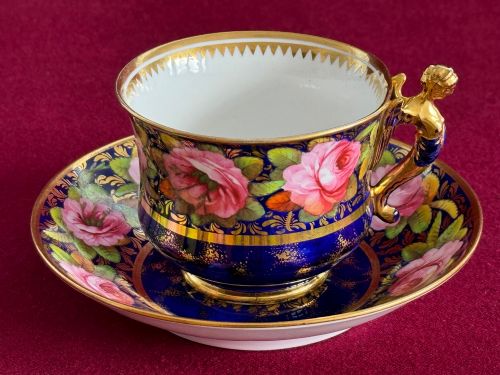
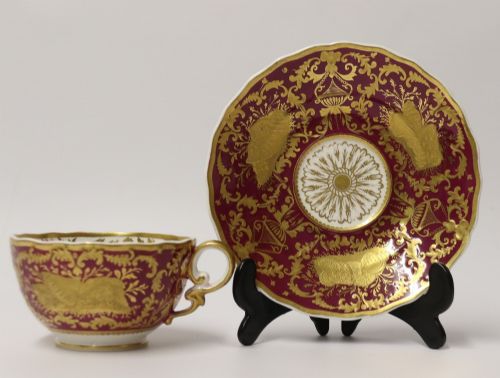
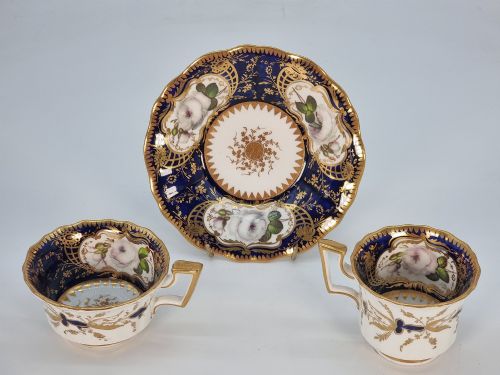
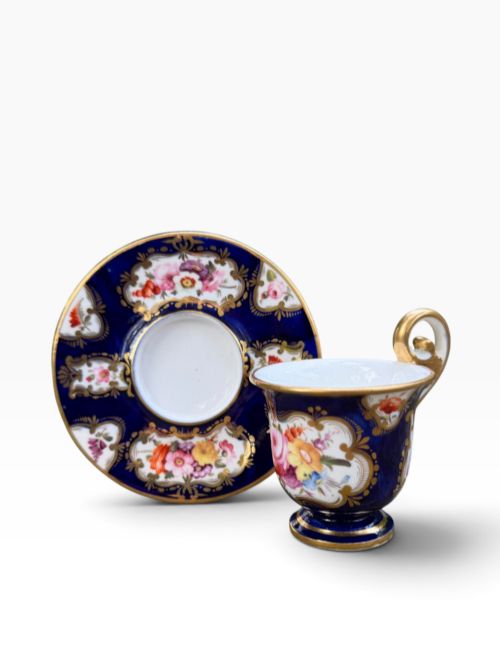
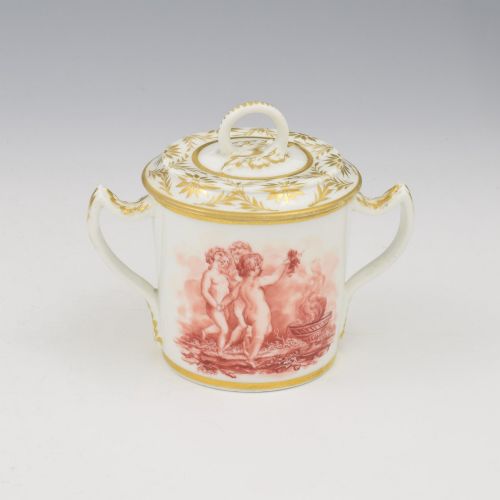
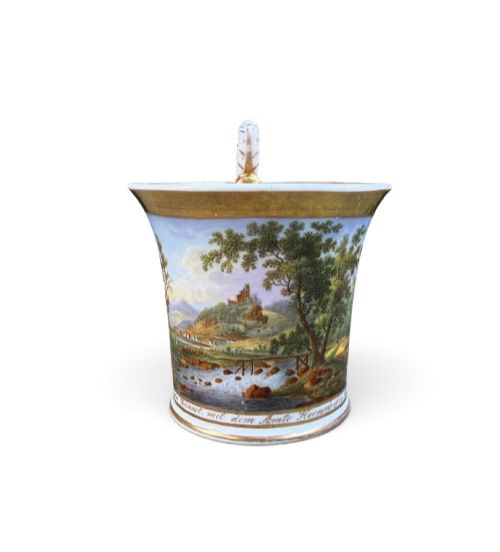
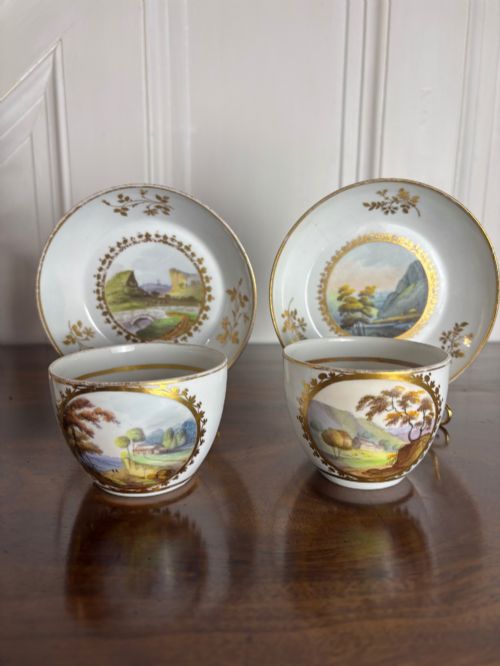
A regency china cup encompasses fine porcelain drinking vessels produced during the Regency, Georgian, and early nineteenth-century periods. These items primarily manifest as teacups and saucers, coffee cans, cabinet cups, and trios designed for formal social dining.
The pieces on this page originate from notable English factories and continental makers, reflecting neoclassical styles alongside ornate handpainted botanical and landscape motifs. Buyers encounter both utilitarian tea sets and decorative cabinet pieces intended for display.
Materials and Manufacture
The creation of these vessels relies on fine porcelain and bone china bodies shaped into classical silhouettes such as coffee cans, handled teacups, and covered chocolate cups. Manufacturers applied smooth glazes to provide a pristine white ground suitable for subsequent decoration.
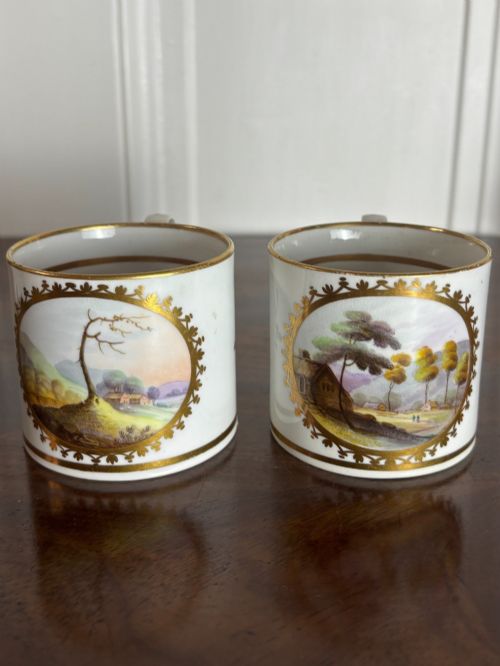
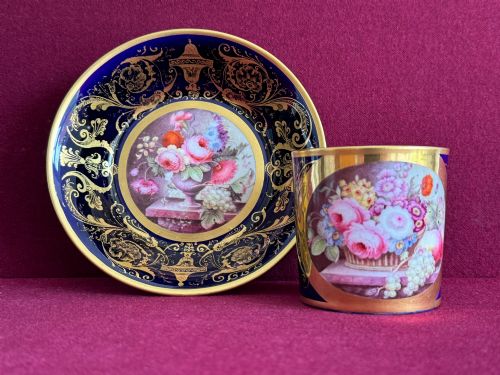
Artisans employed rich gilding with gold leaf alongside vibrant enamel painting to adorn the surfaces. Master decorators executed intricate handpainted scenes, botanical studies, and topographical views directly onto the porcelain body before final firing.
Regency China Cup Retail Price Guide 2026
Typical asking prices for regency china cup among the pieces listed under this phrase on Sellingantiques today, from the lower quarter to the upper quarter. They describe what is for sale here now, not the wider market.
Listings feature porcelain forms from the Regency and Georgian periods, including teacups, coffee cans, and cabinet cups decorated with enamel and gold leaf.
Factors of Quality
The standard of a piece depends heavily on the finesse of the handpainted decoration and the prestige of the maker. Superior examples feature intricate pictorial scenes, such as landscapes or botanical studies by named artists, executed with exceptional precision.
The crispness of the moulding and the application of heavy gold gilding or enamel work further distinguish finer cabinet cups from standard service wares. The presence of specialised forms, such as chocolate cups with covers or lemonade beakers, also elevates the standing of an item.
Spode·Royal Flight Barr And Barr·Duesbury And Kean·Minton·H And R Daniel·Chamberlain Worcester·Newhall·Coalport John Rose·Berlin·Bloor Derby·Mason·Derby Porcelain·Yates·Davenport
The Regency China Cup Glossary
- Cabinet Cup
- A decorative cup intended primarily for display in a cabinet rather than for daily use. These pieces often feature elaborate topographical or figural paintings.
- Coffee Can
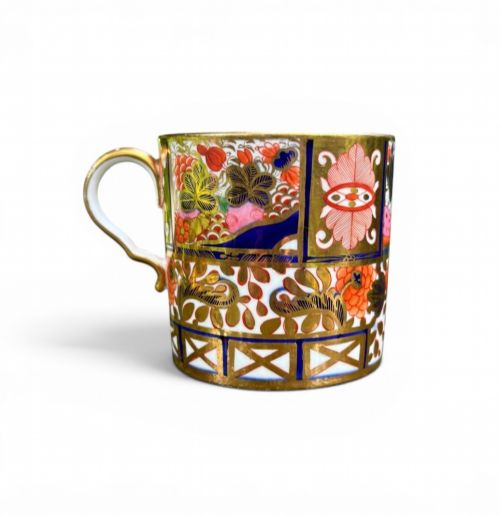
- A straight-sided cylindrical porcelain cup used for serving coffee during the Regency period. They are frequently paired with a matching saucer.
- Trio
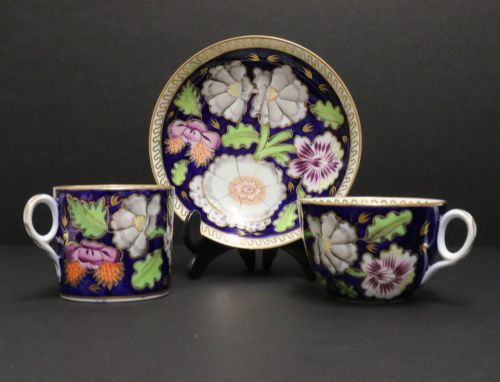
- A matched set consisting of a teacup, a coffee cup, and a matching saucer. This configuration was common in early nineteenth-century porcelain services.
- Gilding
- The application of gold leaf or gold paint to highlight rims, handles, and decorative borders. It adds a lustrous finish characteristic of high-status ceramics.
- Imari
- A decorative style inspired by Japanese export porcelain, featuring a distinctive palette of underglaze blue, iron red, and gold. This style was widely adopted by English factories.
Regency China Cup: Frequently Asked Questions
How were regency china cups used?
These vessels served high-status beverages like tea, coffee, and chocolate during formal morning and afternoon gatherings. Cabinet cups were often kept on display rather than used for drinking.
Their forms reflected the changing social rituals of the early nineteenth century, where distinct cups were designated for specific hot drinks.
How do I care for antique porcelain?
Antique porcelain requires gentle hand washing in warm water with mild soap. Dishwashers and harsh abrasives will damage the delicate enamels and gold gilding.
Store the pieces securely away from direct sunlight and extreme temperature fluctuations to protect the glaze and painted decoration.
Can I use my cup for daily tea?
While these vessels were originally made for dining, most collectors prefer to limit their use to preserve the fragile enamels and gold leaf. Standard wear from modern daily use can easily degrade two-century-old surfaces.
Gentle occasional use is acceptable if handled with extreme care, though many owners restrict them to display.
How do I identify the period?
Dating relies on factory marks found on the base, along with characteristic shapes, paste compositions, and painting styles. Neoclassical motifs and specific pattern numbers often point to the Regency or Georgian eras.
Comparing the handle design and decorative palette with documented factory histories helps narrow down the decade of production.