
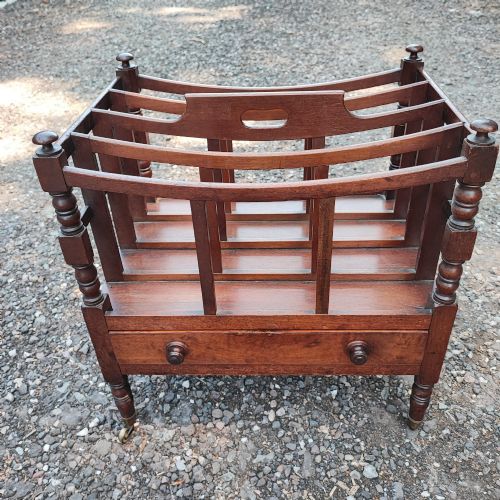
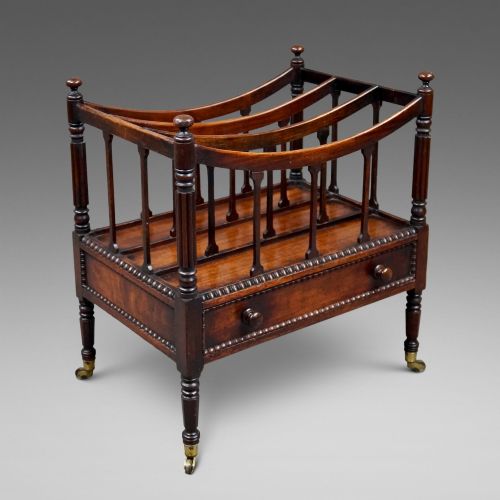
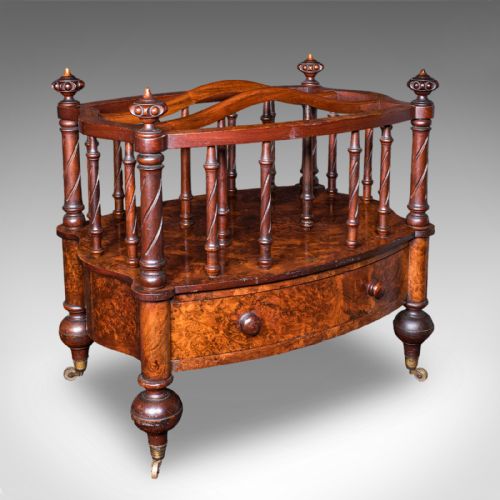


Regency Canterbury Rack
A regency canterbury rack offers a structured home for newspapers, sheet music and folios with low slatted divisions raised on castors.
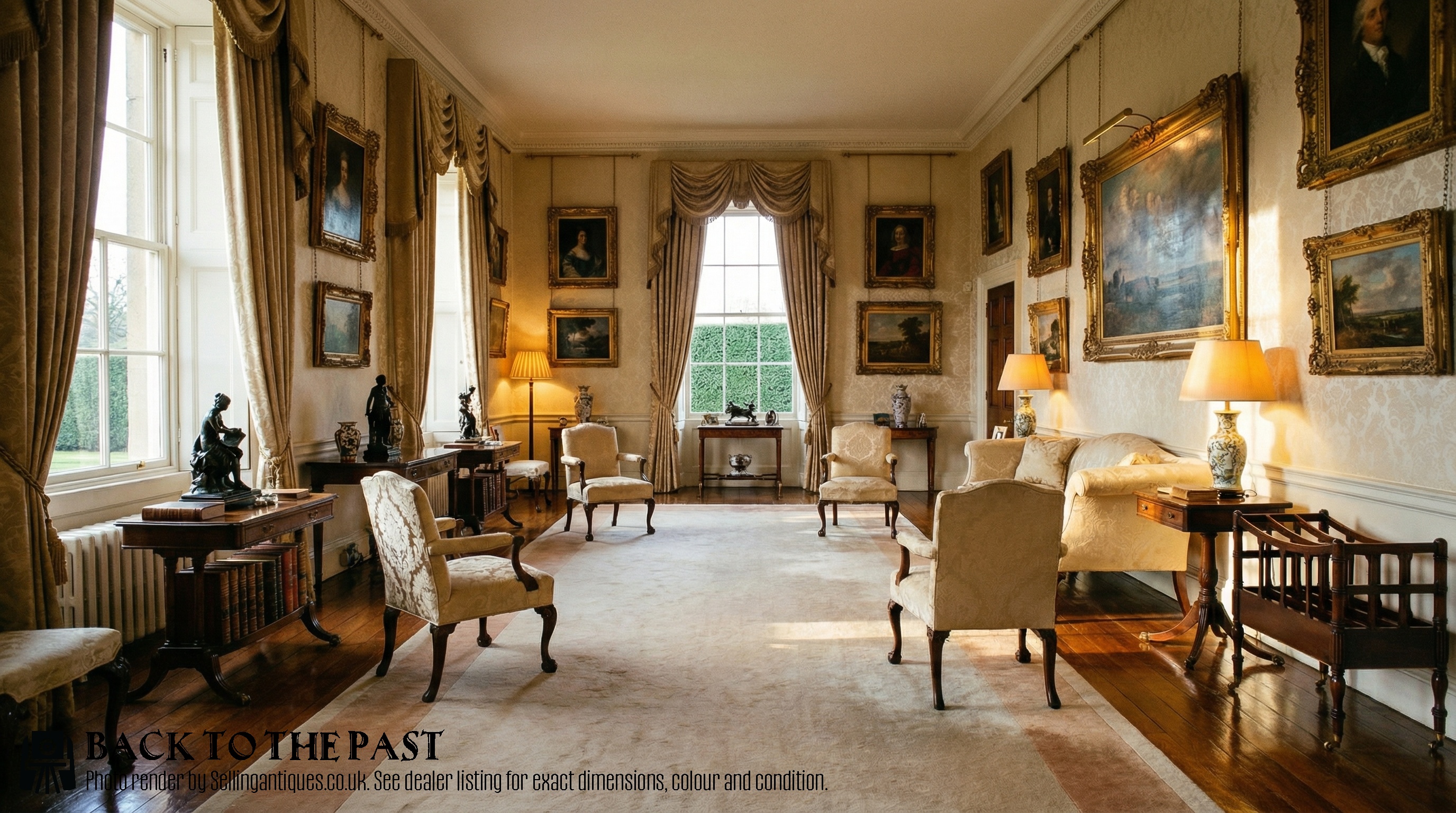
Regency Canterbury Rack
A regency canterbury rack is a low, multi-compartment stand designed for holding periodicals, music sheets and books. The form emerged in the late eighteenth century and remained popular through the nineteenth century, encompassing Georgian, Regency and William IV iterations.
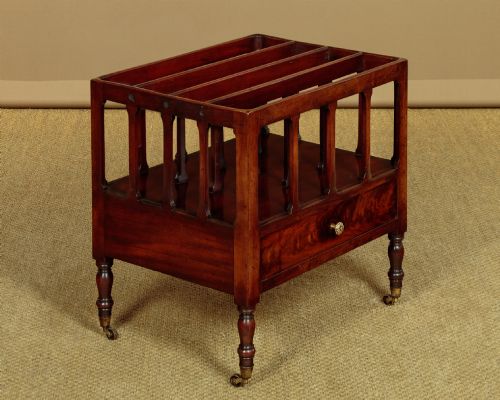
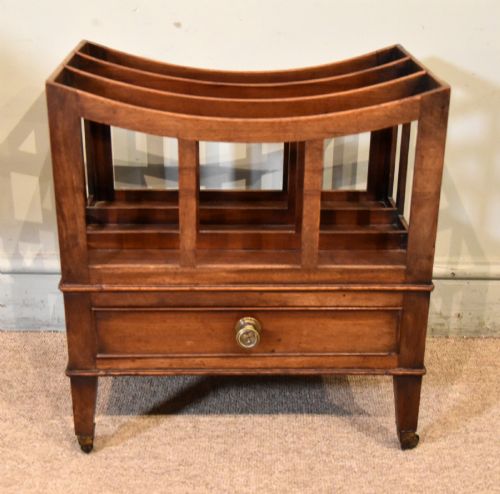
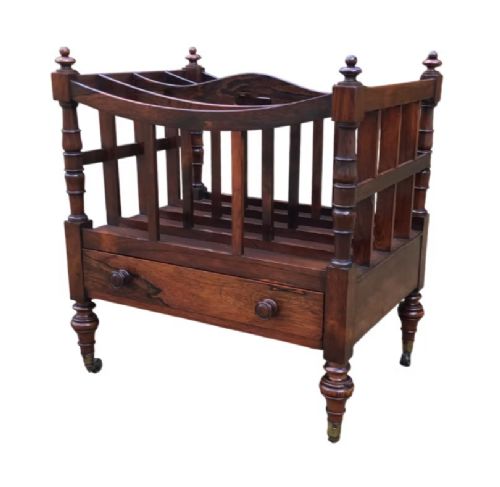
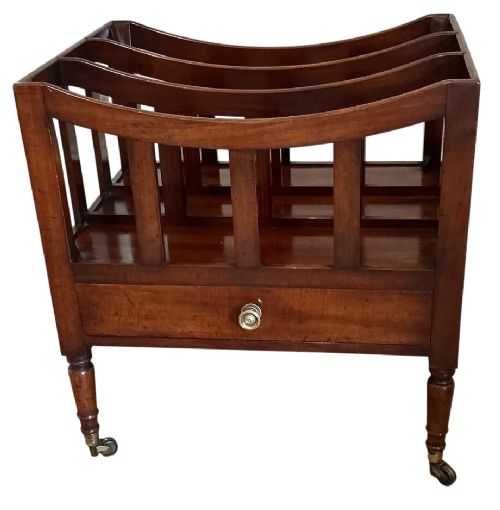
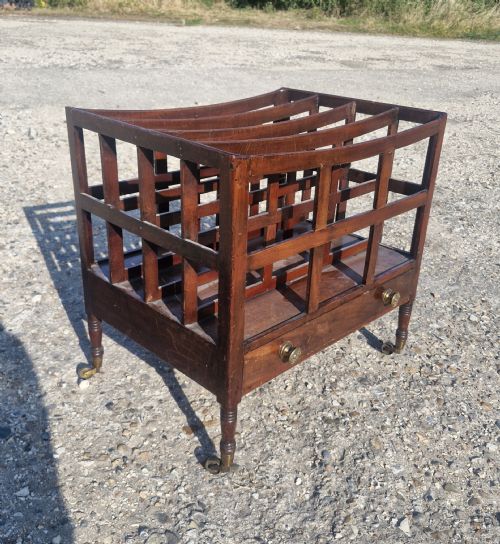
You will most frequently meet mahogany and rosewood examples on this page, often featuring slatted divisions above a single drawer. Boat-shaped designs and pieces resting on turned legs with castors appear regularly across the listings.
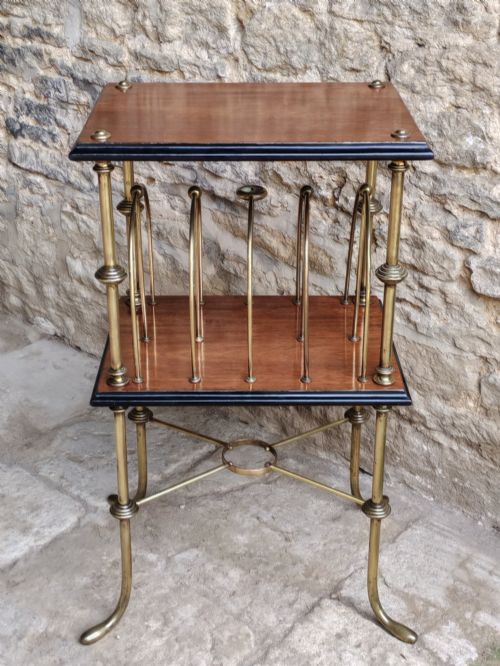
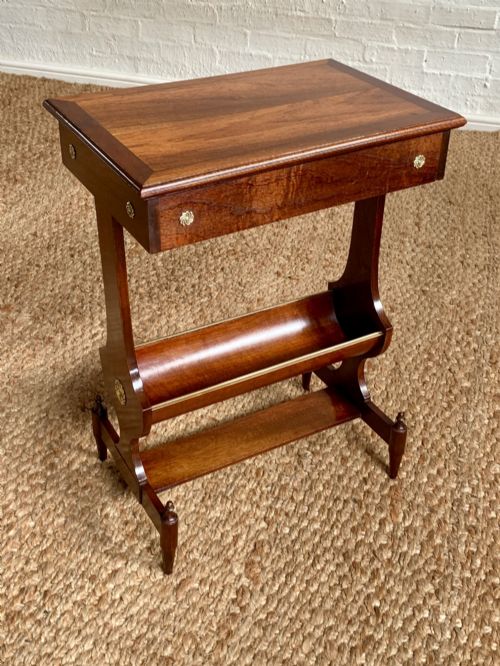
Makers adapted the form for various domestic uses, creating pieces that double as low tables, music stands or small Whatnots. The evidence shows these stands serving country houses and parlours alike as functional furniture.
How they were made
Cabinetmakers constructed these stands primarily in mahogany and rosewood, occasionally utilising burr walnut, Cuban mahogany or ebony banding for contrast. Brass mounts, inlay and carved details such as Prince of Wales feathers ornament the finer frameworks.
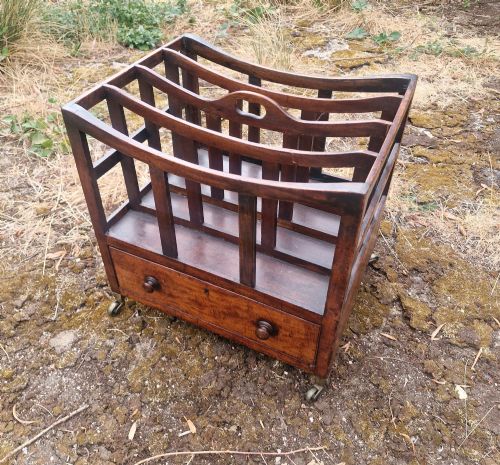
The characteristic vertical divisions are joined to a low base, which frequently incorporates a single drawer beneath the main rack. Turned or carved legs fitted with castors allow the stands to move easily across carpets and floorboards.
Period styles span Georgian, Regency, William IV, Victorian and Edwardian, reflecting continuous production over two centuries.
What varies in quality
The distinction between ordinary and exceptional pieces lies in the choice of timber and the crispness of the joinery. Dense Cuban mahogany or well-figured rosewood paired with refined brass casters elevates a standard rack into a distinguished piece of furniture.
Proportion and decorative restraint dictate the visual success of the stand. Pieces displaying balanced boat-shaped profiles, subtle inlay or carved accents demonstrate superior craftsmanship from their period.
The Regency Canterbury Rack Glossary
- Canterbury
- A low stand with divisions for holding sheet music, newspapers or magazines. The name supposedly derives from an archbishop who requested such a stand for his dining room.
- Folio
- A large sheet of paper folded once, or a book made from such sheets. Folio stands accommodate these oversized items in deep compartments.
- Whatnot
- An open set of freestanding shelves used for displaying ornaments or books. Examples in the evidence combine this form with a lower rack.
- Castor
- A small wheel fitted to the foot of a piece of furniture for ease of movement. Most stands utilise brass castors on turned legs.
- Inlay
- Material embedded into a contrasting background to form a decorative pattern. Ebony banding serves this purpose on certain mahogany stands.
Regency Canterbury Rack: Frequently Asked Questions
What was a canterbury rack originally used for?
These stands were designed to hold loose sheets of music, newspapers and folios close to a seating area or instrument. They kept reading materials organised and accessible in drawing rooms and parlours.
Over time, owners repurposed them for modern magazines and journals while retaining their original function as mobile tidies.
How do I distinguish a Regency canterbury from later copies?
Authentic period pieces display traditional cabinetmaking methods, such as hand-cut joints and native or colonial hardwoods appropriate to the era. The timber patination and wear patterns on the feet offer reliable indicators of age.
Later revival pieces often show different internal construction details and machine-finished secondary woods that distinguish them from nineteenth-century originals.
Can I use an antique canterbury for modern magazines?
The slatted divisions accommodate contemporary periodicals, newspapers and art books quite naturally. Their sturdy construction handles daily domestic use without difficulty.
Placing them beside a sofa or armchair preserves their traditional role while serving a practical purpose in a modern room.
Why do some canterburys have drawers?
The integrated drawer provided secure storage for smaller items such as bookmarks, writing implements or sheet music indexes. It balances the open upper framework with enclosed compartment space.
This addition turns the stand into a more versatile piece of occasional furniture for the parlour.