



Regency Caned Bergere
A regency caned bergere is a deeply comfortable library armchair built for long hours of reading.
Regency Caned Bergere
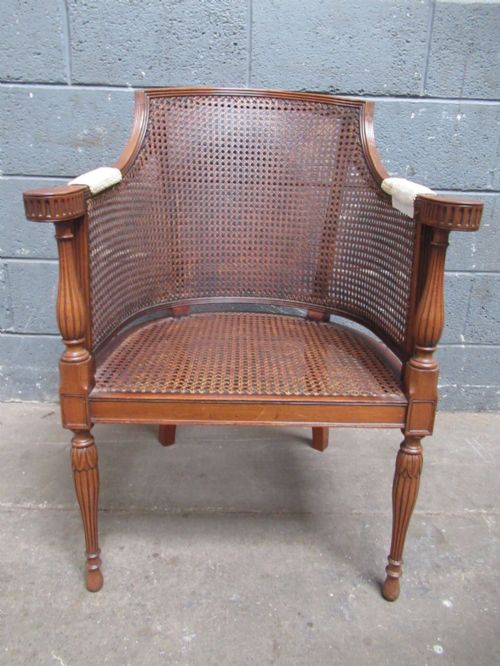
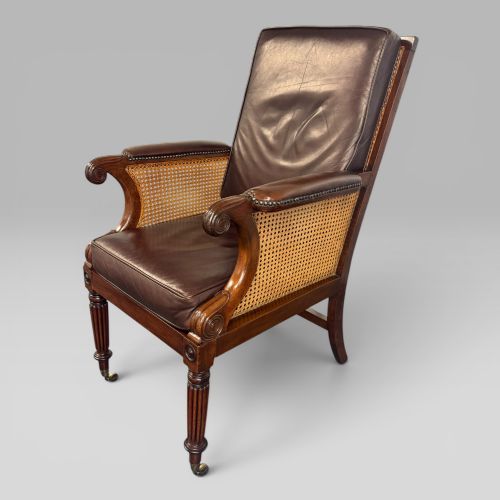
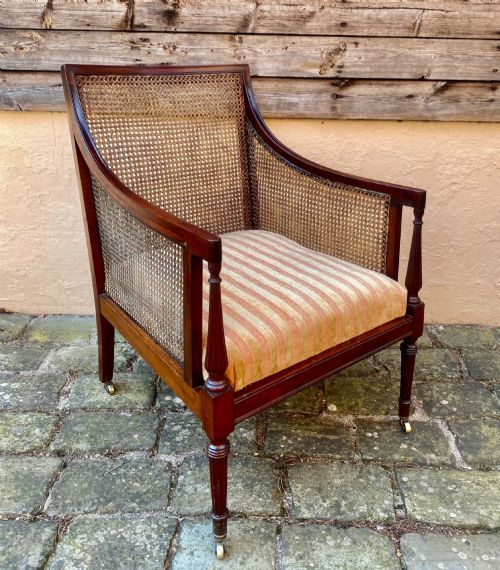
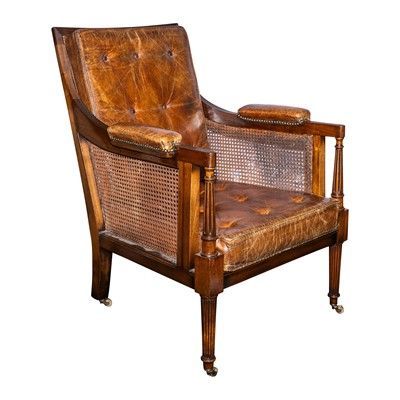
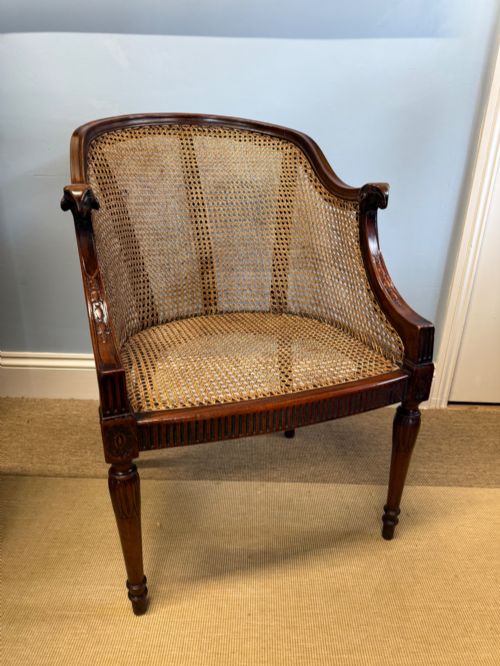
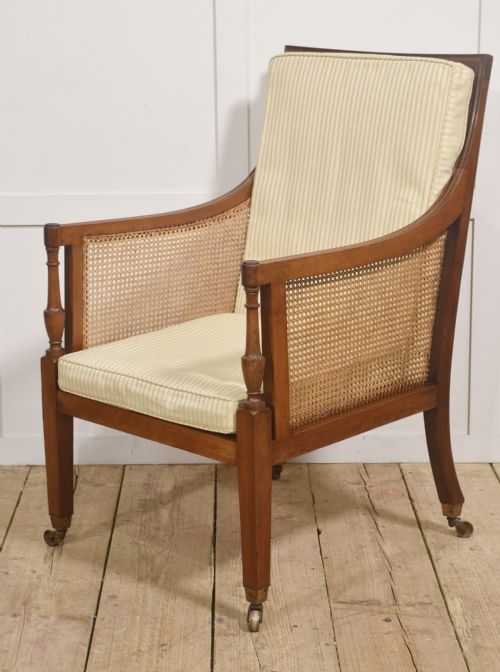
When you search for a regency caned bergere, you encounter deep-seated library armchairs designed with enclosed sides and woven panels. The pieces on this page span the Regency period itself alongside later revivals, William IV examples, and Edwardian or early twentieth-century interpretations.
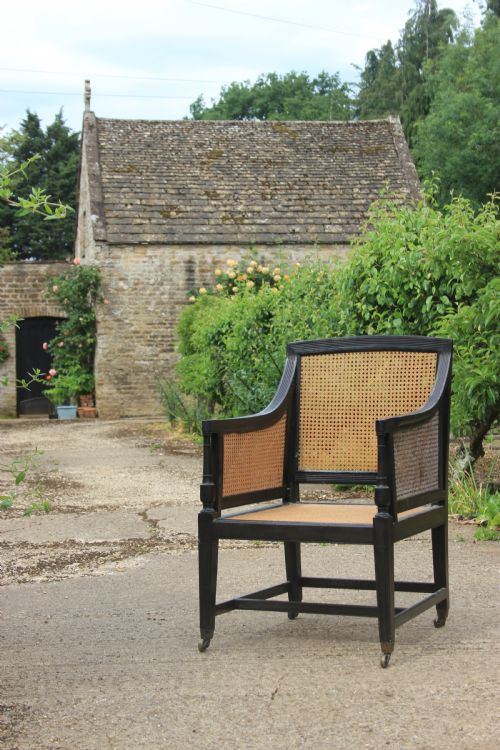
Most examples appear in mahogany, whilst others employ rosewood, simulated rosewood, ebony, and painted finishes. Alongside standard library armchairs, the forms include tub shapes, side chairs, childs armchairs, and window seats with caned seats.
How they were made
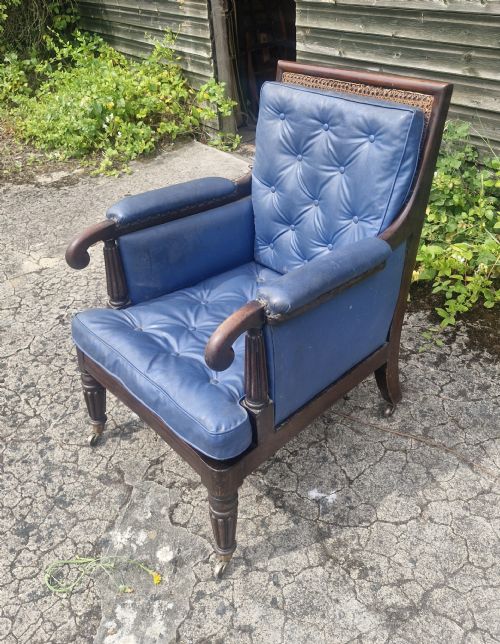
Cabinetmakers constructed the frames using timbers such as mahogany, rosewood, and ebony, frequently turning to simulated or faux rosewood graining techniques. Brass details and leather upholstery occasionally supplement the primary timber structures.
Caning and rattan cane provide the flexible woven panels for the back and sides, whilst drop-in or loose cushions in leather, velvet, and fabric complete the seating arrangement.
Smaller readers are accommodated through miniature childs armchairs built with the exact same caned bergere details as full-sized library seats.
What varies in quality
The distinction between ordinary and exceptional pieces rests upon the crispness of the timber carving and the fidelity of the proportions. Generous library proportions and well-drawn framing elevate certain armchairs significantly above standard production.
Attributions to notable workshops, alongside the survival of original decorative surfaces like ebonising and faux rosewood painting, separate everyday furniture from collector pieces.
Gillows
The Regency Caned Bergere Glossary
- Bergere
- A closed-sided upholstered armchair originating in France, featuring woven cane panels on the back and arms. It provides a lighter alternative to solid wood seating.
- Caning
- A traditional weaving technique utilising split rattan cane to create porous, supportive panels for chair backs and seats. This method offers both flexibility and ventilation.
- Simulated rosewood
- A painted or stained finish applied to a secondary timber to imitate the rich grain and colour of genuine rosewood. Cabinetmakers utilised this technique during the Regency era for decorative effect.
- Klismos chair
- An ancient Greek chair form revived during the Regency period, characterised by curved legs and a sweeping concave backrest. These chairs occasionally incorporate woven seats.
- William IV
- A British design period spanning the 1830s, noted for heavy, robust proportions and solid mahogany construction. Furniture from this era follows closely upon Regency styles.
Regency Caned Bergere: Frequently Asked Questions
What is a bergere chair?
A bergere chair is a deep, enclosed armchair featuring woven cane panels along the back and sides. It was designed primarily for domestic reading and library use.
These seats typically require a loose squab cushion for comfort, upholstered in leather, fabric, or velvet to complement the timber frame.
How do I spot a Regency period chair?
Regency chairs display distinct classical influences drawn from Greek and Roman design, often utilising mahogany, rosewood, or ebonised finishes. Proportions tend to be generous and well-drawn.
Later revival pieces from the Edwardian era or the twentieth century imitate these exact classical lines, making timber analysis and construction methods essential for dating.
Were these chairs used in libraries?
Library armchairs formed a core part of nineteenth-century domestic seating, offering deep seats and enclosed sides to block draughts. They were built for extended periods of study and reading.
Their robust timber frames and supportive caned panels made them practical furnishings for quiet study spaces.
What is simulated rosewood?
Simulated or faux rosewood is a decorative painted finish applied by craftsmen to substitute for expensive tropical hardwoods. Artisans carefully brushed secondary timbers to mimic distinctive grain patterns.
This technique allowed Regency cabinetmakers to achieve a fashionable dark, exotic aesthetic without utilising solid rosewood throughout the entire frame.