



Regency Burr Wood Table
A regency burr wood table brings extraordinary grain and warm tone to a room, offering both practical surface space and a rich focal point.
Regency Burr Wood Table
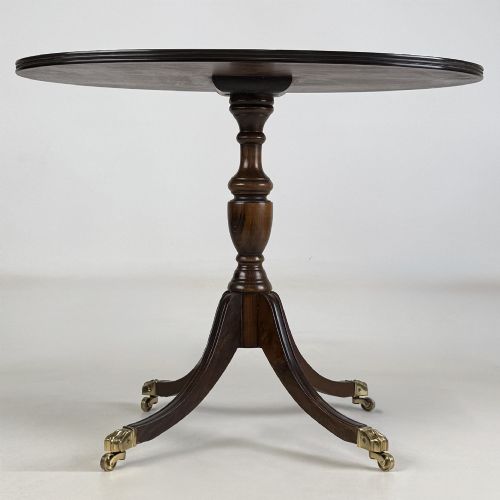
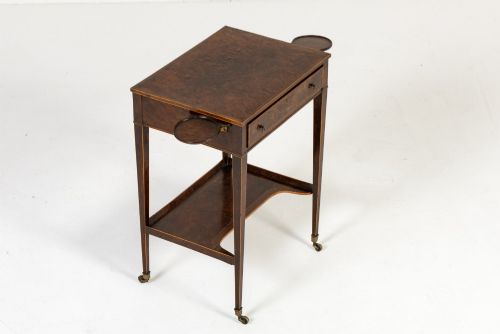
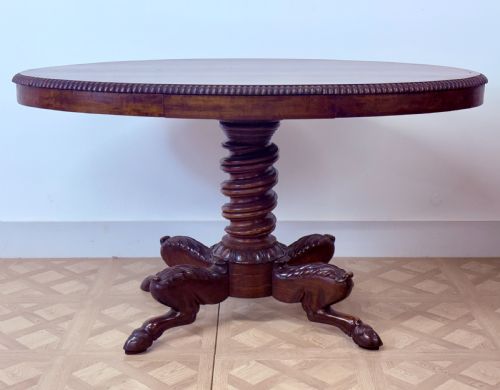
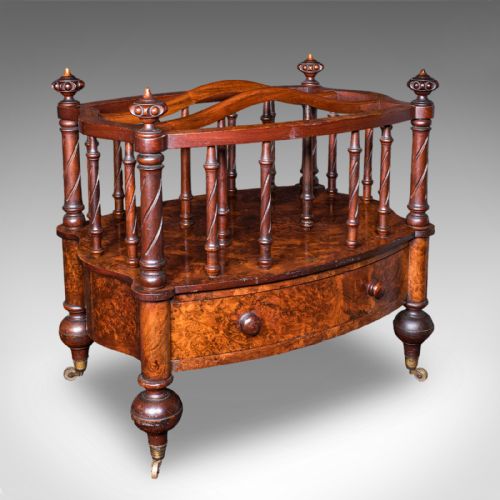
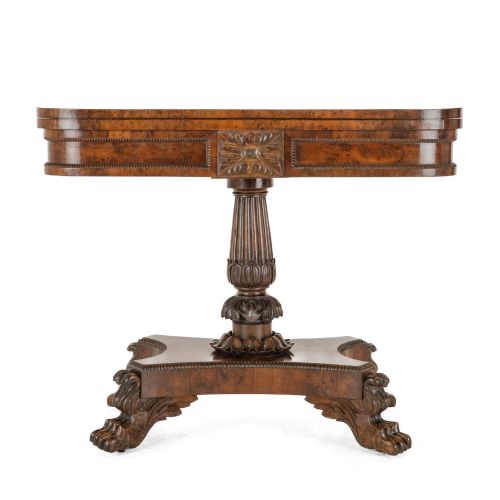
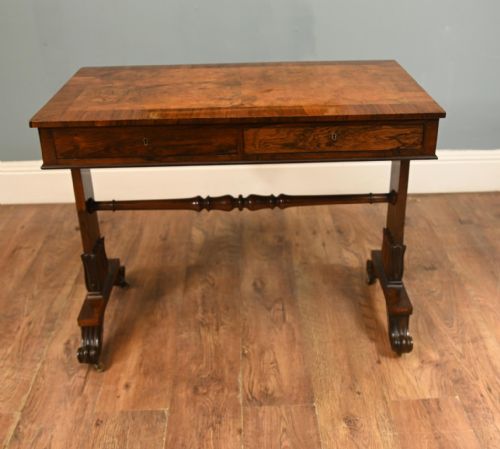
The pieces on this page lean heavily into the Regency era and the nineteenth century, alongside later Georgian pieces and subsequent revivals. You are most likely to meet circular occasional tables, pedestal centre pieces, and fold-over card tables displaying the distinctive swirling patterns of burr veneers.
Cabinet makers utilised these dramatic timbers for domestic settings where social display mattered, creating versatile surfaces for lamps, writing, or cards. Their enduring appeal lies in the tension between classical architectural proportions and the wild, organic movement of the timber growth.
Materials and construction
The maker selected timber taken from the excrescences or burls of trees, yielding dense, turbulent grain patterns that required expert sawing into thin veneers. These delicate slices were then laid down over stable secondary woods like mahogany or pine to prevent warping.
Makers reinforced structural stability in pedestal and tripod bases using solid timbers such as mahogany or oak, often adding brass fittings, castors, or subtle marquetry and boxwood stringing. French polishing built up a deep, protective gloss that intensified the natural amber and brown tones of the burr figures.
The listings on this site record burr variations including yew, walnut, elm, maple, and oak across periods from the Georgian era to the 1930s.
Markers of distinction
The visual punch of a piece depends entirely on the density and symmetry of the burr figuring across the primary surfaces. Superior examples display uninterrupted sheets of matched veneer with minimal patching, whereas lesser pieces show disjointed grain patterns or heavy modern refinishing.
Construction integrity separates workshop production from standard output, evident in the crispness of turned pedestal columns, the smooth action of secret drawers or card table pivots, and the retention of original brass hardware. Attribution to known makers or documented regional traditions elevates the standing of a piece considerably.
George Bullock·William Trotter
The Regency Burr Wood Table Glossary
- Burr wood
- Timber harvested from tree growths containing clustered bud knots, producing highly ornamental swirling patterns. This material was sliced into veneers for decorative furniture surfaces.
- Card table
- A folding table designed for evening games, featuring a hinged top that opens to reveal a baize-lined playing surface. Many examples include internal wells for storing counters.
- Centre table
- A freestanding piece finished on all sides so it could sit in the middle of a room rather than against a wall. These often stood on central pedestals with tripod or platform feet.
- Teapoy
- A small stand or box on legs originally designed to store loose tea leaves under lock and key. Later variants served more general occasional functions.
- Sofa table
- A rectangular occasional table designed to stand in front of a sofa, typically fitted with drop leaves and small drawers. They often incorporate double pedestal supports or trestle ends.
Regency Burr Wood Table: Frequently Asked Questions
How do I care for a burr table?
Protect the polished surface from direct sunlight, excessive heat, and moisture by using coasters and mats. Dust regularly with a soft, dry cloth rather than applying silicone-based polishes.
Maintaining stable room humidity prevents the underlying timber from expanding or contracting, which helps keep the delicate veneer secure.
Are these tables sturdy enough for daily use?
Most examples are structurally robust, having survived two centuries of domestic life through sound cabinet-making techniques. Tripod and pedestal designs distribute weight effectively for normal surface tasks.
However, care should be taken with folding mechanisms on card tables and drop leaves to avoid straining historic hinges and joints.
How do I identify a Regency period table?
Regency pieces typically display classical architectural motifs, such as reeded columns, brass paw feet, sabre legs, and crisp geometric proportions. The use of exotic veneers like burr yew and rosewood reflects the taste of the early nineteenth century.
Examining the secondary woods, fixings, and construction methods helps distinguish genuine period pieces from later Edwardian or twentieth-century revivals.