


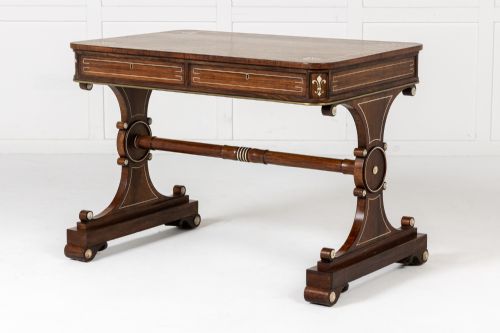


Regency Brass Inlaid Sofa
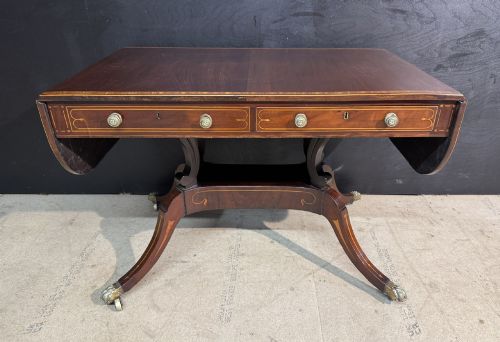
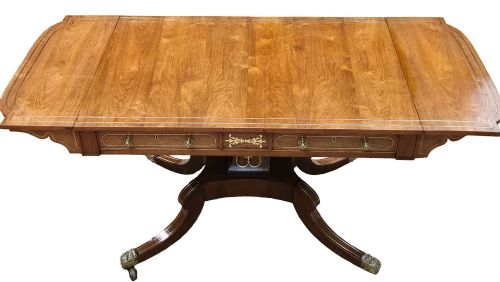
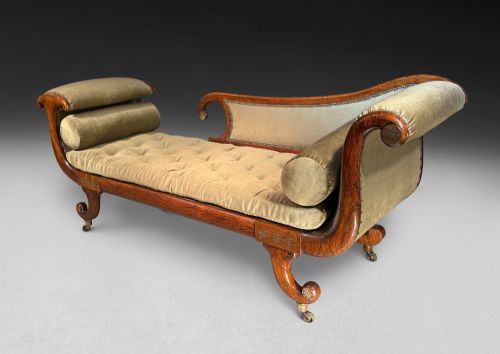
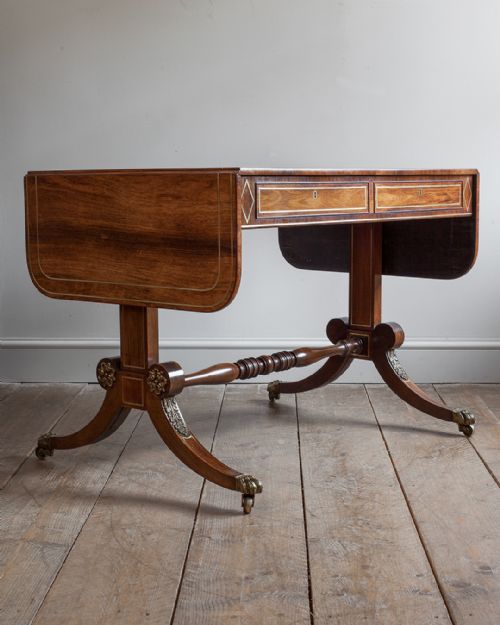
These pieces are a regency brass inlaid sofa, embodying the elegant proportions and precise metalwork characteristic of the early nineteenth century.
Regency Brass Inlaid Sofa
A regency brass inlaid sofa stands as a refined expression of early nineteenth-century cabinet-making, combining comfortable seating with meticulous decorative metalwork. Collectors seeking this specific form will frequently encounter drop-leaf tables bearing similar brass inlay alongside actual seating pieces from the Regency and Georgian periods.
The surviving examples range from compact scroll-end sofas to larger library and sofa tables utilising rosewood and mahogany. These forms were designed to sit freely within a room, often featuring twin pedestals or sabre legs terminating in brass castors.
The prevailing aesthetic reflects the classical tastes of the Regency and George III eras, where dark tropical timbers provided a strong contrast for bright brass enrichment. Buyers examining this page find pieces that served central functions in fashionable nineteenth-century interiors.
Materials and construction methods
Cabinet-makers of the period selected dense exotic timbers such as rosewood and mahogany as the primary ground for these pieces, occasionally incorporating coromandel or kingwood. These woods were often veneered onto solid secondary framing to achieve stability and rich surface figures.
Brass inlay and mountings were meticulously hand-cut and channelled directly into the wood surface, sometimes complemented by ebony stringing and boxwood details. This metalwork required exceptional precision from the artisan to sit flush with the surrounding timber grain.
Structural elements frequently included turned or reeded pillars, supported on platform bases with brass paw feet. Leather inserts also appear on related writing surfaces, finished with blind tooling.
Listings feature extensive use of rosewood paired with brass inlay across tables and seating from the Regency period.
Distinctions in craftsmanship and design
The refinement of the brass inlay work dictates much of the distinction between standard production and superior examples. Sharply chiselled brass motifs that remain completely tight within their channels demonstrate a higher order of workshop skill than wider, filled joints.
Timber selection further separates the output, with highly figured rosewood veneers and well-matched grain patterns marking out pieces intended for elite patronage. The architectural harmony of the frame, from the turning of the pedestals to the sweep of the scroll ends, determines the overall elegance.
Attribution to documented makers or workshops elevates certain pieces, though unsigned examples still display the structural integrity and proportion expected of the period.
John McLean·George Bullock·Marsh & Tatham·Gillow Lancaster·Edwards & Roberts·George Oakley
The Regency Brass Inlaid Sofa Glossary
- Sofa Table
- A freestanding table with drop leaves on either side, originally designed to stand in front of a sofa. They typically feature two drawers and sturdy end supports.
- Brass Inlay
- The technique of embedding thin sheets or strips of brass into routed channels within wood. It creates geometric or classical decorative patterns across the surface.
- Rosewood
- A dense, dark timber with distinct figuring, widely utilised during the Regency period. Its deep colour provides a strong visual contrast against polished brass work.
- Scroll End
- A curving structural termination shaped like a rolled scroll. This outline appears frequently on the arms of sofas and the supports of tables.
- Sabre Leg
- A curved, outwardly tapering furniture leg with a rounded or rectangular section. It is characteristic of Regency seating and small tables.
Regency Brass Inlaid Sofa: Frequently Asked Questions
How do I identify a genuine Regency piece?
Authentic Regency pieces typically exhibit timber construction methods consistent with the early nineteenth century, including hand-cut dovetails and native secondary woods. The brass inlay should show precise hand-chiselling rather than modern mechanical routing.
Proportions remain classically balanced, reflecting the design books of the period. Examining the underside and drawer linings often reveals the tool marks characteristic of nineteenth-century workshop production.
Where should I place a sofa table?
These tables are designed to be freestanding, making them well-suited to sit behind a sofa or in the centre of a room. Their finished backs and drop leaves allow them to function effectively in open spaces.
They also serve well along hallways or as writing surfaces in a library. The hinged leaves provide flexibility for adjusting the surface area to the room.
How do I care for brass inlaid rosewood?
Keep the wood conditioned with appropriate paste wax to maintain the moisture of the rosewood veneer. Avoid excessive exposure to direct sunlight, which can fade tropical timbers and dry out the grain.
Polish the brass gently with a soft cloth, taking care not to abrading the surrounding timber or loosen the flush fit of the metal. Standard liquid polishes should be kept away from the wood interface.
What is the difference between Regency and Georgian styles?
Georgian furniture generally spans the eighteenth century through the early reign of George III, often emphasising solid mahogany with carved classical motifs. The Regency period represents the early nineteenth century, leaning towards lighter, more archaeological inspirations derived from Greek and Roman design.
Brass inlay and simulated rosewood finishes become much more prominent during the Regency era. The overall silhouettes also shift toward cleaner, linear structures supported by sabre legs or pedestals.