

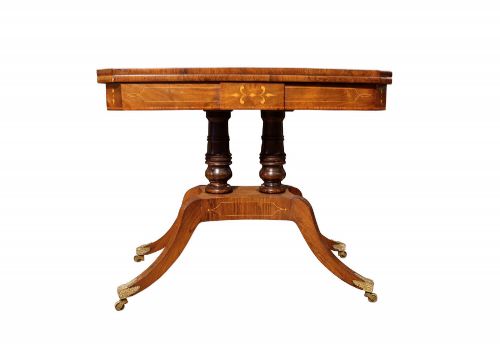
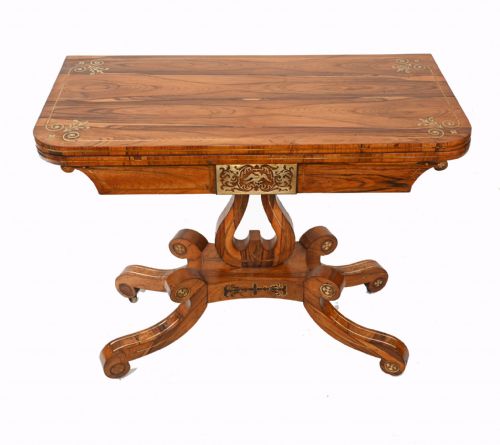
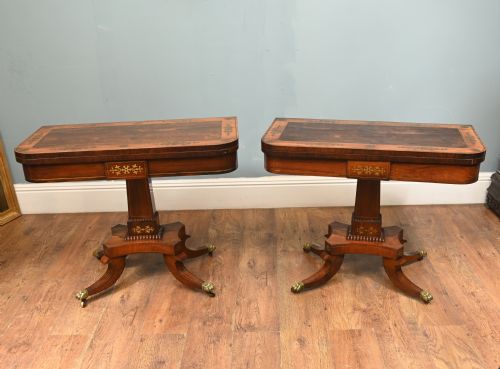


Regency Brass Inlaid Card Table
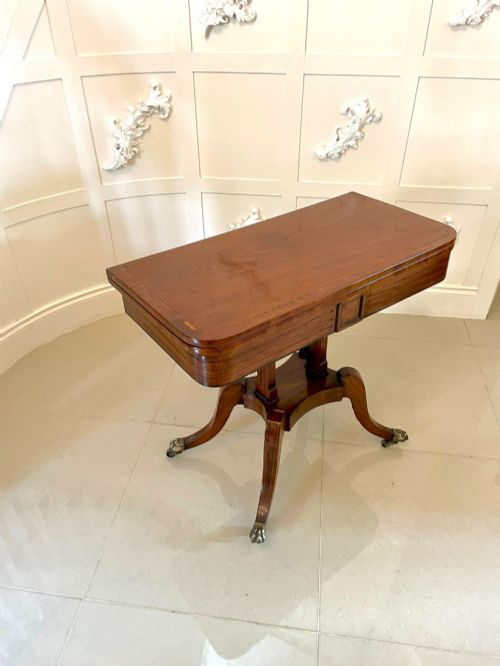
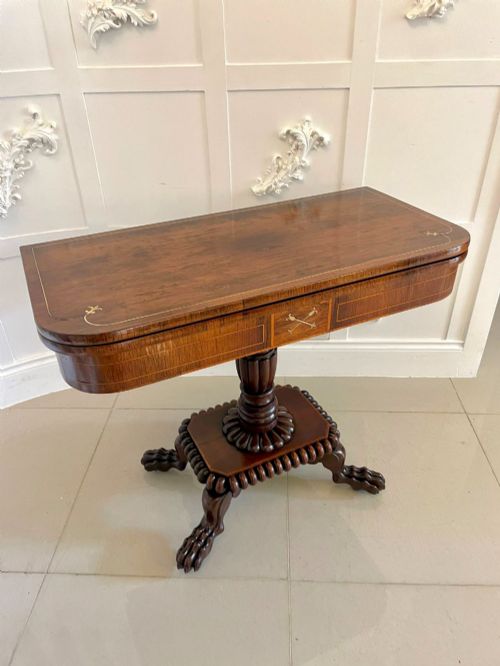
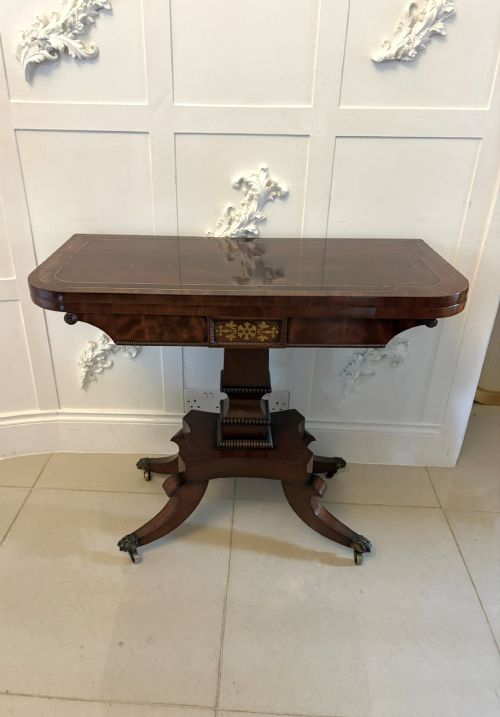
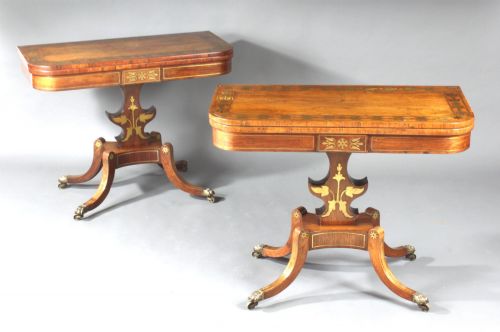
A regency brass inlaid card table combines precise metalwork with rich timbers like rosewood and mahogany to create a centrepiece for social evenings.
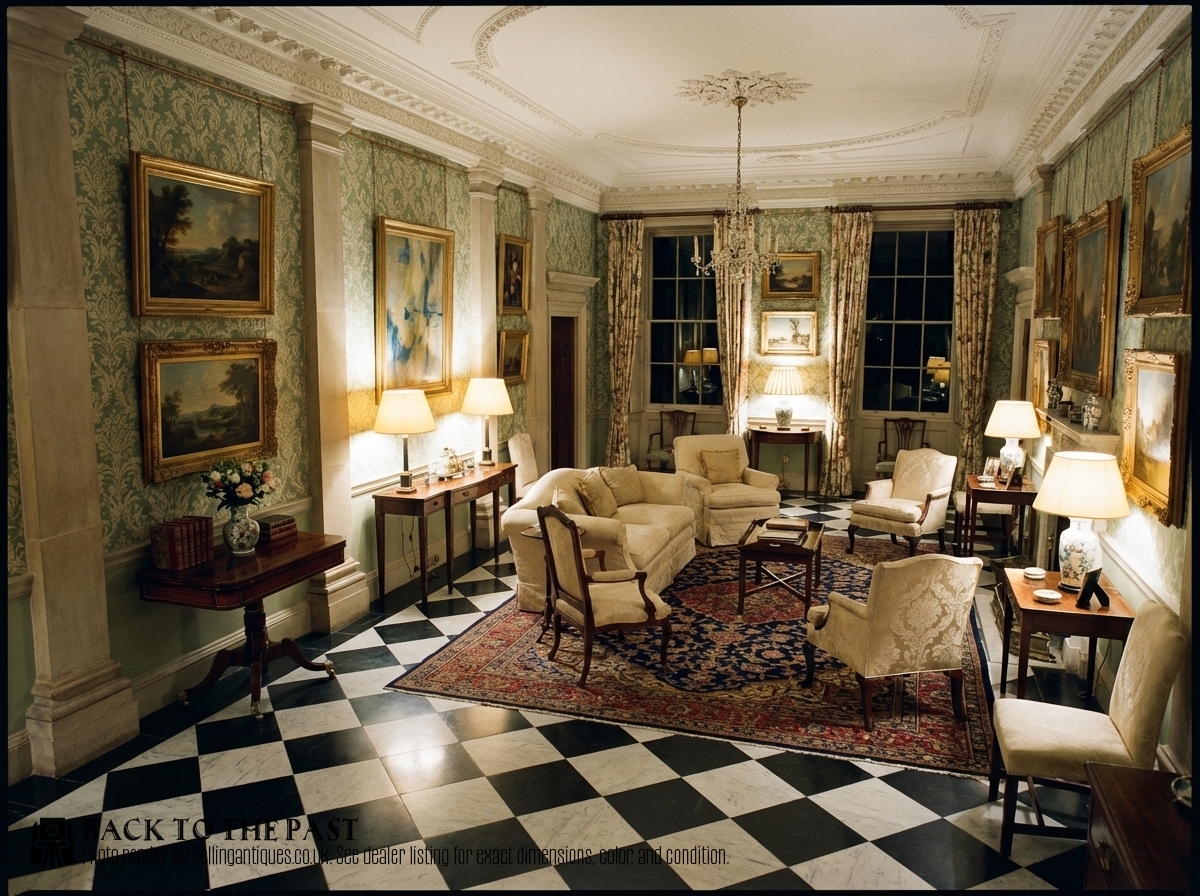
Regency Brass Inlaid Card Table
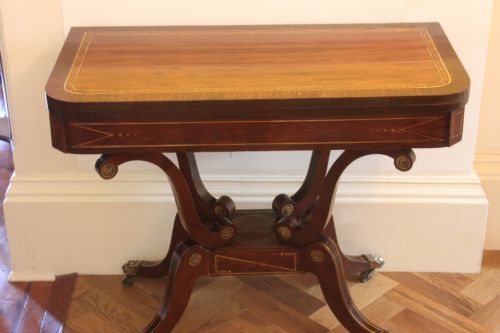
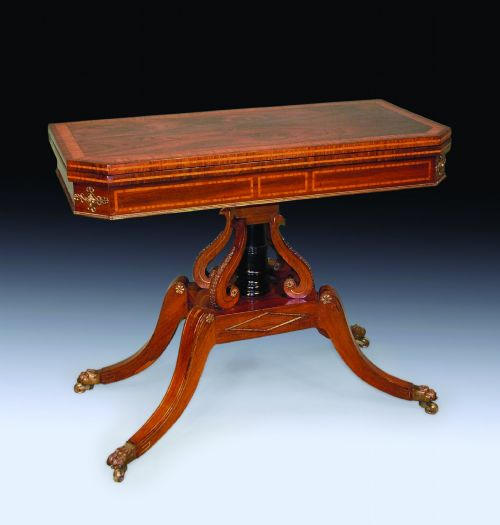
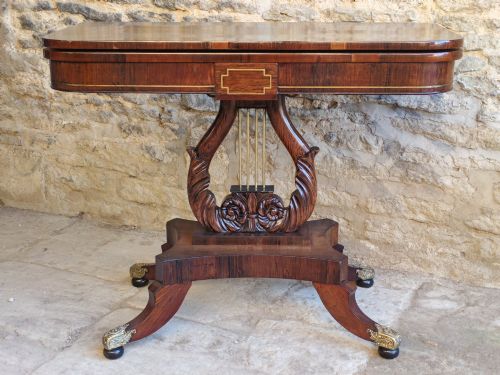
Rosewood and mahogany form the primary structural timbers, frequently decorated with contrasting brass inlay arranged in classical or geometric patterns. Buyers most commonly encounter D-shaped or rectangular formats supported by pedestal bases, scroll feet, or lyre supports.
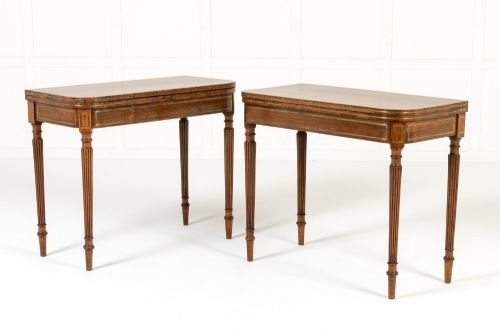
The assortment includes individual tables as well as matched pairs, incorporating related forms such as tea tables and games tables. Their origins tie closely to English workshops of the Regency era, though occasional pieces show distinct regional variations.
How they were made
Cabinet makers utilised dense tropical hardwoods like rosewood and mahogany as foundations for fine veneers, applying contrasting timbers such as satinwood, ebony, and boxwood for decorative borders. Brass inlay was meticulously channelled into the timber surface alongside cast or gilt metal mounts.
Structural stability relied on robust pedestal columns or turned legs fitted with brass sabots and castors for mobility. Fold-over tops required precise wooden hinges and pivoting mechanisms to support the weight of the dual-leaf top during use.
Listings demonstrate a strong preference for rosewood structures paired with contrasting brass inlay across the Regency period.
What varies in quality
The precision and complexity of the brass inlay distinguish standard workshop production from master cabinet work, with finer pieces incorporating delicate foliate motifs and stringing. The choice of timber grain, particularly figured rosewood or plum pudding mahogany, dictates the visual depth of the surface.
Construction details such as the integration of the pedestal base, the quality of the cast brass sabots, and the crispness of any carved elements reveal the original maker's investment of time and skill.
George Bullock·George Oakley·John McLean
The Regency Brass Inlaid Card Table Glossary
- Fold over top
- A hinged tabletop design that doubles the surface area when opened for card games or tea. It sits flat against the base when closed for use as a side table.
- Brass inlay
- Fine strips or cut brass ornaments flush-set into channels carved within the wooden surface. This technique creates geometric or classical decorative patterns.
- Sabot
- A protective brass or gilt metal fitting applied to the base of furniture feet. They often incorporate castors to allow smooth movement across carpets.
- Lyre pedestal
- A central table support shaped in the form of an ancient Greek lyre instrument. It provides a stable base while maintaining an open silhouette.
- Baize
- A coarse woollen fabric traditionally used to line the playing surface of card and games tables. It provides a soft, non-slip texture for handling cards.
Regency Brass Inlaid Card Table: Frequently Asked Questions
How were card tables used originally?
These tables remained closed against the wall as decorative console or side tables during the day. When guests arrived for evening entertainment, the top unfolded to reveal a baize surface for card games.
After play concluded, the tables folded back and served as a focal point for holding lamps or small decorative objects.
How do I care for a rosewood surface?
Keep wooden surfaces away from direct sunlight and strong heat sources to prevent the rosewood veneers and brass inlay from drying out. Regular dusting with a soft, dry cloth maintains the finish without needing harsh polishes.
Apply a microcrystalline wax occasionally to nourish the timber and protect the brass elements from tarnishing.
How can I tell a Regency table from a Georgian one?
Regency pieces often display bolder use of brass inlay, exotic woods, and classical architectural motifs inspired by ancient Greece and Rome. They frequently feature central pedestal columns rather than four distinct corner legs.
Georgian examples tend to lean towards mahogany structures with more restrained decoration, though stylistic overlaps occur frequently in pieces bridging the turn of the century.
Can I use a card table every day?
Daily use is entirely practical provided the hinges and pivoting top mechanisms are handled with care. Avoid placing excessive weight on the open leaf, as the unsupported half relies on the rotating action rather than structural legs.
Using coasters and mats protects the polished timber and delicate brass work from accidental moisture or scratching.