
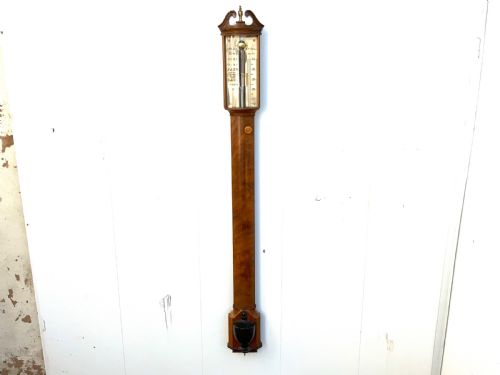
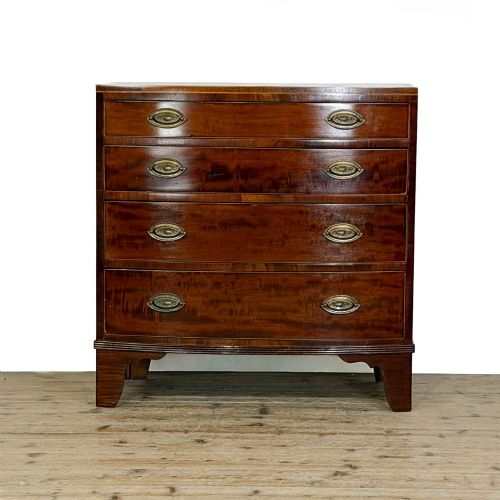
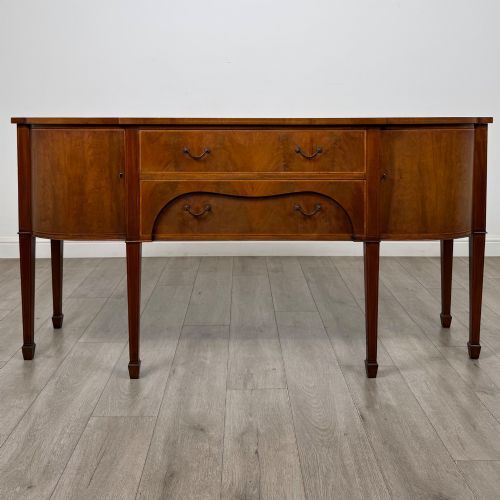
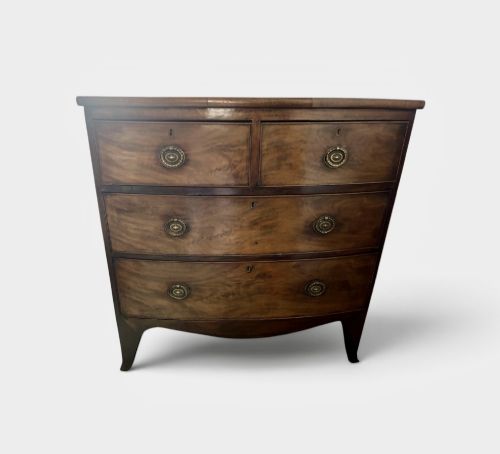
Regency Bow Front
A regency bow front piece brings a curved profile and rich timber tones to a room, offering practical storage with distinct period elegance.
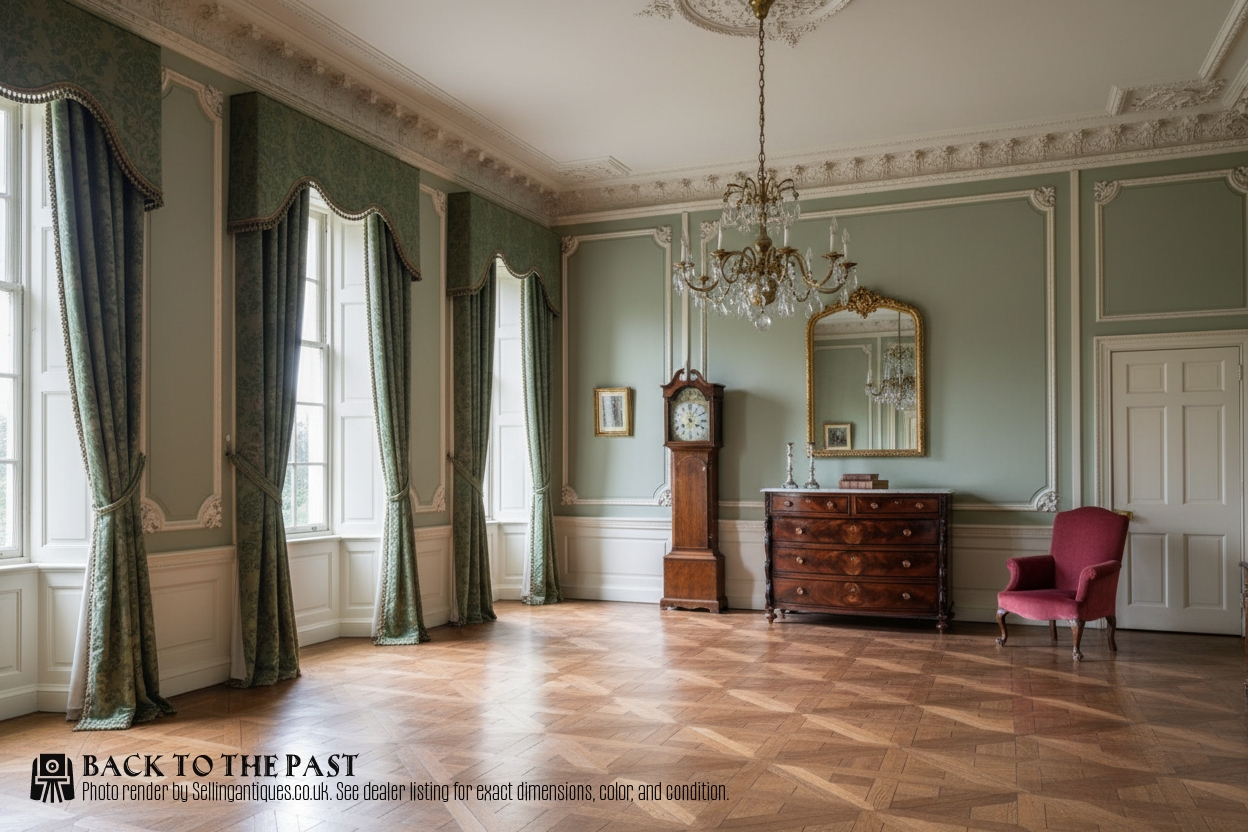
Regency Bow Front
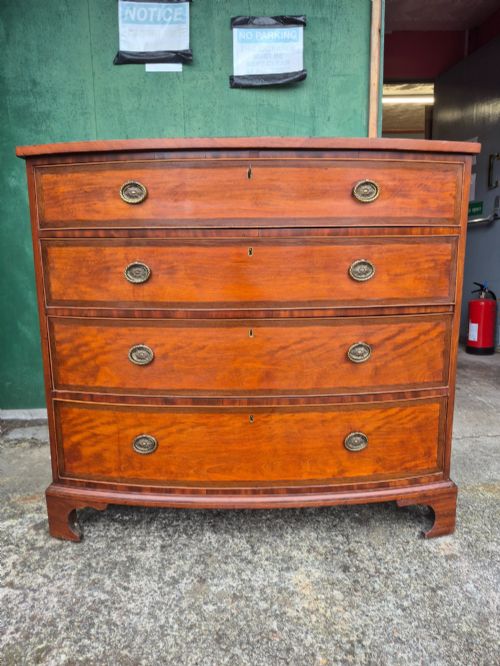
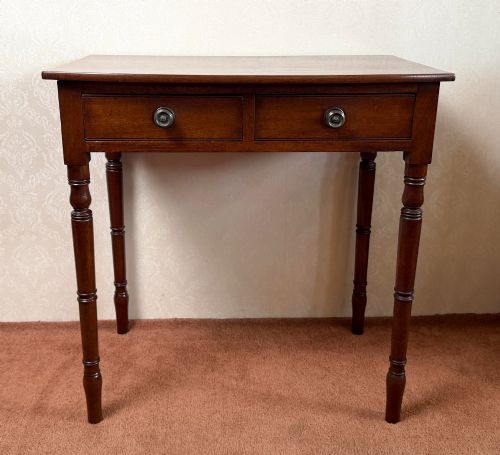
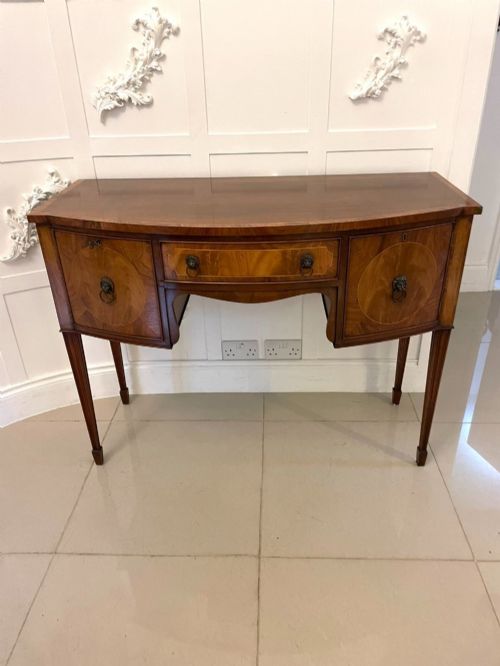
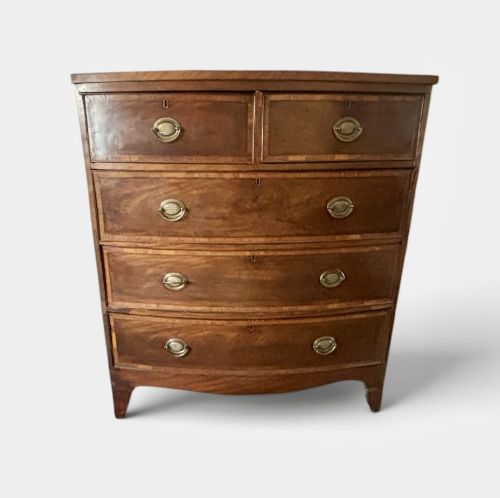
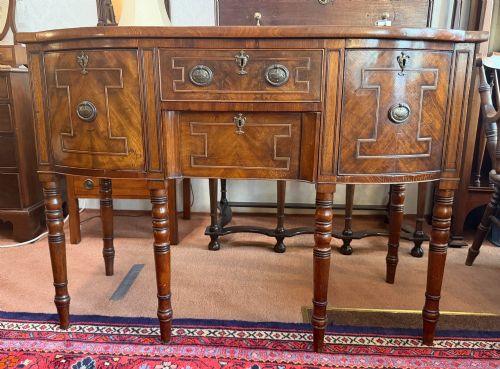
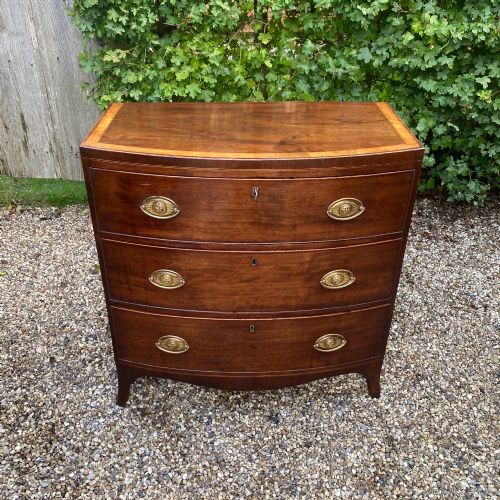
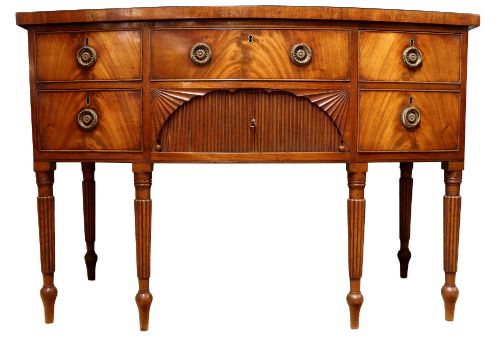
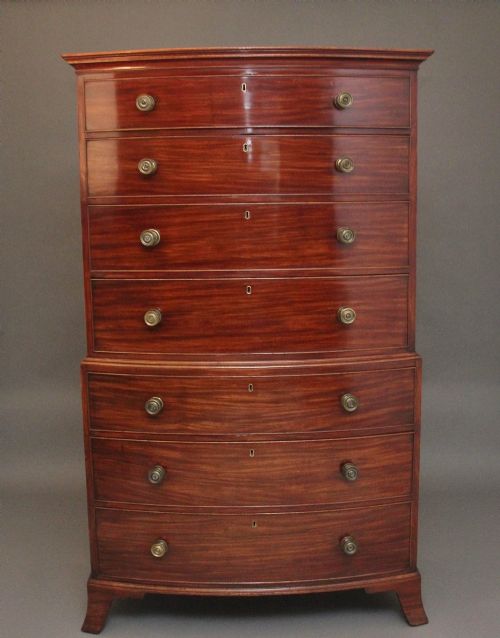
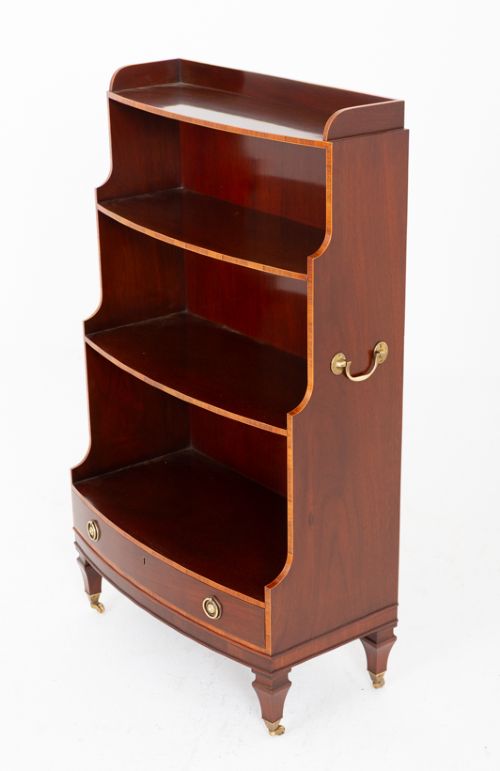
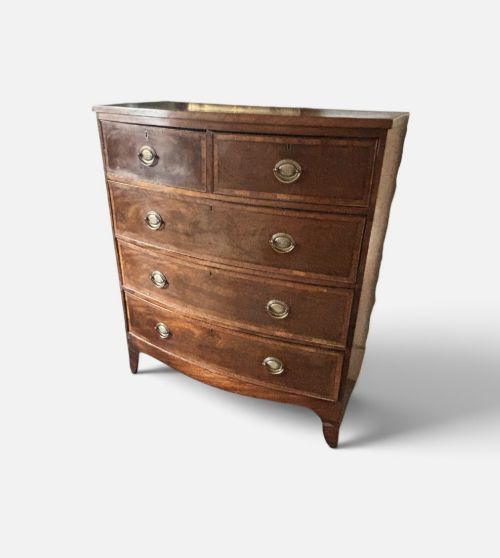
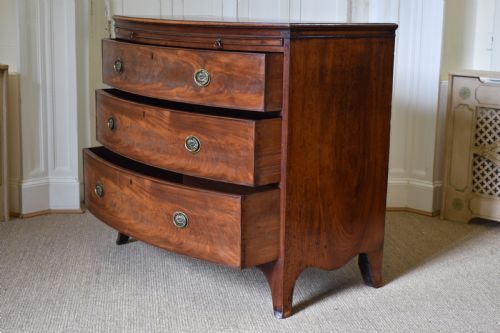
When searching for a regency bow front, buyers encounter chests of drawers, sideboards, and side tables originating primarily from the Regency, Georgian, and nineteenth-century periods.
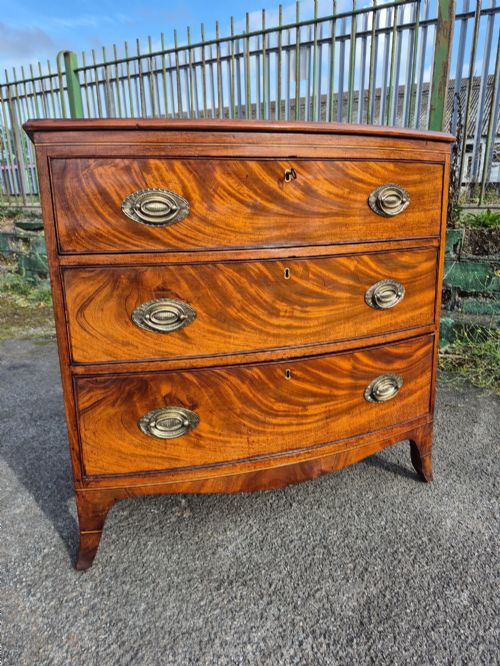
The chest of drawers remains the most common form, often featuring graduated drawers and a gently curved projecting front.
Sideboards and smaller dressing tables or corner cupboards also appear, reflecting the domestic utility demanded by households of the period.
Assessing Quality
Quality depends upon the selection of timber figures, where strongly marked flame mahogany or well-matched veneer surfaces elevate the visual presence of a piece.
Proportion and restraint in inlay define superior examples, distinguishing finely balanced designs from heavier revival pieces.
The integrity of the curved drawer fronts and the precision of the secondary woods inside the carcase indicate the skill of the original workshop.
Certain Welsh chests hide a secret drawer, offering a discreet compartment for small valuables.
The Regency Bow Front Glossary
- Bow front
- A convex curved front profile typical of case furniture from the Georgian and Regency eras. This curved shape softens the rigid angles of a room.
- Flame mahogany
- A veneer cut from the fork of the mahogany tree to produce a flickering, flame-like grain pattern. Cabinet makers reserved this timber for principal drawer fronts.
- Caddy top
- A moulded tabletop with an elevated centre profile resembling the lid of a tea caddy. This edge treatment appears on select nineteenth-century chests.
- Crossbanding
- A narrow strip of veneer laid perpendicular to the surrounding grain to form a decorative border. It often incorporates satinwood or boxwood lines.
- Graduated drawers
- A series of drawers decreasing in depth from bottom to top. This arrangement maintains visual balance on tall chests.
Regency Bow Front: Frequently Asked Questions
What rooms suit a regency bow front?
These pieces fit naturally into bedrooms, living spaces, and hallways where a curved silhouette softens straight architectural lines. Their storage capacity makes them practical for everyday use without dominating a room.
Smaller chests and side tables function well as bedside surfaces or lamp tables, while larger sideboards serve dining areas effectively.
How do I spot a later revival piece?
Revival items dating from the early twentieth century often display machine-cut timber and lighter interior carcase woods compared to earlier examples. Examining the drawer linings and backboards helps reveal the period of construction.
Style markers such as burr walnut veneer also point towards twentieth-century manufacturing rather than the original nineteenth-century mahogany standard.
Are all bow fronts from the Regency period?
While the form flourished during the Regency and late Georgian eras, makers continued producing bow front furniture through the Victorian period and into the twentieth century. Listings span multiple eras including Georgian, Victorian, and Edwardian revivals.
Checking construction methods and secondary timbers assists in determining whether a piece dates to the early nineteenth century or a later revival.
How should I care for mahogany veneer?
Mahogany surfaces benefit from occasional application of traditional wax polish to nourish the timber and maintain a soft lustre. Direct sunlight should be avoided to prevent fading of the rich reddish-brown tones.
Maintaining stable room humidity protects the underlying veneers from lifting along the curved edges of the bow front.