



Regency Bottle Chest
A regency bottle chest is a substantial piece designed to store and chill wine or spirits, bringing period proportion and rich timber into a room.
Regency Bottle Chest
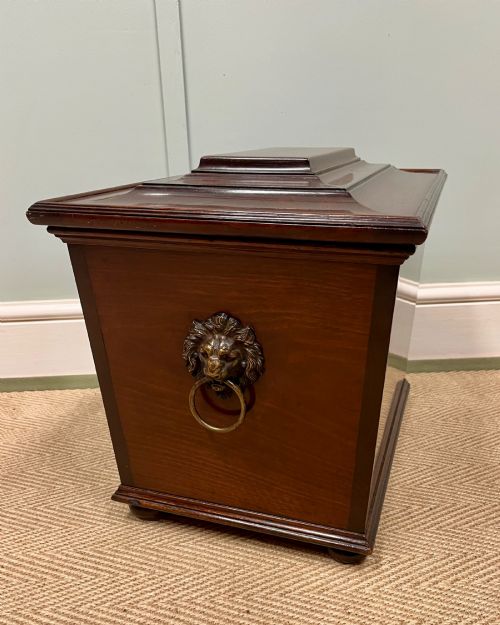
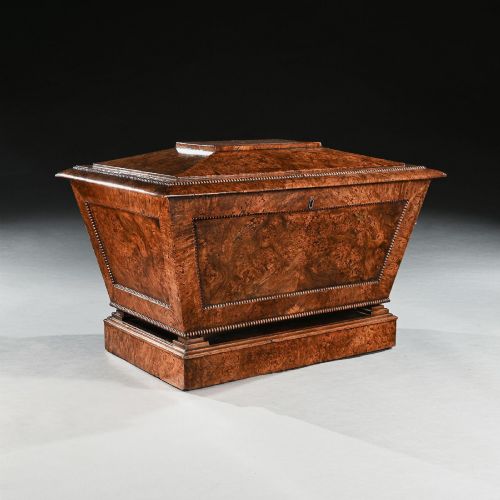
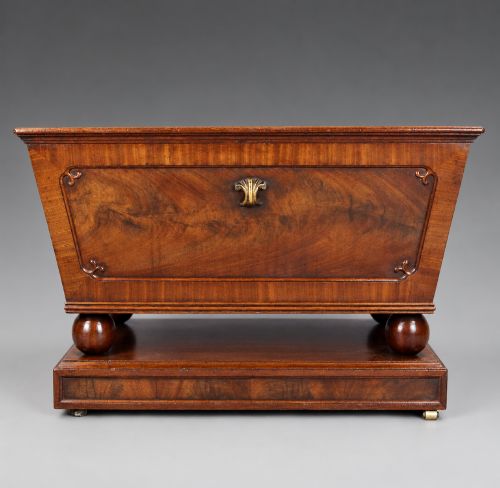
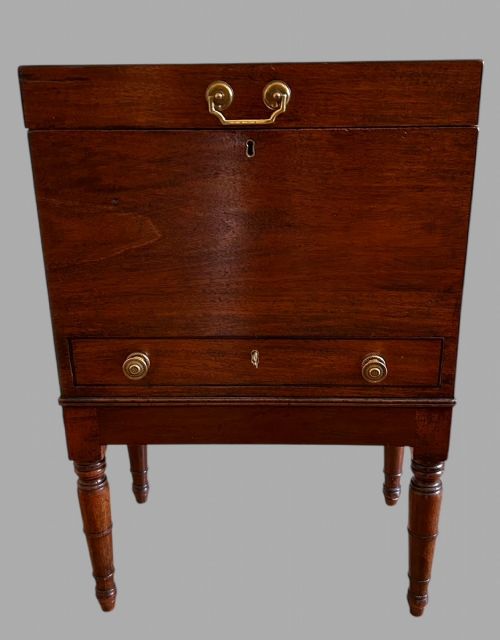
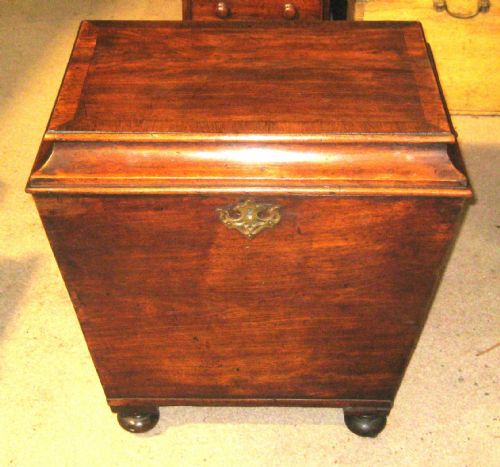
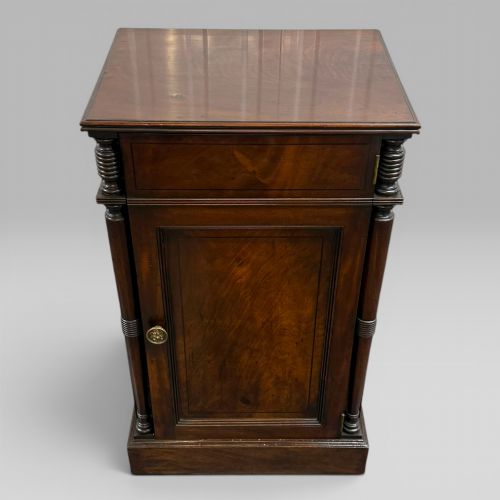
A regency bottle chest functions primarily as a wine cooler or cellarette, designed to hold bottles securely at table height or on the floor during dining. The pieces seen on this page span the Georgian, Regency, and Victorian eras, taking forms such as sarcophagus shapes, oval containers, and pedestal boxes.
The version most commonly encountered is the mahogany sarcophagus form standing on paw feet or a plinth base. These vessels often feature fitted interiors designed to keep wine cold, utilising lead linings or brass fittings.
How they were made
Cabinet makers utilised solid mahogany, flame mahogany, and occasionally pollard oak or elm, applying careful joinery to construct heavy carcases. Rich figuring in the wood grain was selected to catch the light on curved surfaces.
Metalwork played a structural and decorative role, incorporating brass bands, handles, and bronze mounts. Interiors frequently received lead linings to hold ice and water for chilling wine.
Regency Bottle Chest Retail Price Guide 2026
Typical asking prices for regency bottle chest among the pieces listed under this phrase on Sellingantiques today, from the lower quarter to the upper quarter. They describe what is for sale here now, not the wider market.
Listings feature mahogany as the predominant material, accompanied by brass, glass, and lead.
What varies in quality
The distinction between ordinary and exceptional pieces lies in the choice of timber and the crispness of the carving. Figured mahogany with strong flame patterns and deep natural patination commands greater attention than plain, dry boards.
Execution of detail separates fine workshop output from standard production. Well-modelled paw feet, precise brass mounts, and intact internal lead liners indicate superior manufacture.
Gillows·Maples and Co
The Regency Bottle Chest Glossary
- Cellarette
- A lockable container used to hold bottles of wine near the dining table. They frequently include internal divisions or lead linings.
- Sarcophagus
- A monumental coffin-like form with a sloping lid, popular for Regency wine coolers and cellarettes. This shape allowed ample internal depth for bottles and ice.
- Flame mahogany
- A veneer cut from the fork of the mahogany tree to produce a dramatic, flickering grain pattern. Cabinet makers used it on prominent exterior surfaces.
- Apothecary box
- A portable wooden chest fitted with internal compartments and glass bottles for medicines. These boxes share the compact, fitted nature of bottle chests.
Regency Bottle Chest: Frequently Asked Questions
What is a regency bottle chest used for?
These pieces were built to store wine bottles and keep them chilled during meals in the dining room. Inside, many contain lead linings designed to hold ice alongside the bottles.
Today, they serve equally well as decorative side tables, log bins beside a fireplace, or statement storage pieces in a living space.
How do I identify a Regency period piece?
Regency pieces often display classical architectural influences such as paw feet, bronze mounts, and bold sarcophagus shapes. The timber is predominantly mahogany, frequently chosen for striking grain figures.
Examining the construction methods, interior linings, and brass hardware helps confirm the nineteenth-century origins of the piece.
Are these pieces waterproof inside?
Many examples retain their original lead linings, which were originally packed with ice to cool wine. However, age can compromise these historical joints.
It is wise to check the condition of the interior lining before placing ice or liquid directly inside an antique wooden chest.
Where should I place a bottle chest at home?
Because of their substantial proportions and rich timber surfaces, these chests work well as freestanding focal points in a dining room or study. Their flat lids allow them to function as surface display areas.
Keep them away from direct heat sources and strong sunlight to protect the polished mahogany finish and prevent the wood from drying out.