


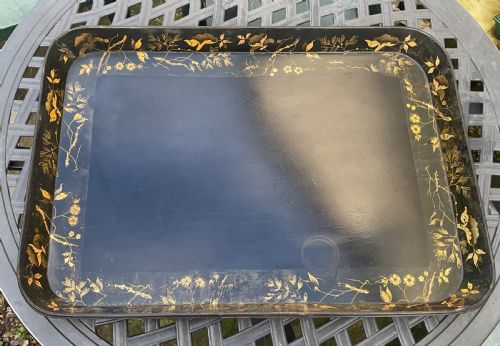


Regency Black Tray
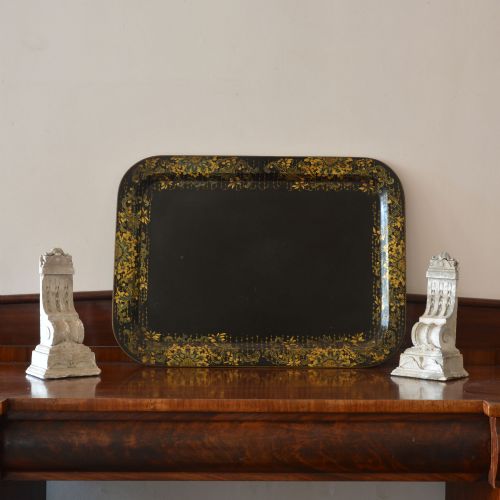
A regency black tray brings dramatic dark surfaces and gilded detail into a room, serving as both a functional piece and a striking tabletop.
Regency Black Tray
A regency black tray encompasses objects created during the Georgian and Regency periods, stretching into the nineteenth century, designed for serving or display. Buyers searching for a regency black tray will most frequently encounter papier-mâché and toleware surfaces finished in dark lacquer and paint.
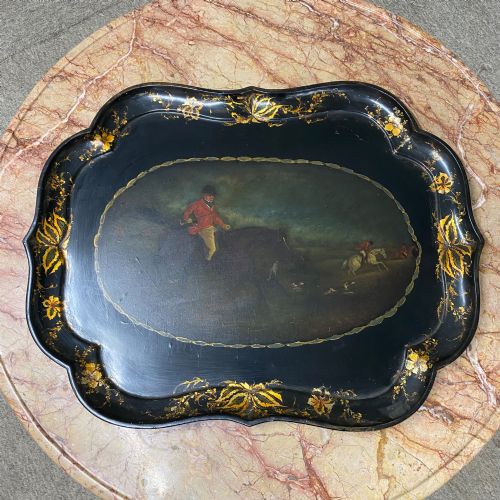
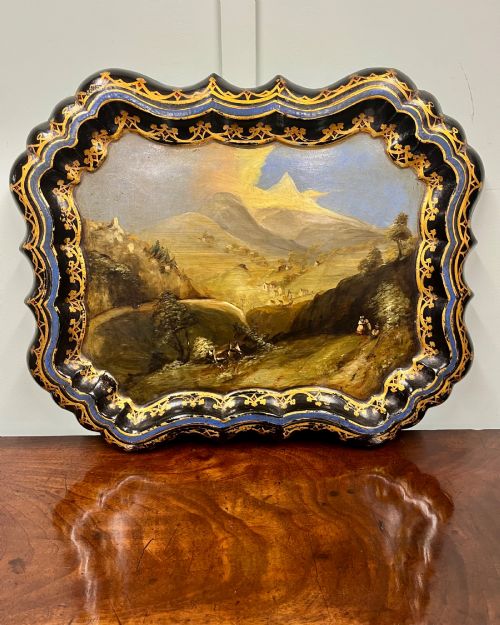
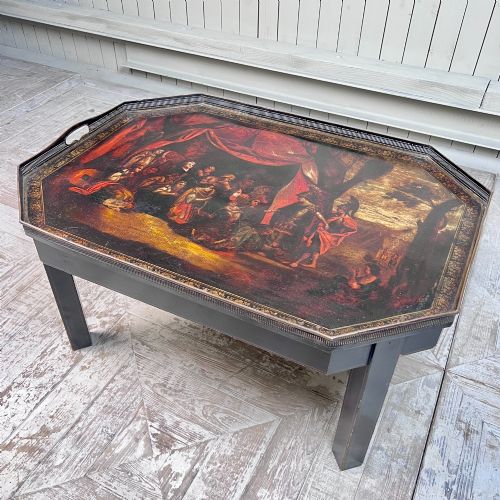
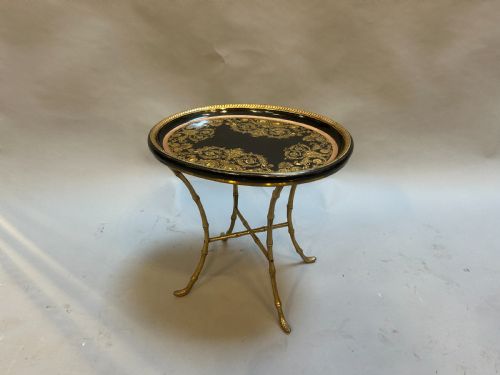
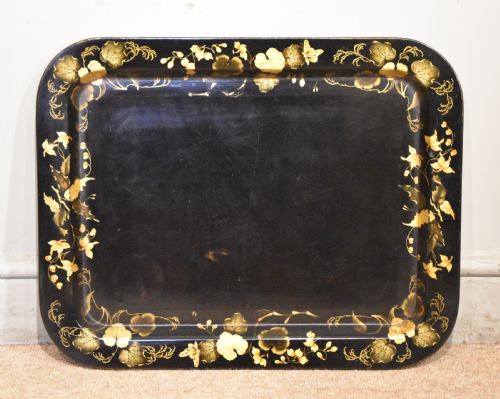
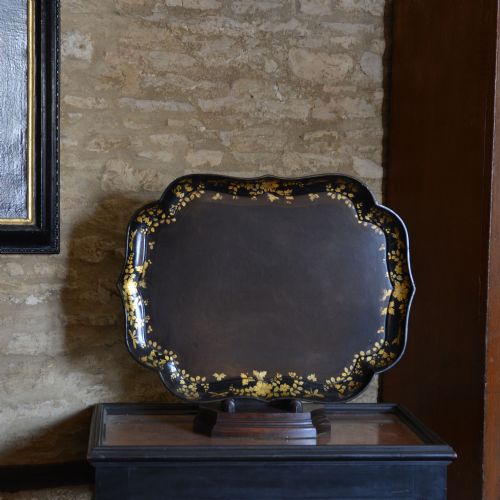
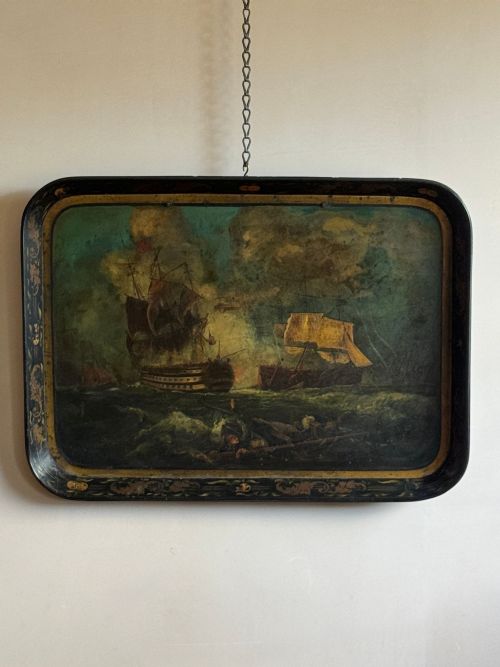
The forms vary from simple serving trays to large examples mounted on folding stands to create occasional tables. Many feature shaped rims, raised edges, and gilt decoration ranging from simple borders to elaborate figurative scenes.
Materials and construction
Papier-mâché construction involves layers of paper pulp or sheets pressed and heavily varnished to create a sturdy, lightweight core. Toleware provides an alternative metal base, shaped from sheet iron and coated with dark lacquer.
Surface decoration relies on hand painting, lacquer, and gold leaf application. Artisans built up deep black grounds before applying metallic highlights and detailed pictorial motifs.
Regency Black Tray Retail Price Guide 2026
Typical asking prices for regency black tray among the pieces listed under this phrase on Sellingantiques today, from the lower quarter to the upper quarter. They describe what is for sale here now, not the wider market.
Listings feature items spanning the Georgian, Regency, and early Victorian eras, constructed primarily from papier-mâché, metal toleware, and wood.
Judging quality in black trays
Quality rests in the crispness of the hand-painted details and the depth of the dark lacquer finish. Superior examples display refined brushwork in the gilding and well-preserved pictorial subjects rather than flat, mechanical stencilling.
The integrity of the underlying papier-mâché or metal base dictates durability, with finer pieces maintaining smooth surfaces and crisp edge moulding without heavy structural distortion.
Jennens & Bettridge·Clay
The Regency Black Tray Glossary
- Papier-mâché
- A composite material made from paper pulp or layered paper mixed with glue and resin, pressed into moulds and dried. It offers a smooth surface that accepts lacquer and paint exceptionally well.
- Toleware
- Enamelled or lacquered sheet metal ware, usually iron, produced in domestic and decorative forms. Pontypool and similar British centres became known for this painted metalwork.
- Japanned
- A European imitation of East Asian lacquerwork, created by applying successive coats of dark varnish and drying them in heat. The finish provides a glossy, hard-wearing dark ground for gilt decoration.
- Chinoiserie
- European artistic style reflecting Chinese motifs and landscapes, often rendered in gold paint against black lacquer. This style appears frequently on Regency serving pieces and game boards.
Regency Black Tray: Frequently Asked Questions
How do I clean a papier-mâché tray?
Dust the surface gently with a soft, dry cloth to remove loose particles. Avoid using water, chemical sprays, or abrasive cleaners, as moisture can penetrate the lacquer and damage the painted decoration.
Keep the piece away from direct sunlight and excessive heat sources to prevent the dark finish from fading or cracking over time.
Can I use these trays for serving drinks?
While original trays served drinks in period households, antique surfaces are sensitive to moisture and alcohol. Placing hot cups or wet glasses directly on the antique lacquer can leave permanent rings.
Most owners today utilise them for display on coffee tables or mount them securely on stands rather than using them for active hospitality.
What is the difference between papier-mâché and toleware?
Papier-mâché uses compressed paper pulp and binding agents to create a lightweight, rigid wooden-like board. It tends to feel warmer to the touch and offers slight flexibility before fracturing.
Toleware consists of sheet metal, typically tinned iron, which provides a heavier and more rigid metallic structure that can dent rather than crack under impact.
How do I distinguish Regency from Victorian examples?
Regency pieces often display restrained neoclassical motifs, simple gilt borders, or delicate Chinoiserie scenes against deep black grounds. The proportions remain balanced and forms follow classical geometric outlines.
Later Victorian production frequently introduced heavier ornamentation, more crowded painted compositions, and different manufacturing stamps as industrial techniques advanced.