

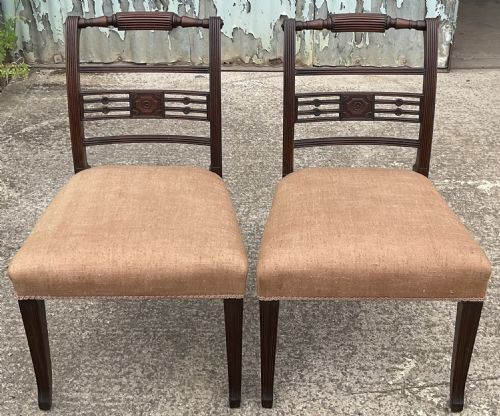
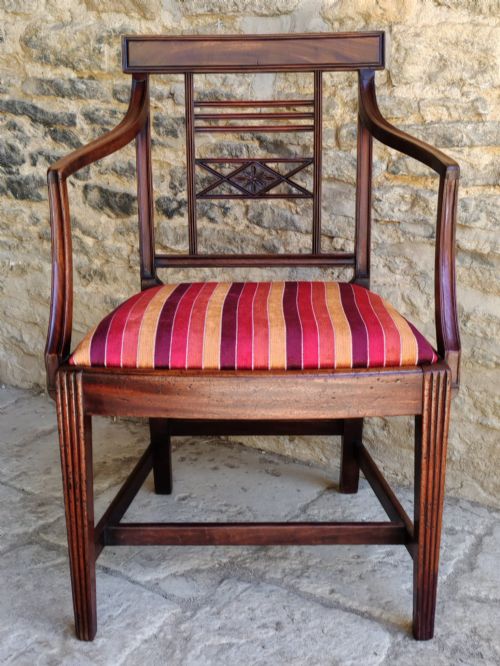
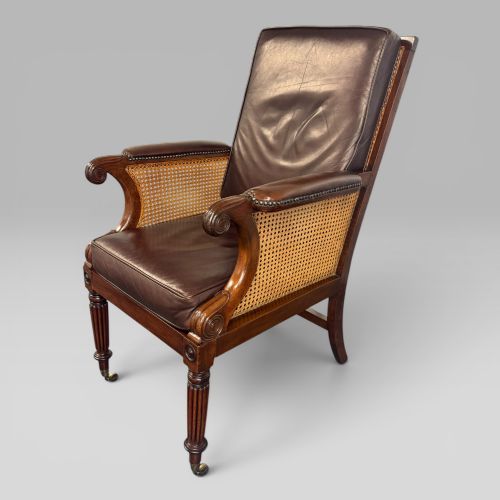
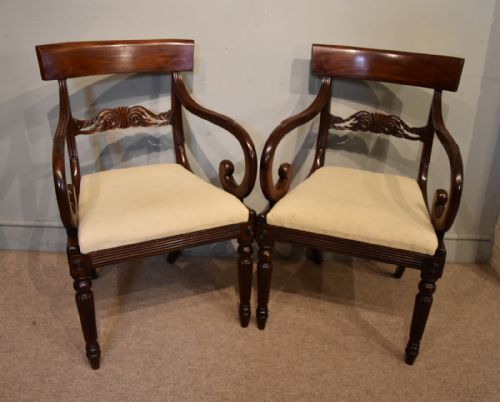


Reeded Leg Desk Chair
These reeded leg desk chair examples are sturdy mahogany seats built for the library and study, offering robust comfort alongside classic lines.
Reeded Leg Desk Chair
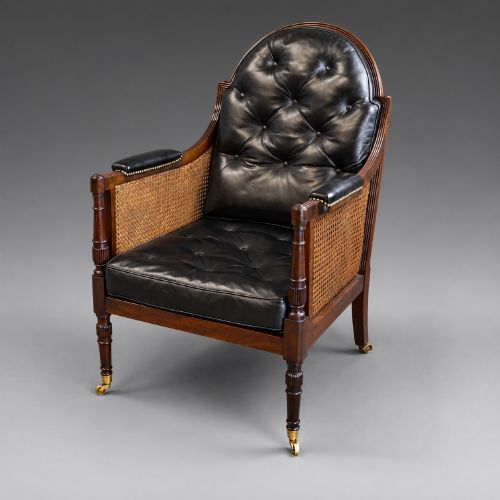
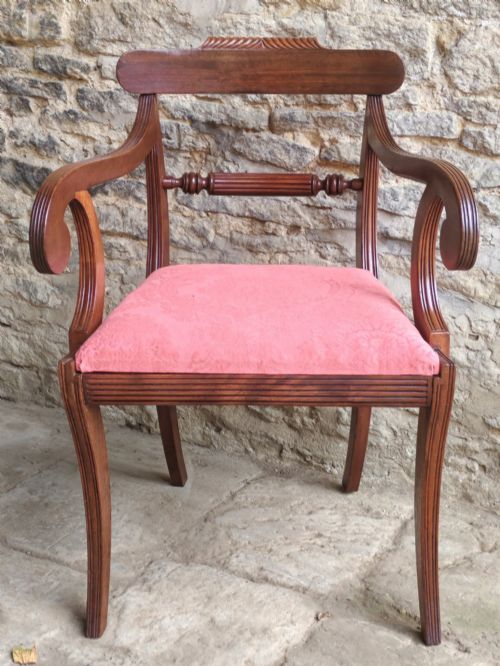
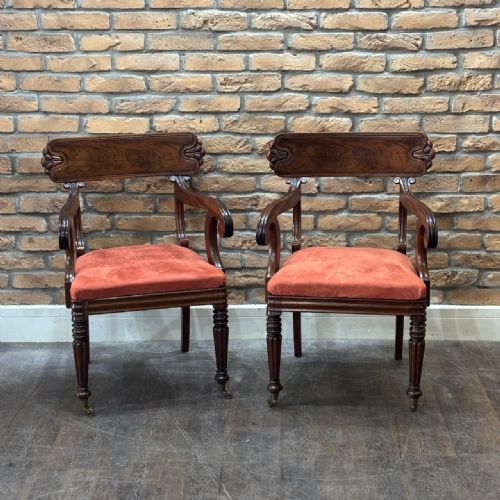
A reeded leg desk chair is typically encountered as a mahogany library chair, arm chair, or carver dating from the Regency period through to the nineteenth century. These forms include bergères with caning, open armchairs with drop-in seats, and side chairs bearing the distinct linear carving of the era.
Makers drew on Georgian and Regency design traditions, producing sturdy seating intended for writing tables and reading rooms. Pieces from this selection span the eighteenth century up to Edwardian revivals, maintaining the characteristic turned or reeded supports.
How they were made
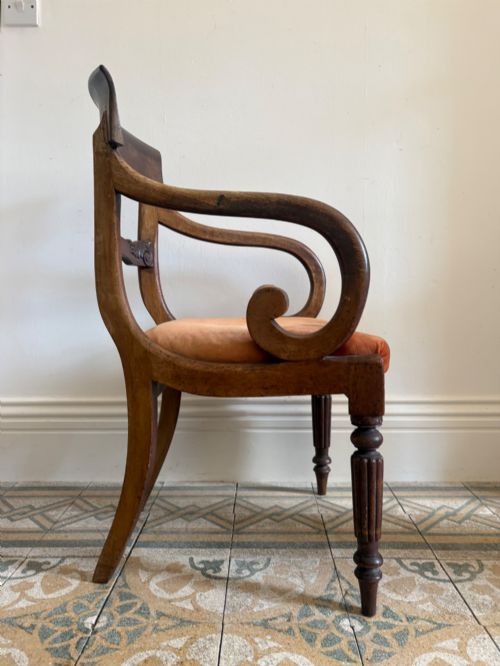
The primary structural timber across these pieces is mahogany, shaped into robust frames and slender supports. Artisans employed parallel concave grooves, known as reeding, along the legs to catch the light and lend architectural refinement to the heavy wood.
Upholstery methods varied by function, utilising leather, cane, velvet, and drop-in fabric pads secured with brass studding. Joinery relied on traditional mortise and tenon techniques, creating resilient frames designed for daily use at a desk.
Reeded Leg Desk Chair Retail Price Guide 2026
Typical asking prices for reeded leg desk chair among the pieces listed under this phrase on Sellingantiques today, from the lower quarter to the upper quarter. They describe what is for sale here now, not the wider market.
One persistent maker signed his work in a chair, leaving a quiet signature for future generations of scholars to uncover.
What varies in quality
Proportion and execution separate standard examples from finer works, particularly in the crispness of the turned reeding and the grace of the arm curves. Generous proportions and well-drawn framing indicate a more deliberate design process by the maker.
The choice of secondary materials, such as finely grained mahogany timber and intact original caning or quality leather upholstery, distinguishes superior pieces. Attention to detail in the carved joints and overall structural balance dictates the lasting integrity of the chair.
The Reeded Leg Desk Chair Glossary
- Reeding
- Parallel convex mouldings carved into wood, resembling bundled reeds. This decorative technique is frequently found on the legs of Regency chairs.
- Bergère
- An enclosed upholstered armchair with a wooden frame and cane back and sides. These often feature loose squab cushions for added seating comfort.
- Carver
- An armchair designed to match a set of dining or desk chairs, typically featuring more substantial armrests. They were often placed at the head of a table or utilised at a writing desk.
- Drop-in seat
- A removable upholstered frame that drops into a rebate within the chair rails. This construction allowed for easier recovering and maintenance over time.
Reeded Leg Desk Chair: Frequently Asked Questions
Were these chairs used at desks?
Many examples function as library chairs or carvers, built with supportive arms and sturdy mahogany frames suitable for reading and writing.
Their generous proportions and upholstered seats provided comfort during long hours spent at a desk or in a study.
How do I identify a Regency period chair?
Regency chairs often display classical influences, utilising mahogany timber, sabre or reeded legs, and sometimes brass inlay or gilt bronze mounts.
They date from the early nineteenth century and typically combine robust construction with restrained, elegant classical ornamentation.
What materials are common on these seats?
Mahogany serves as the primary structural timber across nearly all examples, complemented by secondary materials like leather, cane, and velvet.
Cane panels and studded leather upholstery provided durable, comfortable surfaces for daily use in studies and libraries.