

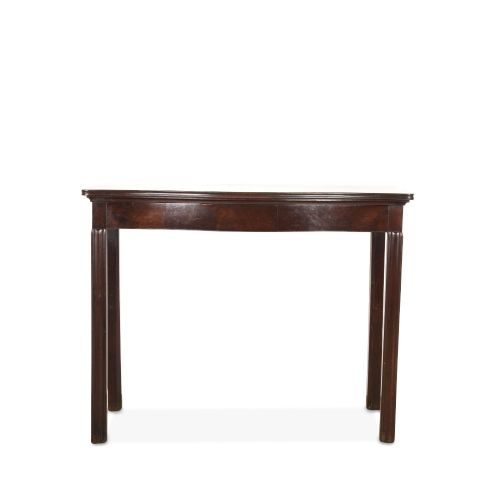
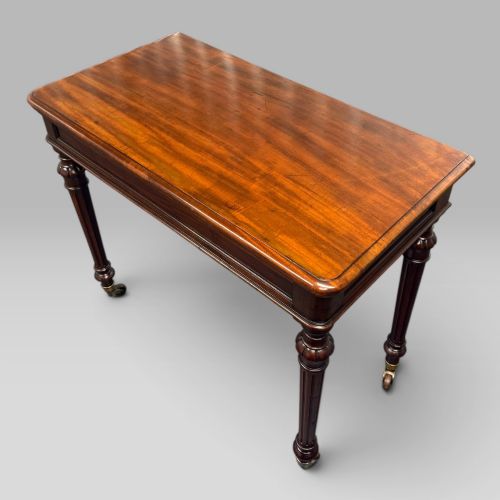
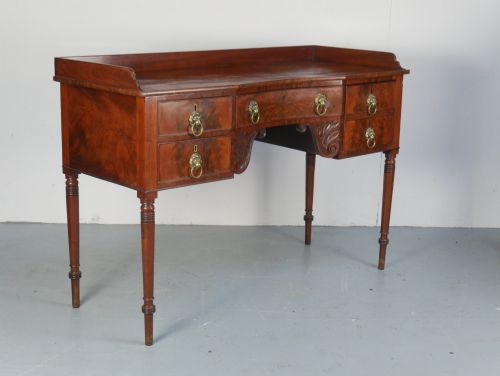
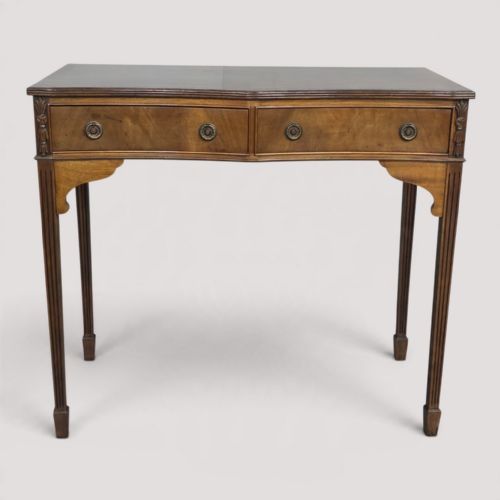
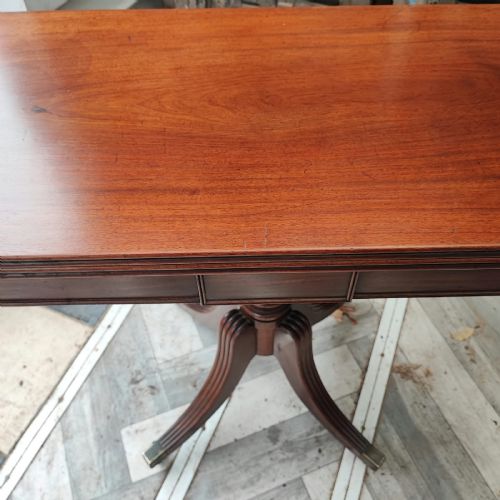
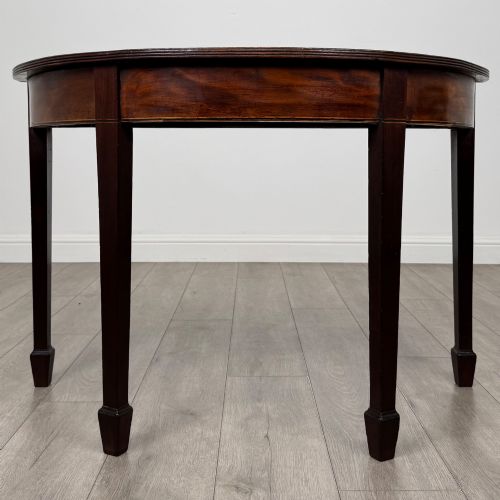
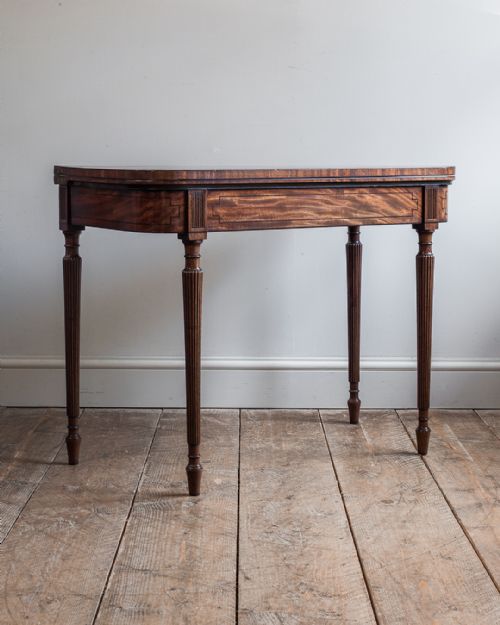
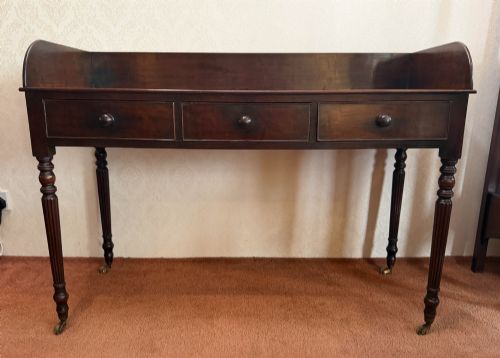
Reeded Console Table
A reeded console table brings linear elegance and architectural detail to a hallway or reception room.
Reeded Console Table
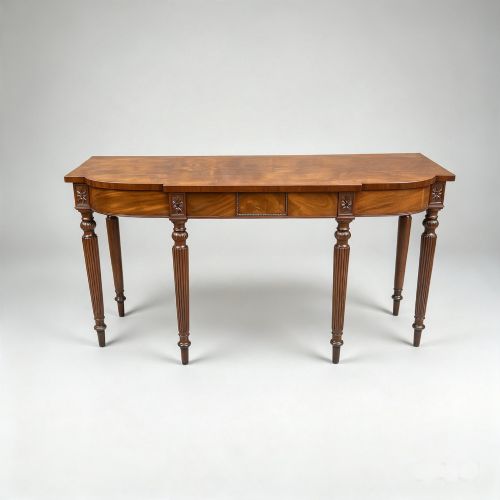
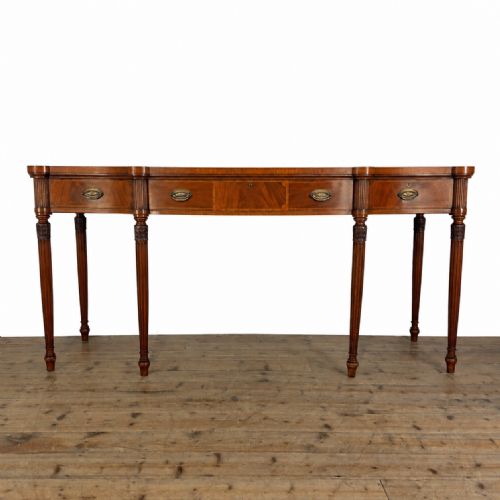
A reeded console table provides a slender surface for display and support against a wall, drawing the eye with carved parallel mouldings. These tables appear across multiple periods, including Regency, Georgian, Victorian, and Edwardian eras, as well as later revival interpretations.
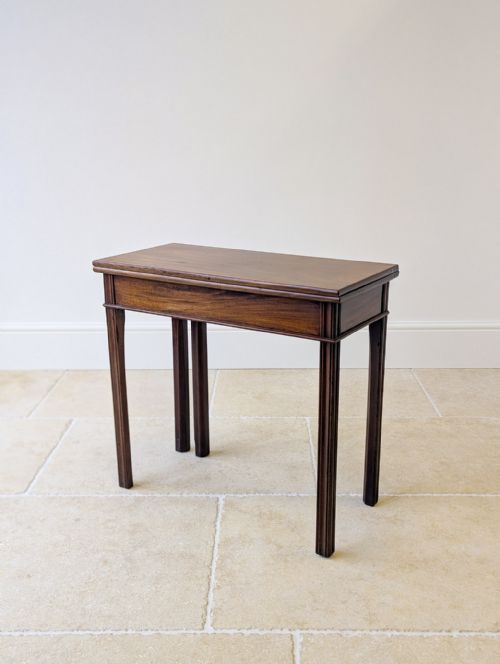
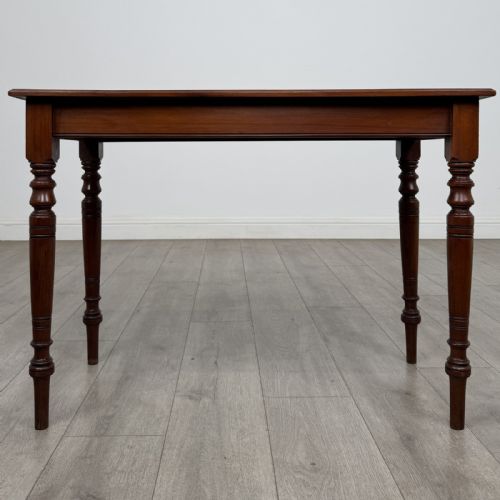
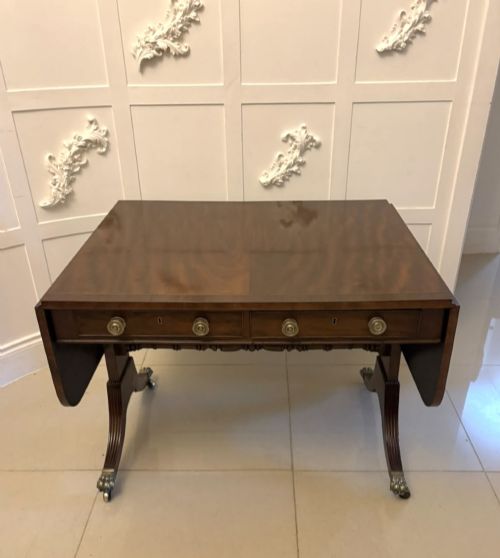
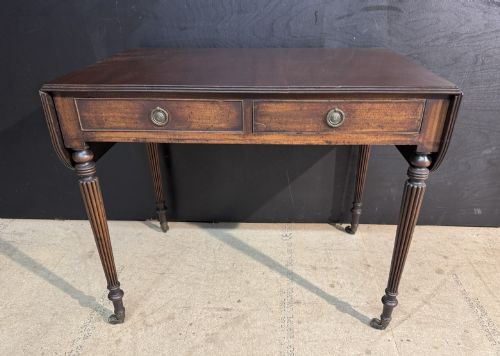
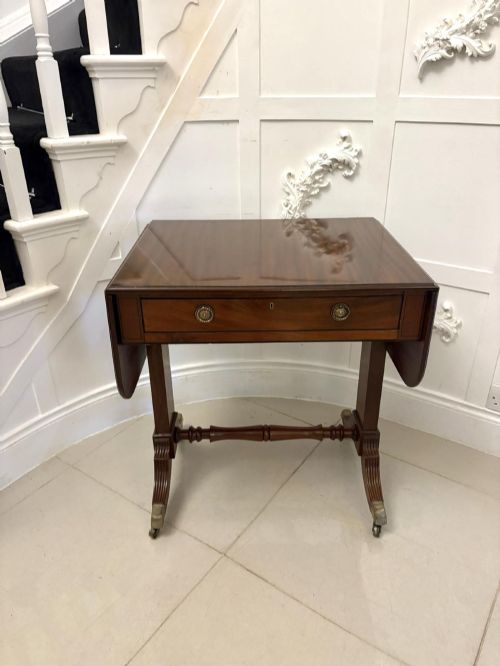
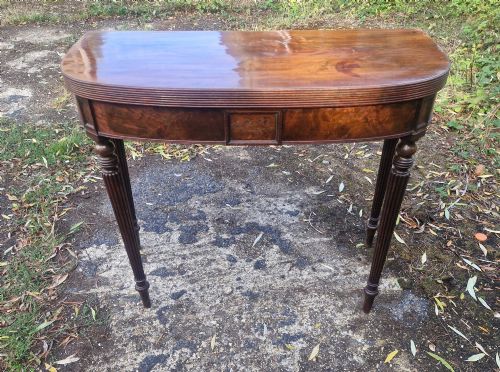
While the search specifies a console form, the listings show that makers applied reeded decoration across a wider family of related tables, including side tables, sofa tables, tea tables, and serving tables. Pieces featuring reeded turned legs or a reeded frieze dominate the selection available here.
Origins span English workshops from the late eighteenth century through to the early twentieth century, alongside Irish examples. Buyers encounter both grand scaled serving pieces and neat domestic writing tables sharing the same characteristic linear carving.
How they were made
Makers relied primarily on mahogany as the main timber, often selecting figured varieties for tabletops alongside secondary structural woods like oak. Cabinetmakers also utilised walnut and incorporated boxwood inlay, ebony details, and brass fittings.
The defining reeding technique involves carving convex parallel semicircular mouldings directly into solid timber, typically along table legs or friezes. Craftspeople executed these grooves by hand using specialised moulding planes to achieve uniform depth and spacing.
Reeded Console Table Retail Price Guide 2026
Typical asking prices for reeded console table among the pieces listed under this phrase on Sellingantiques today, from the lower quarter to the upper quarter. They describe what is for sale here now, not the wider market.
Listings feature mahogany predominantly, alongside walnut and oak, spanning the Georgian, Regency, Victorian, and Edwardian periods.
What varies in quality
Quality rests upon the crispness of the timber carving and the selection of figured mahogany veneers. Sharp, clean reeded lines on legs or friezes indicate superior workshop skill, whereas worn or shallow grooves suggest lower execution.
Construction methods and secondary details set standard pieces apart from finer cabinetwork. Robust joinery, well-fitted drawers, and high-grade brass hardware separate ordinary utility items from superior examples attributed to accomplished makers.
Gillows of Lancaster and London·Robert Strahan & Co·William Trotter of Edinburgh
The Reeded Console Table Glossary
- Reeding
- A decorative moulding formed of parallel convex semicircular strips raised above the surface. This technique frequently appears on table legs, friezes, and column supports during the Regency and Georgian periods.
- Console table
- A wall table supported by console brackets or legs, designed to stand against a vertical surface. These tables often feature decorated friezes and polished timber tops.
- Frieze
- The wide horizontal band situated directly beneath the tabletop. On these tables, makers frequently applied reeding or inlay across this prominent architectural section.
- Sofa table
- A rectangular occasional table traditionally designed to sit in front of a sofa, featuring drop leaves and often twin pedestals or end supports. Many examples incorporate drawers and reeded legs.
- Tea table
- A small folding or turnover top table utilised for serving tea in the eighteenth and nineteenth centuries. They appear frequently with reeded legs and mahogany construction.
Reeded Console Table: Frequently Asked Questions
Where should I place a reeded console table?
These tables suit hallways, entrance passages, and reception rooms where a shallow surface is required against a wall. Their linear carved detail adds architectural interest without dominating limited floor space.
Pair the table with a mirror or a picture above to create a balanced focal point. Ensure the proportions match the wall space and clearance needs of the room.
What is the difference between a console and a side table?
A console table is traditionally designed to stand permanently against a wall, sometimes secured with wall brackets in formal interiors. Side tables are more versatile freestanding items that can move around a room more easily.
Both forms appear frequently in mahogany with reeded legs in the available listings. Functionally, modern placement often treats both types interchangeably for display and storage.
How do I identify a Regency table?
Regency tables typically date from the early nineteenth century and draw heavily on classical Greek and Roman motifs. Look for architectural proportions, brass mounts, sabre legs, and crisp reeding.
Construction details such as hand-cut dovetails in drawers and solid mahogany secondary woods help confirm the period. Comparing the piece to documented workshop styles provides further verification.