


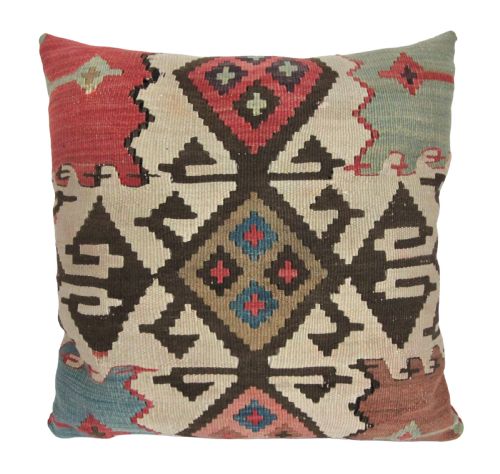


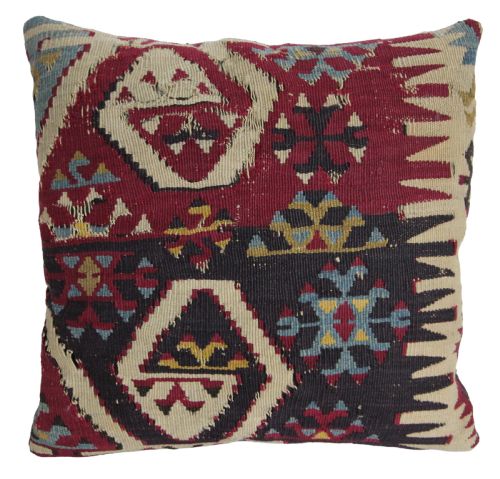
Red Wool Scatter Pillow
These red wool scatter pillow options bring warmth and texture into a room, offering genuine antique character.
Red Wool Scatter Pillow
A red wool scatter pillow typically takes the form of a cushion fashioned from antique woven textiles, including kilim fragments, bag faces, and rug remnants. Buyers searching for a red wool scatter pillow will encounter pieces originating from tribal and nomadic traditions, dating from the nineteenth and early twentieth centuries.
The selections on this page heavily feature antique kilim cushions and bag face cushions derived from older Baluch and nomadic weavings. These items repurpose durable wool and cotton textiles into soft furnishings suitable for modern domestic spaces.
Materials and construction
Makers fashioned these textiles primarily from hand-spun wool, often combined with cotton for structural support in the backing or foundation. The surface designs rely on traditional hand-woven techniques characteristic of Anatolian, Persian, and tribal nomadic cultures.
The original flat-weave and pile structures of antique rugs and bags were cut and stitched into cushion forms. This method preserved the authentic hand-woven patterns while adapting utilitarian objects into decorative soft furnishings.
Red Wool Scatter Pillow Retail Price Guide 2026
Typical asking prices for red wool scatter pillow among the pieces listed under this phrase on Sellingantiques today, from the lower quarter to the upper quarter. They describe what is for sale here now, not the wider market.
Nomadic weavers often tucked personal marks and local superstitions into the corners of their utility bags.
Qualities that set pieces apart
Quality rests upon the fineness of the original weave and the integrity of the surviving textile. Tighter knotting and denser wool pile or flat-weave structure indicate a higher grade of craftsmanship in the source material.
Visual appeal depends on the balance of the tribal pattern and the depth of the red dye used throughout the wool. Better examples display harmonious proportions from the original bag face or kilim fragment rather than awkward compromises in the cutting.
The Red Wool Scatter Pillow Glossary
- Kilim
- A flat-woven carpet or rug produced without a pile, frequently utilised for these cushions. It provides a durable, smooth surface with geometric patterns.
- Bag Face
- The decorative front panel of a nomadic storage bag, often repurposed into a cushion. These panels display concentrated tribal motifs and fine hand-weaving.
- Baluch
- A nomadic group known for distinctive dark-toned wool weavings. Their work often forms the basis for early twentieth-century scatter cushions.
- Nomadic Tribal
- A style originating from wandering pastoralist groups. The designs reflect traditional motifs passed down through generations.
Red Wool Scatter Pillow: Frequently Asked Questions
How do I clean an antique wool cushion?
Surface dust should be removed gently using a soft brush or light vacuum suction through a mesh screen.
Professional specialist cleaning is recommended for any deeper attention to preserve the old wool fibres.
Are these cushions made from old rugs?
Most examples utilise authentic nineteenth and early twentieth-century fragments cut from tribal kilims or bag faces.
This recycling method gives sturdy old wool textiles a second life as decorative home furnishings.
How do I identify a tribal design?
Tribal designs typically feature geometric medallions, repeating hooked motifs, and stylised animal or plant forms. These patterns carry symbolic meaning specific to the weaving community.
Will these cushions suit modern interiors?
The rich red tones and geometric patterns add warmth and a grounding focal point to contemporary seating.
They blend easily with neutral modern fabrics by introducing historical texture and handcrafted depth.