





Red Turkish Kilim
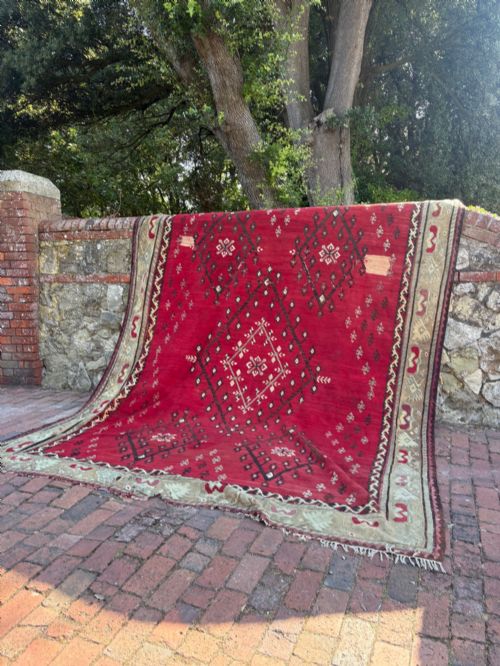
These red turkish kilim pieces bring tactile warmth and geometric history into a room through flatwoven wool and cotton.
Red Turkish Kilim
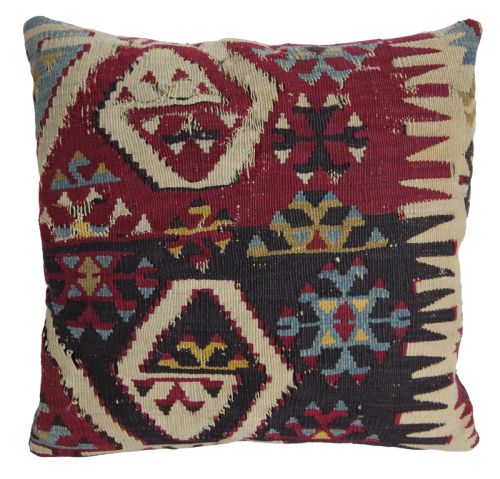
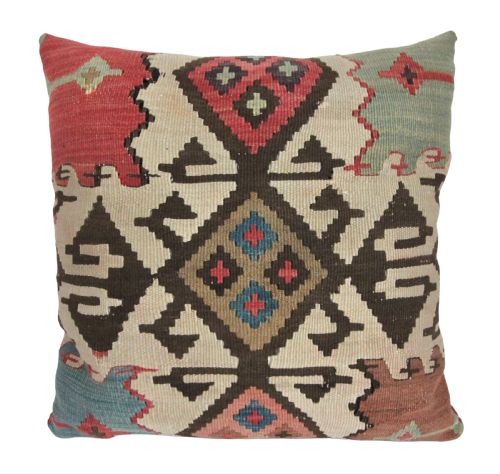
A red turkish kilim is a flatwoven textile originating from Anatolia, the Balkans, and surrounding regions, spanning utilitarian floor coverings and domestic furnishings. Buyers encounter diverse regional formats here, ranging from large room-sized carpets and runners to smaller cushions, bag faces, and prayer rugs.
The selections reflect traditional village and nomadic craftsmanship, often associated with specific locales such as Malatya, Konya, Ushak, and Sarkoy. These pieces manifest in varied configurations including single-panel formats and large textiles woven in two parts and joined together.
Dating predominantly from the mid-nineteenth century through the early twentieth century, these flatweaves serve functional roles as floor rugs, wall hangings, and decorative cushions. Their enduring appeal lies in the geometric motifs and soft red grounds developed by weavers using traditional regional vocabularies.
Materials and Construction
Weavers constructed these textiles primarily from wool, utilising cotton for foundations or structural integrity and occasionally incorporating leather elements in items like bag faces. The dominant technique is slit-tapestry flatweaving, where the weft yarns are tightly packed over the warp threads to create crisp geometric patterns without a pile.
Many large-scale carpets and room-sized floor coverings were produced on narrower village looms in two separate panels and skillfully joined down the centre. Dyes derived from natural sources yielded the characteristic warm soft reds, pastel tones, and contrasting ivory borders seen across the regional styles.
Some nomadic weavers solved loom width limits by simply sewing two matching red rugs together and calling it a day.
Assessing Quality and Character
Quality in these flatweaves rests upon the precision of the geometric design, the balance of the regional colour palette, and the integrity of the weave structure. Finer pieces demonstrate tight weft-face packing and sophisticated handling of traditional motifs by the weaver.
The character of a piece is further shaped by the depth and harmony of the dyed wool, where complex abrash and softly faded red grounds indicate skilled dye work. Proportion, scale, and the retention of original borders or structural edges distinguish exceptional regional examples from standard domestic output.
The Red Turkish Kilim Glossary
- Kilim
- A flatwoven textile produced without a pile by tightly inter-weaving warp and weft threads. This technique creates a lightweight, reversible fabric historically used for floor coverings and domestic furnishings.
- Abrash
- Variations in colour shading caused by uneven uptake of dye in batches of wool or shifts in yarn lots. It creates a subtle, variegated appearance across the field of the textile.
- Warp
- The stationary vertical threads stretched on the loom that form the structural foundation of the weaving. Weft threads are passed horizontally over and under these structural elements.
- Weft
- The horizontal yarns packed densely across the warp threads to form the visible pattern and colour of the textile. In flatweaves, these yarns completely conceal the underlying foundation.
- Slit tapestry
- A weaving technique used in flatweaves where weft yarns of different colours turn back at the boundary of their respective colour areas, leaving a small vertical slit. Weavers frequently interlock these turns to strengthen the fabric structure.
- Juval
- A large storage bag produced by nomadic and tribal weavers, often featuring detailed face designs intended for household utility. Surviving examples are typically collected and preserved as decorative panels or cushions.
Red Turkish Kilim: Frequently Asked Questions
How do I clean a kilim rug?
Gentle surface cleaning and regular vacuuming without a beater bar help maintain the wool fibres. Professional textile cleaning is recommended for deep maintenance to protect the historic dyes.
Harsh chemical treatments and excessive water should be avoided to prevent dye bleeding or structural weakening of the flatweave.
Are these textiles suitable for high traffic areas?
The dense flatweave construction makes wool kilims durable for everyday use in living spaces and hallways. Placing a suitable rug underlay beneath the textile prevents slipping and reduces friction against the floor.
Heavily timeworn pieces or delicate cushions benefit from placement in lower traffic zones to preserve their historic structure.
What is a prayer kilim?
Prayer kilims feature a distinctive architectural niche design, often called a mihrab, pointing toward Mecca during devotional use. Weavers traditionally oriented these smaller formats for personal prayer in nomadic and village settings.
Today, collectors value these pieces for their symbolic geometry and compact regional artistry.
Why are some large kilims woven in two parts?
Traditional village looms had limited width capacities, requiring weavers to produce large room-sized carpets in two separate narrow strips. These panels were then carefully joined down the centre to achieve the desired floor coverage.
This construction method is a hallmark of specific regional production centres rather than a sign of alteration.