


Red Tabriz Rug
A red tabriz rug brings grounded Persian craftsmanship into a room, offering durability and historic floral motifs that anchor traditional interiors.
Red Tabriz Rug
When you search for a red tabriz rug, you encounter hand-knotted floor coverings originating from the North West of Persia. These textiles span periods from the eighteenth century through to the early decades of the twentieth century, appearing as both room-sized carpets and smaller village rugs.
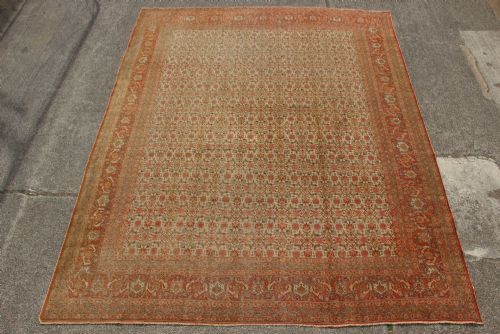
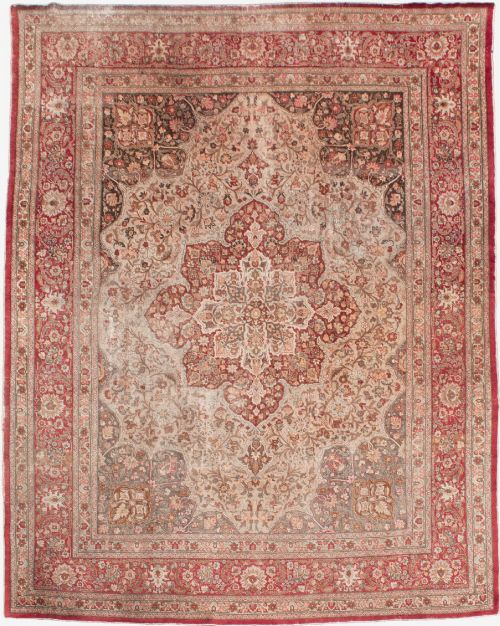
You are most likely to meet early twentieth-century examples on this page, particularly pieces dated around 1920. These often display classic floral medallion patterns or all-over Herati designs set against red fields.
The selection ranges from large country house carpets down to compact area rugs. Each piece reflects the traditional Persian styles associated with the Tabriz region.
What varies in quality
The distinction between standard examples and the finest pieces lies in the crispness of the design execution and the density of the weave. Finer knotting permits more intricate curves and delicate detailing within the floral fields and borders.
The choice of wool and the depth of the dye saturation also separate ordinary production from exceptional work. Superior materials retain their handle and visual richness over decades of use.
Country house carpets often carry the quiet echoes of booted footsteps and muddy spaniels from centuries past.
Benlian
The Red Tabriz Rug Glossary
- Tabriz
- A major weaving centre in North West Persia known for producing refined workshop carpets and village rugs. Pieces from this region often incorporate classic floral motifs and structured medallions.
- Herati design
- A repeating geometric pattern composed of a central rosette flanked by leaf motifs, frequently seen across Persian carpets. It creates a balanced, all-over visual texture.
- Safavid
- Pertaining to the historic Persian dynasty whose artistic output inspires classical carpet designs. Safavid-inspired rugs often feature elaborate vase patterns and refined floral arrangements.
- Medallion
- A central ornamental motif placed in the middle of the carpet field. It serves as the primary focal point around which the corner pieces and borders are organised.
- Pile
- The upright yarn surface of the rug formed by individual knots tied to the warp and weft foundation. The quality of the pile determines the softness and durability of the piece.
Red Tabriz Rug: Frequently Asked Questions
How do I date a red tabriz rug?
Dating relies on stylistic markers, construction methods, and materials recorded in the specific piece. Earlier eighteenth-century examples often show Safavid inspirations, while 1920s pieces frequently feature standard floral medallions.
Examining the tightness of the weave and the wear patterns also helps determine the approximate age. Comparing the specific design elements to documented regional output confirms the period.
Where were these rugs made?
These textiles originate from Tabriz and the surrounding villages in North West Persia. This region has a long history as a prominent hub for carpet production and trade.
Workshop weavers and village artisans in this area produced both large country house carpets and smaller format rugs. Their output combined traditional Persian iconography with precise knotting techniques.
How do I care for an antique rug?
Protect the wool pile by vacuuming gently without a rotating brush roll to prevent fibre damage. Professional cleaning should be undertaken periodically by specialists familiar with antique textiles.
Keep the rug out of direct sunlight to prevent fading of the red dye fields. Using an appropriate underlay helps reduce friction against the floor.
What is the difference between a carpet and a rug?
Carpets generally refer to larger room-sized floor coverings designed to anchor a major living space or dining room. Rugs encompass smaller formats, including area rugs and village pieces.
Both categories utilise wool and cotton materials, but their scale dictates how they integrate into a room layout. Larger carpets often feature more expansive field designs and broader borders.