


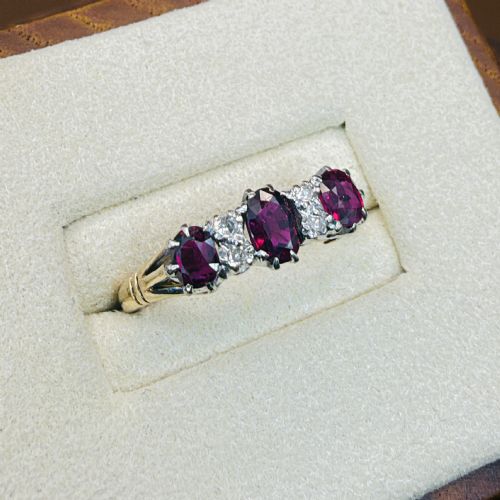
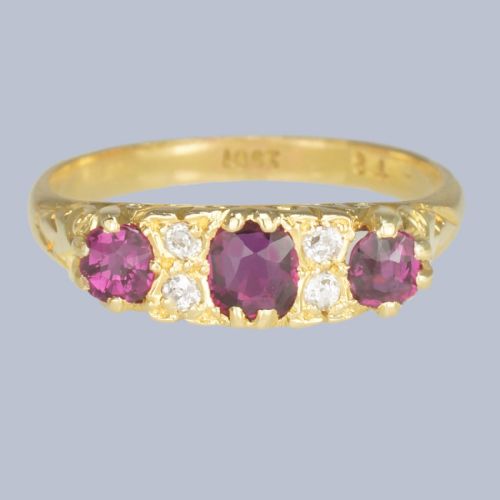
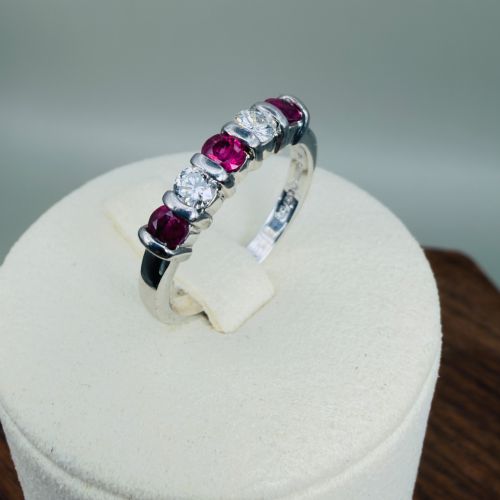
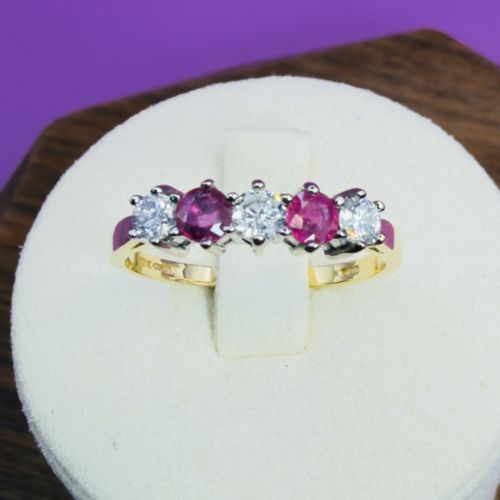
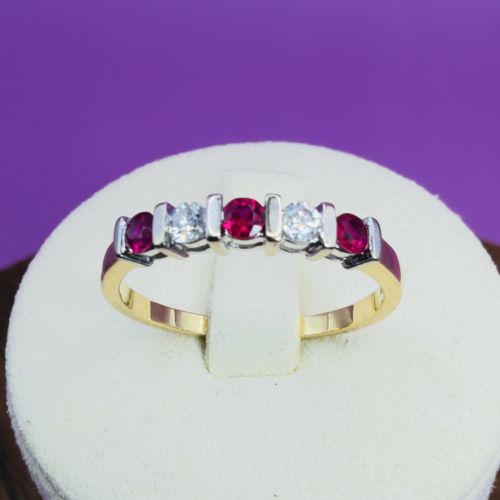
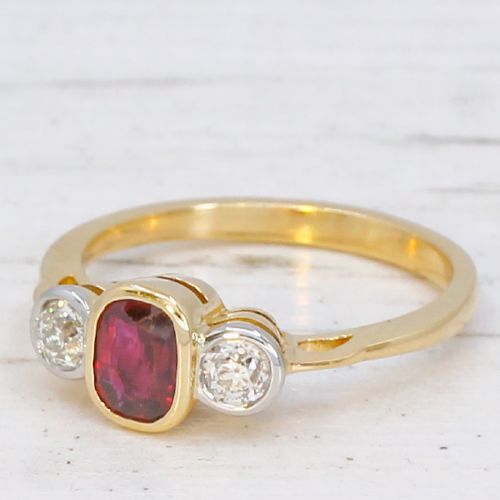
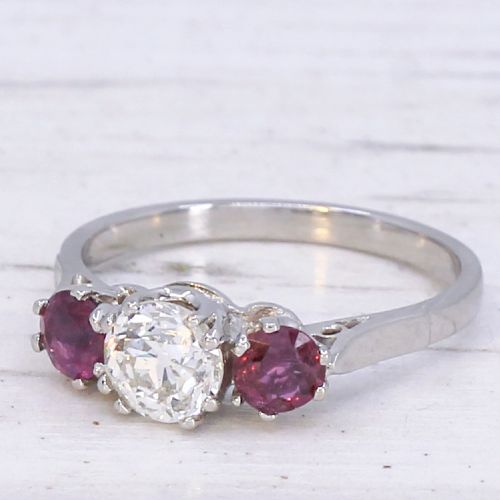
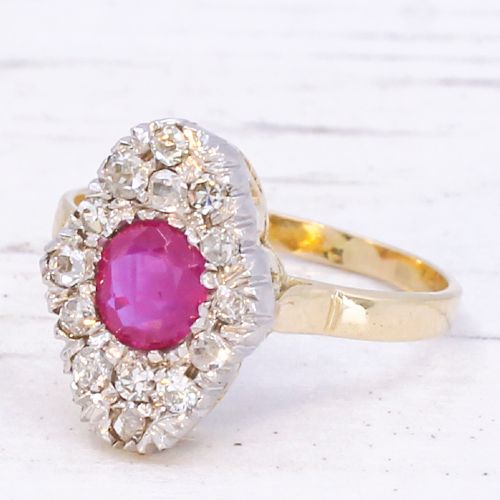


Red Stone Gold Band
These red stone gold band rings combine vibrant red gems with precious yellow or white gold settings across Victorian, Edwardian and later eras.
Red Stone Gold Band
You are most likely to meet classic five stone rings, starburst gypsy settings, and trilogy configurations featuring rubies, spinels, or paste alongside old cut diamonds. These designs range from late Victorian examples to mid-20th century bands.
The assortment reflects diverse stylistic movements, pairing rich red gems with traditional gold bands or white gold accents. Each piece demonstrates the enduring popularity of combining red stones with precious metal bands.
How they were made
Maker techniques rely heavily on 18ct yellow gold, 9ct gold, and platinum frames to secure the central red stones and diamonds. Jewelers utilised traditional setting methods such as starburst gypsy mounts and claw settings for multi-stone bands.
Stones incorporated into these rings include natural rubies, Burmese spinel, emerald paste, and old cut diamonds. These materials are shaped and faceted by hand to fit structured three stone and five stone arrangements.
Object types seen across the inventory consist entirely of rings, predominantly configured as five stone, trilogy, and gypsy settings.
What varies in quality
Quality differences stem from the origin and weight of the central red stones, alongside the presence of natural Burmese or Mogok origins. Finer examples feature substantial carat weights paired with old cut diamonds.
The Red Stone Gold Band Glossary
- Old cut diamond
- A diamond cut popular in the 19th and early 20th centuries, characterised by a smaller table and a high crown. These stones exhibit distinct hand-cut facets that catch candle or gas light differently than modern round brilliants.
- Gypsy ring
- A ring style where the stones are flush-set directly into the heavy gold band. This mounting style protects the girdle of the gem.
- Trilogy ring
- A ring featuring three main stones, often symbolising the past, present, and future. They frequently pair a central red stone with flanking diamonds.
- Starburst setting
- A design where metal rays or engravings radiate outward from the central stone. This technique magnifies the visual impact of smaller gems.
Red Stone Gold Band: Frequently Asked Questions
What is a red stone gold band?
A red stone gold band is an antique or vintage ring featuring a red gem such as a ruby, spinel, or paste set within a gold or platinum band.
These pieces span multiple eras, including Victorian, Edwardian, and Art Deco periods, encompassing styles like five stone rings and gypsy mounts.
How do I date a red stone gold band?
Dating involves examining the metal purity marks, setting styles, and cut of the diamonds or red stones. Victorian and Edwardian pieces often display distinct starburst patterns or hallmarking.
Mid-century examples show shifts towards cleaner lines and different carat distributions, while Art Deco rings feature geometric arrangements.
What metals are used in these rings?
These rings utilise 18ct yellow gold, 9ct gold, 18ct white gold, and platinum. Yellow gold dominates the Victorian and Edwardian selections.
White gold and platinum appear more frequently in later Art Deco and mid-century designs to contrast with the red stones.
Are rubies the only red stones found?
While rubies are most common, listings also include natural Burmese spinel and emerald paste. Each red stone offers a distinct tone and hue within the gold setting.
Origin details like Mogok or Burma occasionally accompany specific antique ruby pieces.
How should I care for an antique gold band?
Care requires gentle cleaning with warm soapy water and a soft brush, avoiding harsh chemical dips that might harm softer stones or paste. Regular inspection by a jeweler ensures the old cut diamonds and red stones remain secure in their gold or platinum settings.