


Red Ruby Jewellery
Red ruby jewellery brings together deep crimson stones and bright diamonds in settings of yellow gold, white gold, and platinum.
Red Ruby Jewellery
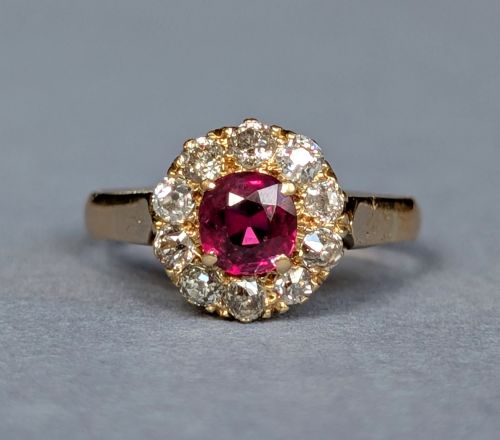
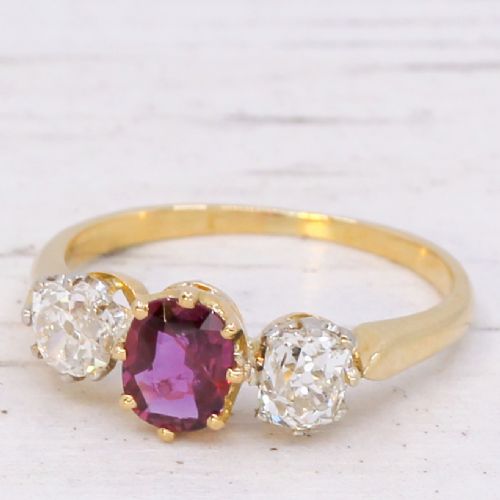
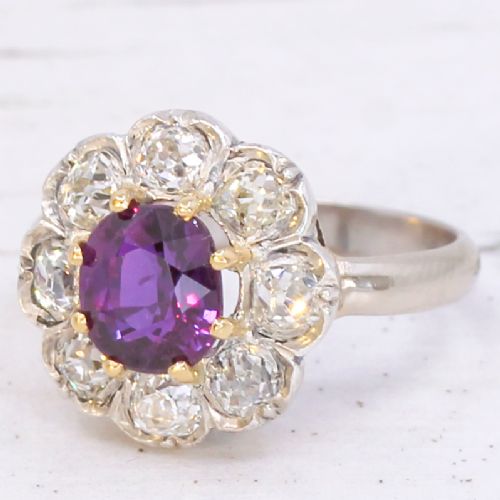
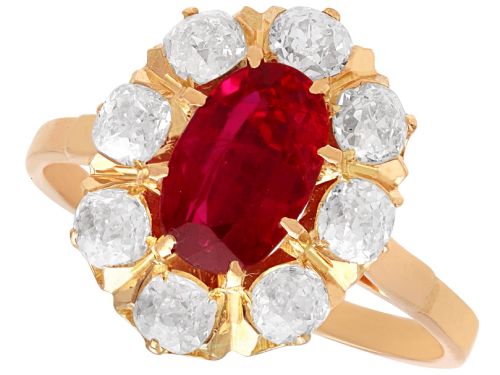
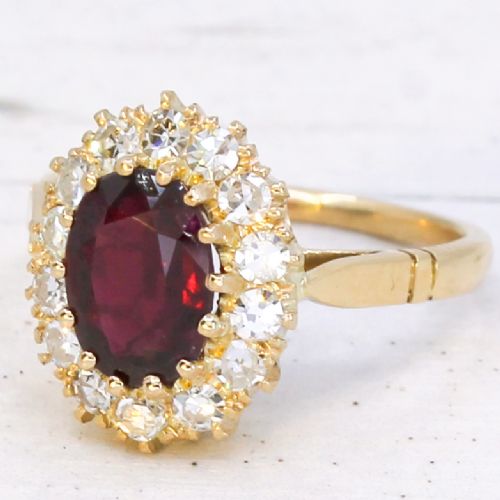
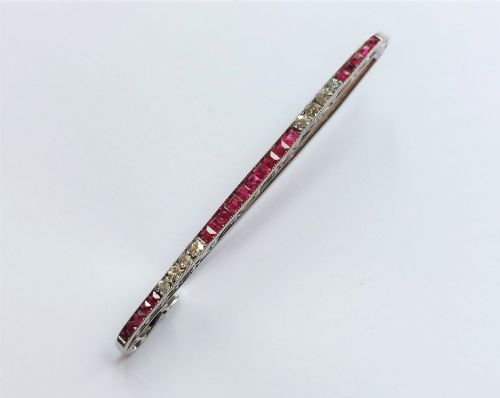
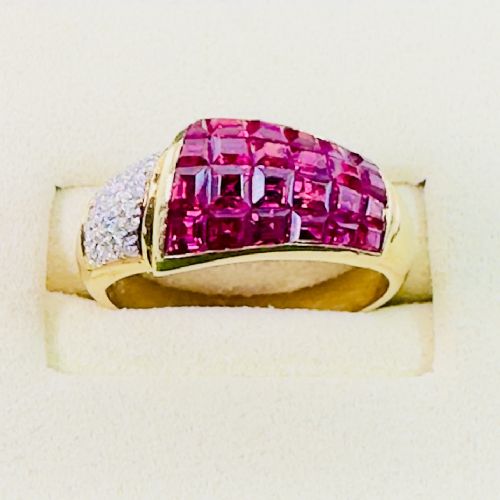
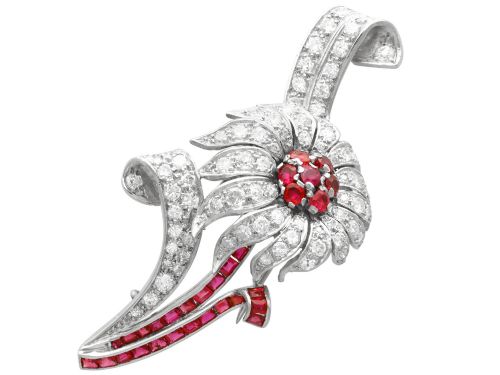
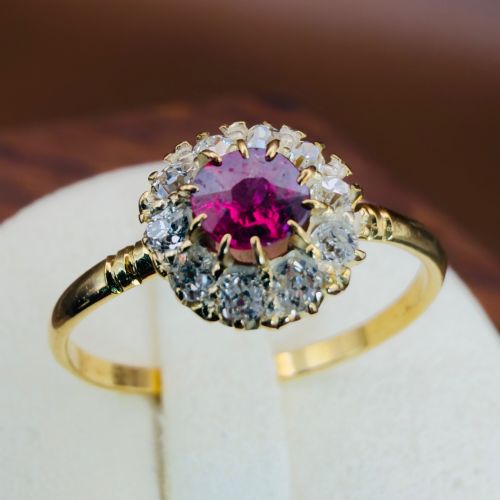
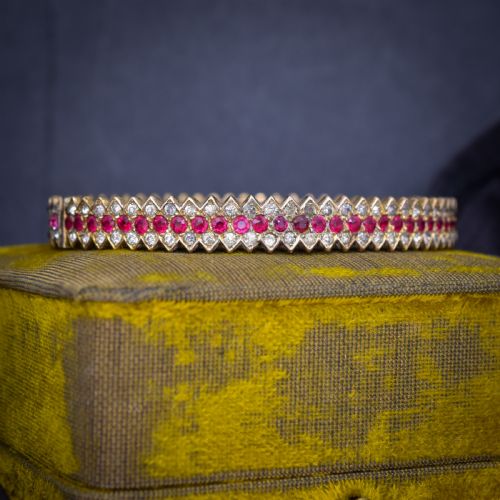
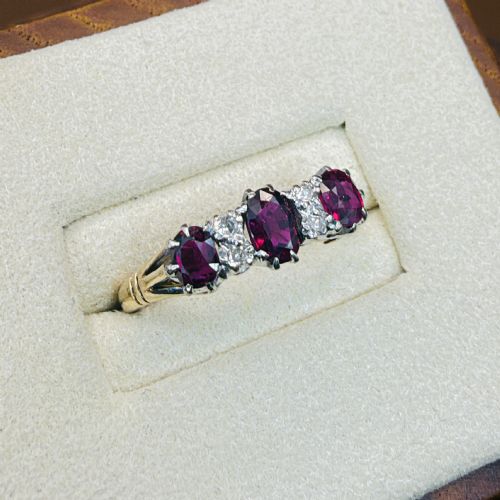
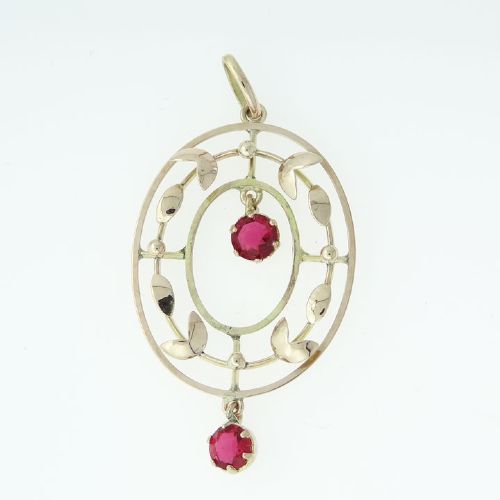
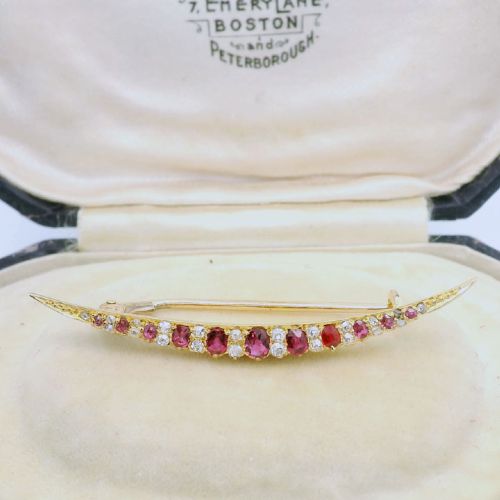
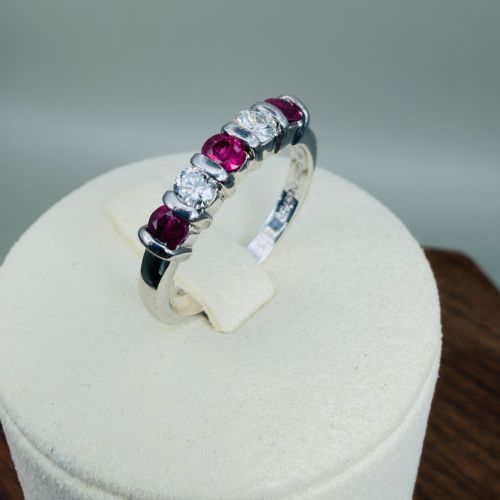
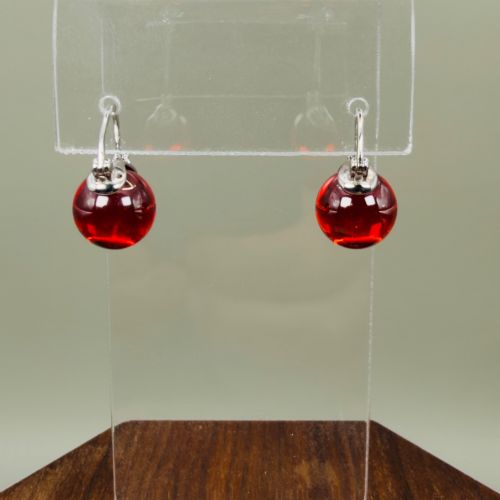
Red ruby jewellery encompasses rings, brooches, pendants, and bangles spanning the Victorian, Edwardian, Art Deco, and mid-century periods. Buyers searching for red ruby jewellery will find cluster rings, flower brooches, and multi-stone band rings set with diamonds. The pieces originate from decades including the 1900s, 1910s, 1920s, 1950s, and 1960s.
Cluster rings dominate the selection, often pairing a central ruby with old cut or brilliant cut diamonds in 18ct gold or platinum. Brooches and pendants from the Edwardian and Art Deco eras utilise delicate platinum work, bows, and geometric chevron designs. Yellow gold, rose gold, and silver provide alternative mountings across the various historical periods.
Examples range from late nineteenth-century starburst gypsy rings to unheated Burmese ruby dress rings from the mid-twentieth century. Buyers encounter both natural stones with gemmological reports and synthetic or paste alternatives from the same eras. Each object type reflects the prevailing design aesthetic of its decade of manufacture.
How they were made
Goldsmiths and platinum-smiths constructed these pieces using 18ct yellow gold, 18ct white gold, rose gold, platinum, and sterling silver. Stones were hand-set into claw, bezel, or flush settings, often incorporating old cut, princess cut, or baguette diamonds alongside the rubies. Metal weights varied, from heavy 18ct gold bands to delicate wirework and stamped platinum mountings.
Workshops employed traditional techniques such as starburst gypsy settings, navette cluster arrangements, and articulated hinge backs for earrings and bangles. Gemstones included both natural unheated rubies from sources like Mogok and Mong Hsu, as well as synthetic stones and paste. Metal alloys shifted across the decades from yellow gold towards platinum and white gold in mid-century pieces.
Red Ruby Jewellery Retail Price Guide 2026
Typical asking prices for red ruby jewellery among the pieces listed under this phrase on Sellingantiques today, from the lower quarter to the upper quarter. They describe what is for sale here now, not the wider market.
Day and night swivel rings let wearers flip between ruby clusters and plain bands without changing jewellery.
What varies in quality
The standard of red ruby jewellery depends on the origin and treatment of the gemstones, alongside the precision of the metalwork. Unheated natural rubies with certified origins command greater attention than synthetic stones or glass paste. The clarity, cut, and carat weight of accompanying diamonds also alter the overall caliber of a piece.
Construction methods dictate durability, with heavy gold castings and secure platinum settings representing finer manufacturing standards. Pieces accompanied by independent gemmological reports offer verified details regarding stone origin and thermal treatments. The intricacy of period designs, from hand-carved navette frames to balanced floral clusters, distinguishes superior examples.
The Red Ruby Jewellery Glossary
- Cluster ring
- A ring featuring a central gemstone surrounded by a border of smaller stones, typically diamonds. This layout maximises the visual impact of the central ruby.
- Navette
- A boat-shaped or marquise setting that tapers to points at either end. It was frequently utilised during the Victorian and Art Deco periods for rings and brooches.
- Old cut diamond
- A diamond cut by hand before modern machinery, characterised by a small table, high crown, and large culet. These stones appear in Georgian, Victorian, and Edwardian pieces.
- Unheated ruby
- A natural ruby that has not undergone thermal enhancement to improve its colour or clarity. Such stones are documented with gemmological reports.
- Paste
- Hand-cut and polished lead glass used as a diamond or gemstone simulant in antique and vintage items. It appears in decorative Edwardian and Art Deco pieces.
Red Ruby Jewellery: Frequently Asked Questions
How do I care for antique ruby jewellery?
Clean these pieces gently using warm soapy water and a soft brush, avoiding harsh ultrasonic cleaners. Store them individually in soft pouches to prevent diamonds from scratching softer metals or gems.
Inspect the claw settings periodically to ensure the rubies and diamonds remain secure. Professional checks by a jeweller help maintain the integrity of older gold and platinum mountings.
Are all rubies in these pieces natural?
The listings include a mix of natural unheated stones, treated stones, and synthetic or paste alternatives. Detailed descriptions and gemmological reports often specify the origin and treatment status of significant rubies.
Period pieces from the twentieth century frequently incorporated synthetic stones alongside natural diamonds. Examining the piece description clarifies whether the ruby is mined, synthetic, or glass paste.
How can I tell which period a ruby ring is from?
Dating relies on stylistic markers such as the geometric lines of Art Deco pieces or the heavy floral clusters of the mid-century. Metal choices also offer clues, with yellow gold dominating Victorian items and platinum defining Edwardian and 1950s mounts.
Diamond cuts provide further evidence, as old cut stones typically indicate nineteenth or early twentieth-century manufacture. Gemmological certification sometimes supplies an estimated era alongside stone specifications.