


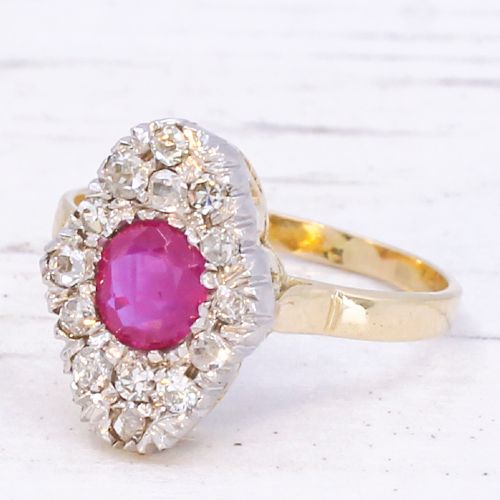
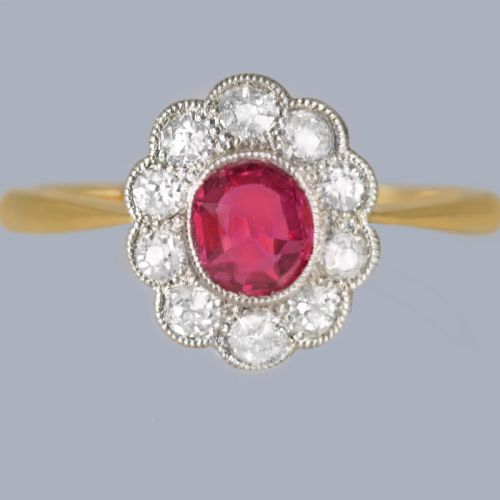
Red Ruby Diamond Band
A red ruby diamond band brings together the rich crimson of rubies and the bright sparkle of diamonds in a classic ring format.
Red Ruby Diamond Band
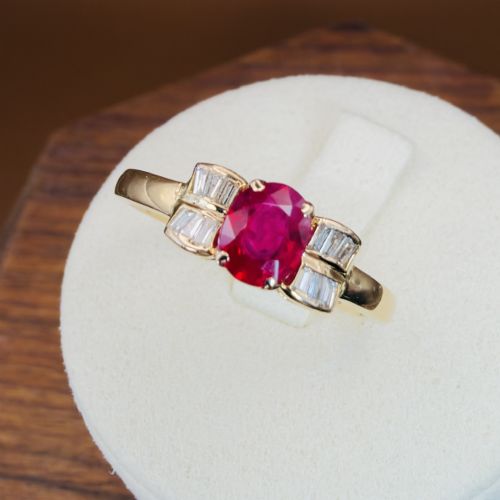
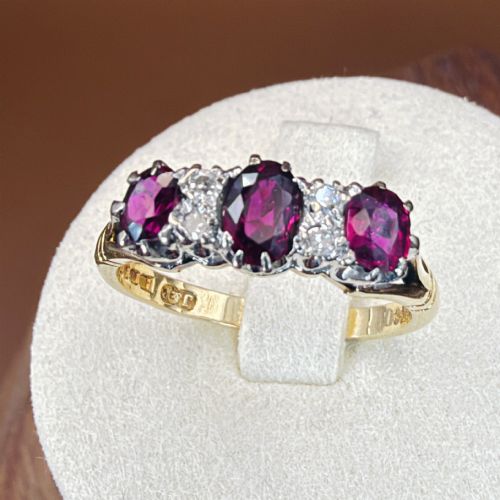
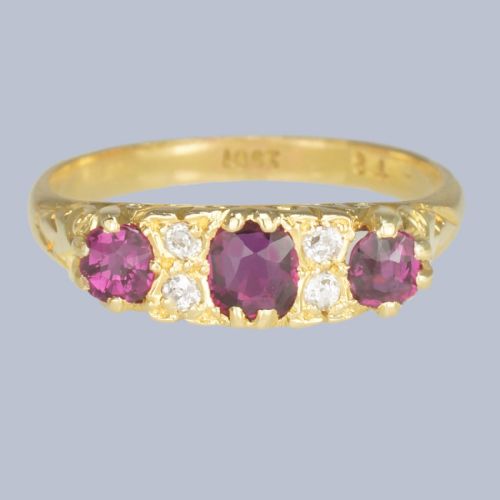
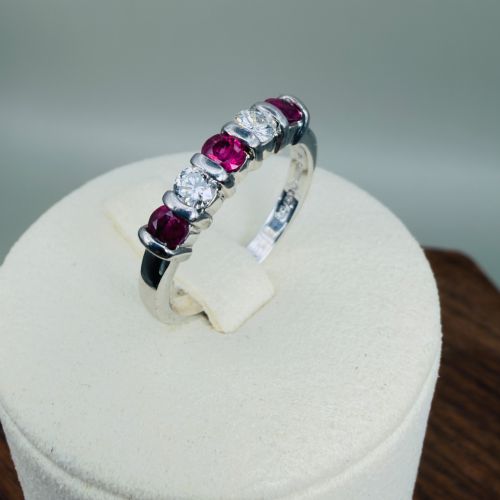
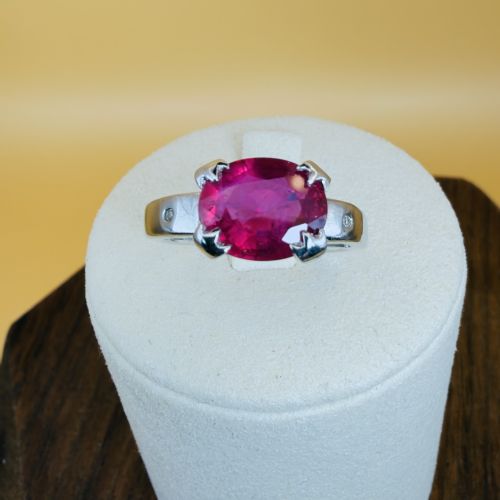
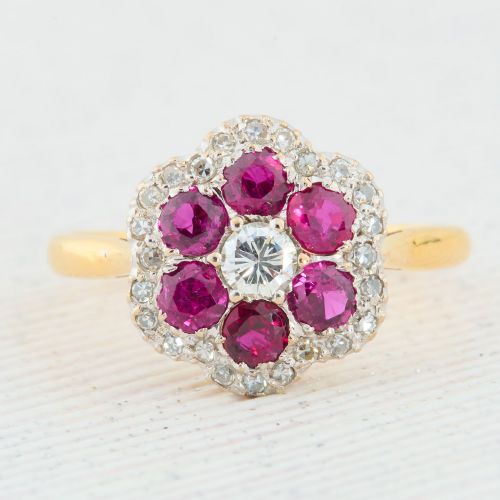
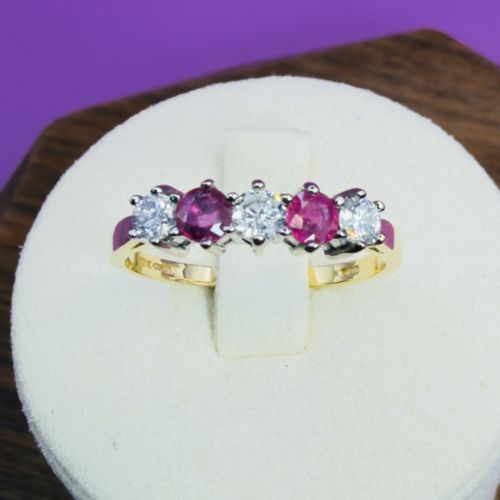
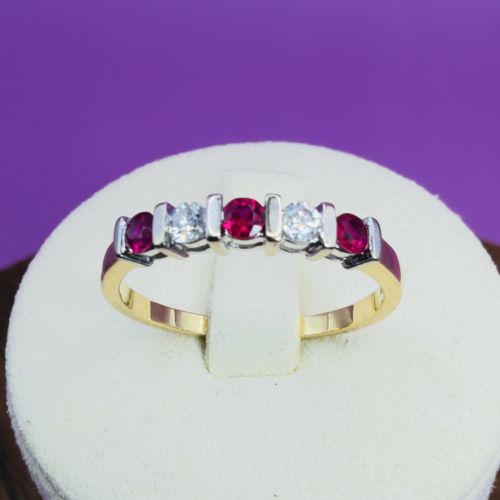
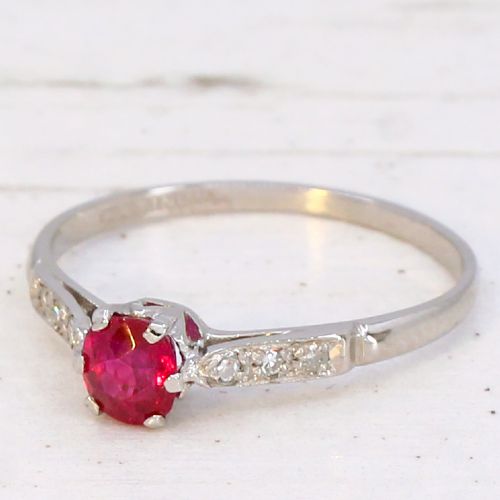
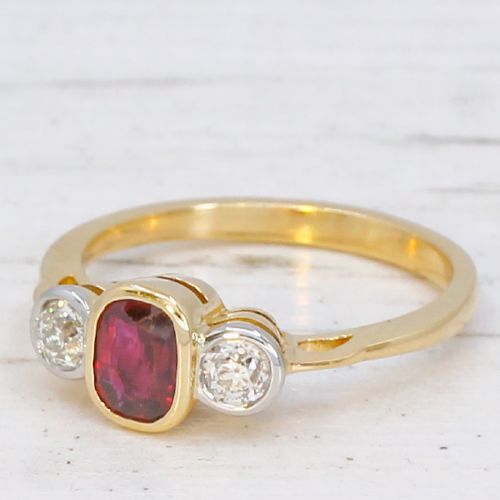
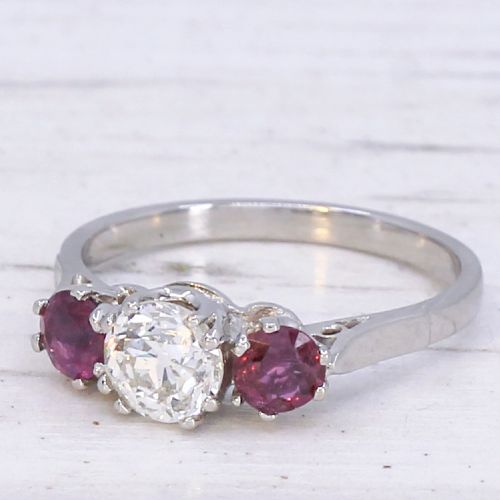
A red ruby diamond band is a ring combining rubies and diamonds set in gold or platinum. These pieces span the late nineteenth century through the mid-twentieth century, capturing periods such as the Victorian, Edwardian, Art Deco, and mid-century eras. The versions most commonly found here include cluster designs and five-stone arrangements.
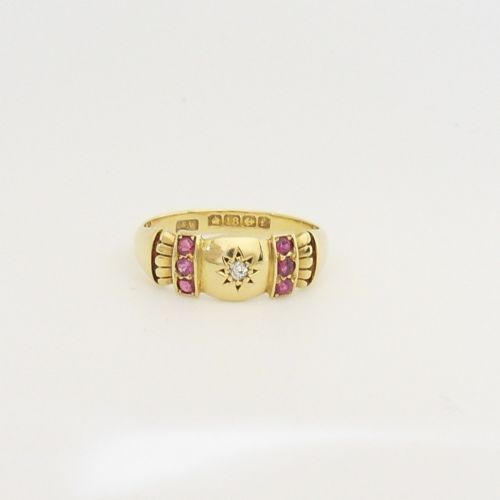
The selections range from antique starburst gypsy rings dated to the early twentieth century to later mid-century creations. Makers utilised yellow gold, white gold, and platinum as foundations for these stones. Each piece reflects the prevailing aesthetic of its decade, from intricate floral cluster arrangements to streamlined multi-stone bands.
Materials and construction
Craftsmen used eighteen-carat gold and platinum to house the gemstones. Yellow gold and white gold provide the structural bands, while platinum frequently appears in twentieth-century settings to secure individual stones. Stones are cut in various shapes, including oval, baguette, princess, and traditional old cuts.
Settings incorporate cluster formations, three-stone trilogy layouts, and starburst designs. The arrangement of rubies alongside diamonds requires precise metalwork to hold each gemstone securely within the band.
Factors of distinction
The distinction between tiers rests upon the quality and origin of the gemstones and the precision of the metalwork. Natural unheated rubies from sources such as Mogok in Burma command higher regard than treated stones. Additionally, the cut and clarity of the diamonds influence the overall calibre of the piece.
Subtleties in mount construction and the weight of the gold further define the standard of a ring. Heavier gold bands and secure, detailed settings indicate superior craftsmanship from their respective periods.
The Red Ruby Diamond Band Glossary
- Cluster ring
- A ring design featuring a central gemstone encircled by a group of smaller surrounding stones. This layout maximises visual impact by concentrating the sparkle of diamonds around a central ruby.
- Gypsy ring
- A style where stones are flush-set directly into the thick metal band rather than held in raised prongs. This technique creates a smooth exterior profile popular in nineteenth-century jewellery.
- Trilogy ring
- A three-stone ring symbolising the past, present, and future, typically displaying a central gemstone flanked by two smaller accent stones. These stones are usually matched in size or graduated.
- Old cut
- A diamond facet style pre-dating modern brilliant cuts, characterised by a smaller table and a higher crown. These stones exhibit a softer, candlelit luminescence.
- Baguette cut
- A step-cut diamond shaped into a narrow rectangle with straight parallel facets. They often serve as accent stones flanking a central ruby in mid-century designs.
Red Ruby Diamond Band: Frequently Asked Questions
How do I wear a ruby and diamond band daily?
These rings pair well alongside plain metal wedding bands or can be worn alone as a statement piece on the hand. Ensure the ring fits securely to prevent undue friction against neighbouring bands.
Because gold and platinum hold stones firmly, careful daily wear is suitable, though removal during manual labour protects the prongs and setting from impacts.
What periods do these rings come from?
The available pieces originate from the late nineteenth century, including Victorian and Edwardian examples, moving through the geometric lines of the Art Deco era and into mid-century modern designs.
Each period imparts distinct characteristics, such as the starburst motifs of the early nineteen-hundreds or the heavier gold settings of the nineteen-fifties.
Are the rubies natural?
Many listings specify natural stones, including examples originating from the Mogok region in Burma. Gemmological reports sometimes accompany specific pieces to verify stone origin and treatment status.
Examining the individual listing details will confirm if a formal gemmological report is included with that particular ring.
How do I clean an antique ring?
Clean antique jewellery gently using warm water and mild washing-up liquid with a soft-bristled brush. This removes everyday oils without harming the gold or platinum setting.
Avoid harsh chemical dips or ultrasonic cleaners, particularly on older settings where stones might be secured with paste or older foil backs.