


Red Lacquer Side Cabinet
A red lacquer side cabinet brings warmth and striking narrative detail to a room, drawing the eye with rich colour and traditional ornament.
Red Lacquer Side Cabinet
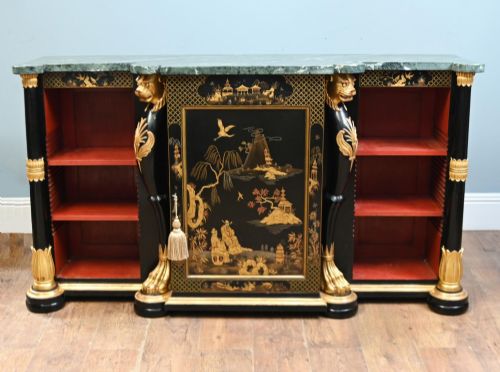
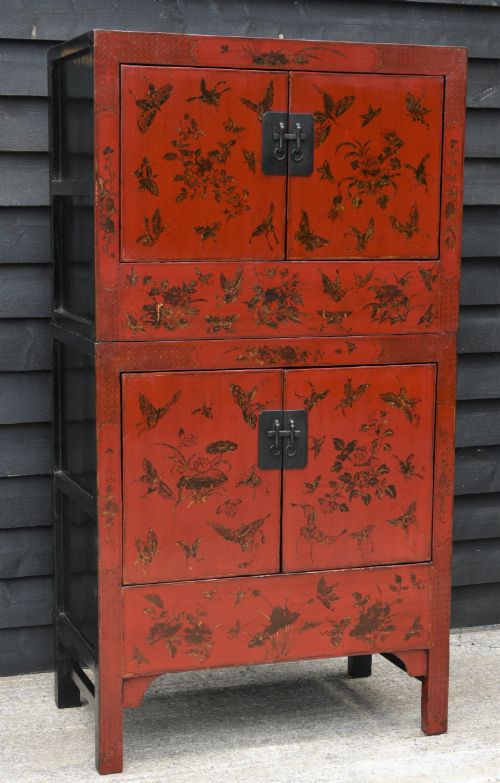
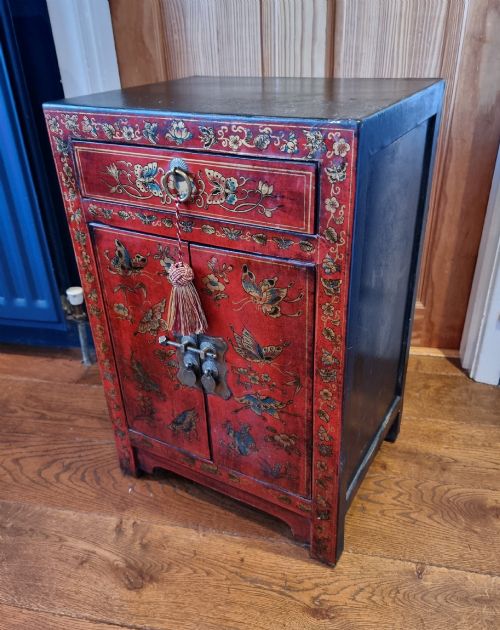
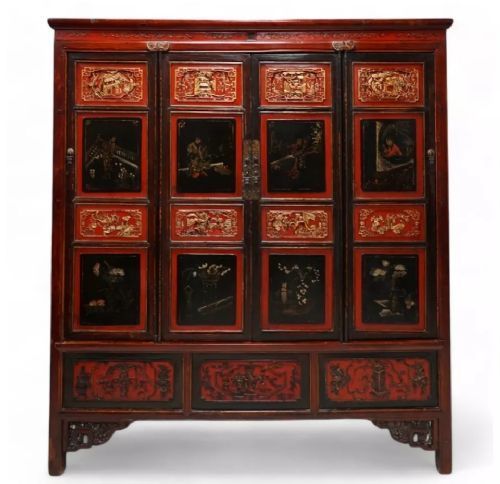
A red lacquer side cabinet combines functional storage with vibrant surface decoration, frequently taking the form of marriage cabinets, cupboards, or bedside tables. Most examples originate from Chinese workshops of the nineteenth and early twentieth centuries, alongside English and European pieces rendered in the Chinoiserie style.
The selection ranges from tall elm marriage cabinets bearing auspicious motifs to smaller twentieth-century bedside pairs and decorative sideboards. Traditional Chinese forms often utilise sturdy local hardwoods like elm beneath the pigmented coatings, while European interpretations lean towards refined occasional furniture.
Buyers encounter a distinct mix of nineteenth-century traditional Chinese construction and later twentieth-century Chinoiserie revival pieces. These items serve equally well as prominent focal points or functional storage units within modern interiors.
How they were made
Construction relies on traditional timber framing, frequently employing elm or mahogany as the structural core for stability. Artisans applied successive coats of lacquer to the wood surface, building up a durable finish that could be polished, carved, or painted.
Many surfaces receive intricate gold leaf detailing or carved relief work, particularly on pieces associated with the Qing Dynasty or later Chinoiserie revivals. Brass and iron hardware, including traditional hinge plates and lock pins, secure the doors while adding metallic contrast to the red ground.
The recorded styles encompass traditional Chinese work, Qing Dynasty design, and European Chinoiserie interpretations.
What varies in quality
Quality reveals itself in the depth of the lacquer finish and the crispness of any carved or gilded decoration. Superior pieces display smooth, even layering without excessive modern repainting, preserving the subtle textural nuances of the underlying materials.
The integrity of the timber joinery and the original state of the brass or iron mountings distinguish exceptional examples from simpler utility pieces. Well-preserved surface motifs and balanced proportions indicate careful workshop execution during manufacture.
The Red Lacquer Side Cabinet Glossary
- Chinoiserie
- European decorative style reflecting Chinese artistic influences, popular in furniture and interior design during various periods. It typically involves painted or lacquered motifs depicting figures, landscapes, and pagodas.
- Lacquer
- Protective and decorative coating applied to wood, derived from natural tree sap or synthetic resins. It hardens into a durable, smooth shell that accepts pigments and metallic leaf.
- Cinnabar
- Mineral form of mercurial sulphide used to produce a deep red pigment for lacquer work. Artisans carved intricate relief designs directly into thick layers of this red material.
- Marriage cabinet
- Large traditional Chinese storage cupboard traditionally given as a wedding gift. These tall pieces often feature prominent metal hardware and symbolic carving.
Red Lacquer Side Cabinet: Frequently Asked Questions
How do I clean red lacquer?
Dust surfaces gently with a soft, dry microfibre cloth to prevent scratching the delicate finish.
Avoid chemical polishes, abrasives, or excessive moisture, which can damage the historic lacquer layers over time.
Where should I place a cabinet?
Position the piece away from direct sunlight and strong heat sources to prevent the wood and lacquer from drying out or cracking.
These cabinets work well as statement pieces in hallways, living rooms, or bedrooms where their vibrant colour can anchor the room.
Are these cabinets purely decorative?
While visually striking, these pieces offer practical enclosed storage with internal shelving or hanging space depending on the specific form.
Sideboards and smaller cupboards accommodate everyday items while maintaining a refined aesthetic.
How do I distinguish age?
Examine the timber construction methods, wear patterns on the hardware, and the natural ageing of the lacquer surface.
Nineteenth-century Chinese examples often show characteristic shrinkage in the elm wood and softer patination compared to later revival pieces.