


Red Glass Jewellery
Red glass jewellery comprises wearable ornaments of paste, garnet, and ruby glass spanning the Georgian era to the mid-twentieth century.
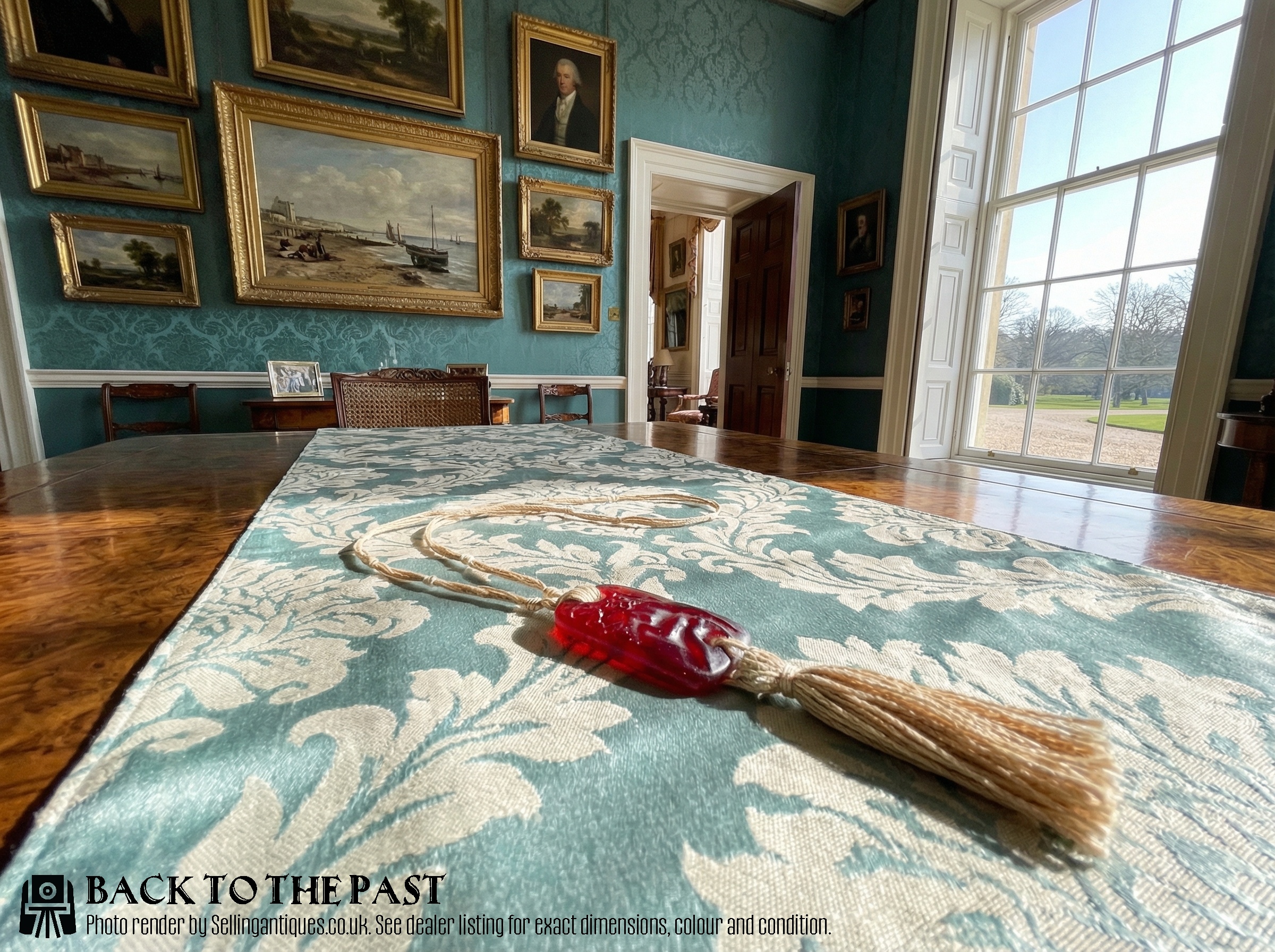
Red Glass Jewellery
Red glass jewellery covers a range of decorative personal ornaments, including rings, brooches, necklaces, and earrings. Pieces incorporate glass set in various metal mounts, taking forms from early silver and gold settings to later silver-plated and gilt frames. Collectors searching for red glass jewellery encounter items designed for personal adornment across multiple distinct periods of design.
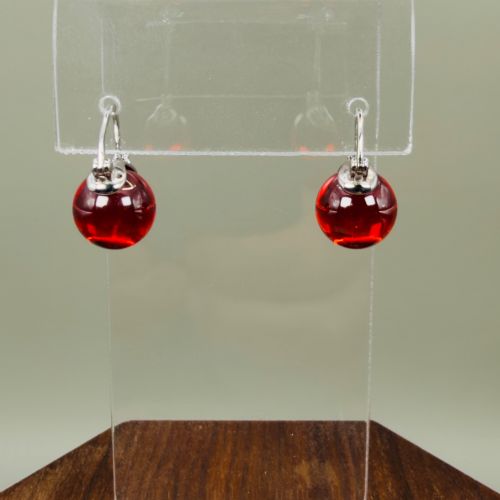
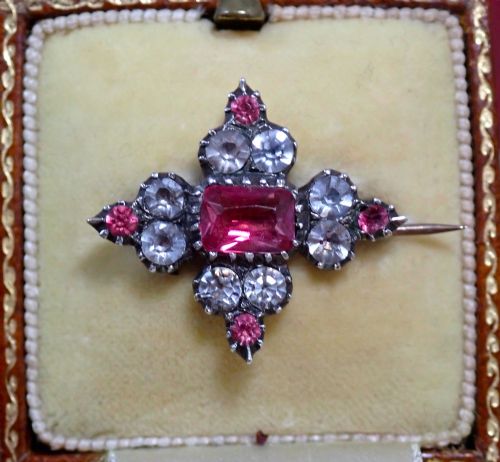
The selections span styles from the Georgian period through the Edwardian era and into Art Deco and mid-century modernism. Early examples feature hand-cut pastes and foil-backed stones, whilst later twentieth-century pieces utilise synthetic ruby beads and moulded elements. This continuity of glass utilisation demonstrates changing tastes in personal ornamentation over successive centuries.
How red glass jewellery was made
Makers utilised glass, paste glass, and synthetic stones set within precious and base metals such as gold, silver, or gilt metal. Artisans shaped glass through cutting, moulding, and enamelling techniques to imitate precious gemstones. Metalwork involved hand-fabricating mounts and hinges to secure the fragile glass components safely.
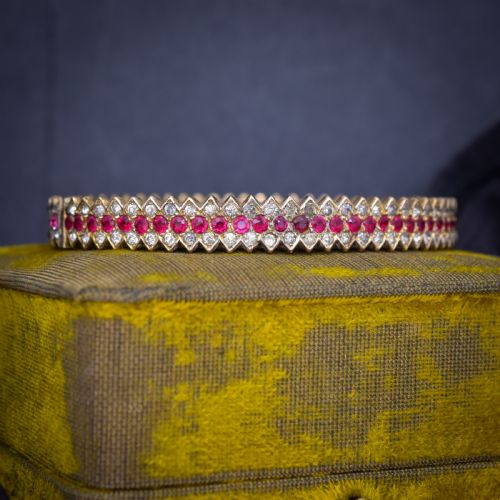
Techniques varied from the foil-backing of Georgian paste stones to enhance light reflection, through to Edwardian riviere necklaces and Art Deco chevron motifs. Nineteenth-century pieces often combined glass elements with velvet or metal structures, whilst later twentieth-century items incorporated silver plating and synthetic beads.
Some red glass pieces include hidden spaces for locks of hair, proving that Victorians liked their sentimentality with a side of dramatic colour.
What varies in quality in red glass jewellery
Quality rests upon the precision of the glass cutting and the integrity of the metal setting. Finer pieces demonstrate careful hand-faceting of paste or glass stones to maximise brilliance, alongside robust precious metal mountings. Inferior examples exhibit softer facets, simple moulded construction, or heavier, less refined base metal frames.
The refinement of the design work, such as the intricacy of an Art Deco chevron pattern or the execution of an enamelled surface, distinguishes standard items from exceptional ones. Condition of the individual glass components and the originality of the associated settings further influence the standing of any piece within its period.
Rene Lalique
The Red Glass Jewellery Glossary
- Paste
- Hand-cut glass used to imitate gemstones in historic jewellery. It was faceted and polished to catch the light in the manner of precious stones.
- Riviere
- A necklace composed of a continuous line of similar gemstones or glass stones linked individually. These items were popular during the Georgian and Edwardian periods.
- Gilt metal
- Base metal treated with a thin layer of gold applied to its surface. This technique provided the appearance of solid gold at a lower cost.
- Verre eglomise
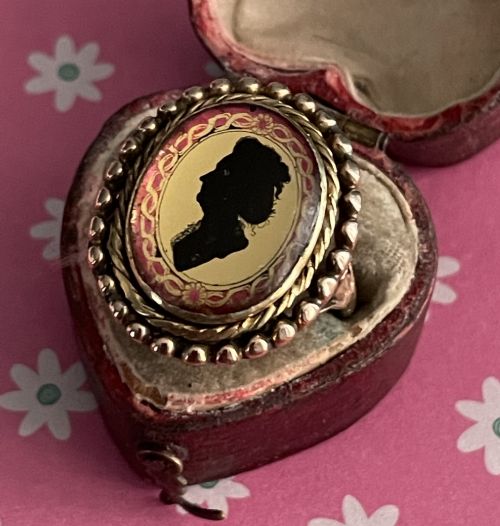
- A historic process of applying gold or silver leaf to glass combined with engraving and painting. It appears in early rings and decorative elements.
- Synthetic ruby
- Laboratory-created corundum utilised as a durable alternative to mined gemstones in twentieth-century pieces. It offers consistent colour and clarity.
Red Glass Jewellery: Frequently Asked Questions
How do I date red glass jewellery?
Dating relies on the style of the metal mount, the cut of the glass, and the construction techniques employed. Georgian and Victorian pieces typically feature closed-back settings and hand-cut stones, whilst Edwardian items often use lighter platinum or gold frames.
Later Art Deco and mid-century pieces introduce geometric motifs, synthetic materials, and alternative base metals like silver plate. Comparing these structural characteristics against known period styles helps establish the approximate age of a piece.
How should I care for red glass jewellery?
Historic red glass pieces require gentle handling to protect fragile glass facets and aged metal settings. Avoid harsh chemical cleaners, ultrasonic baths, and prolonged immersion in water, which can damage foil-backed stones or delicate glues.
Store items individually in lined boxes to prevent scratching between pieces. Periodic inspection of the prongs and mounts by a professional jeweller ensures settings remain secure.
What is the difference between glass and paste?
Glass is a broad term for melted silica shaped into various forms, whereas paste specifically denotes high-lead glass that has been hand-cut and polished to resemble a gemstone. Paste stones possess a higher refractive index than standard window glass, giving them greater sparkle.
Jewellers utilised paste in historic jewellery to achieve brilliance and colour without relying exclusively on expensive mined gems.