


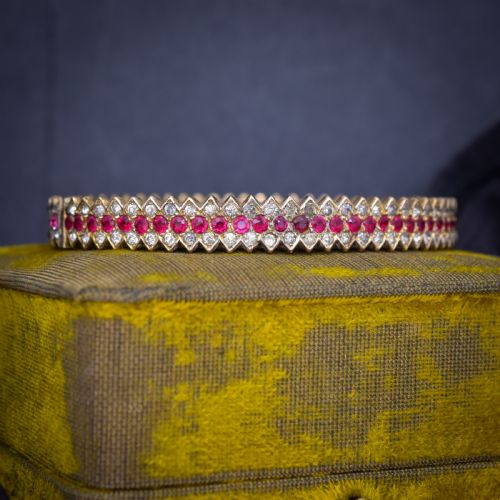
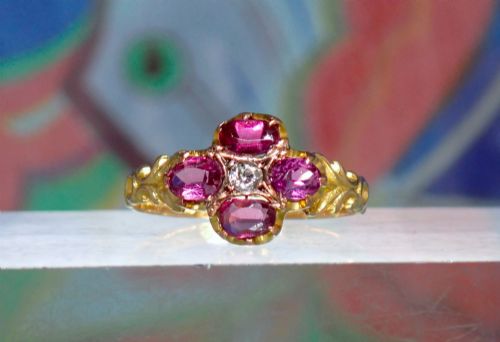
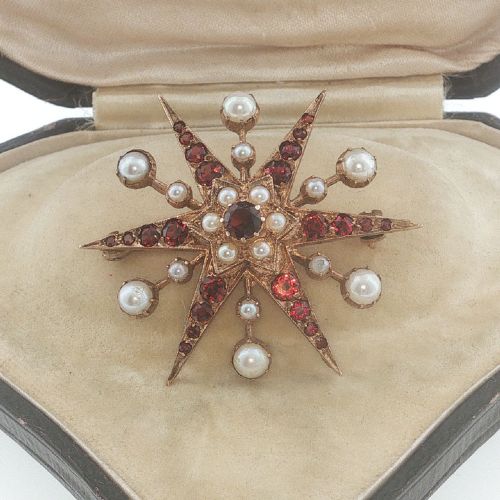
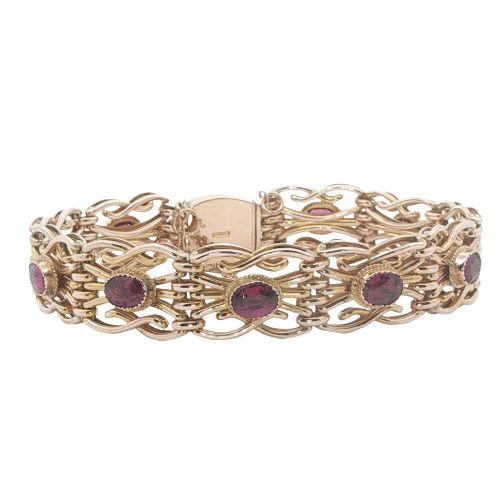
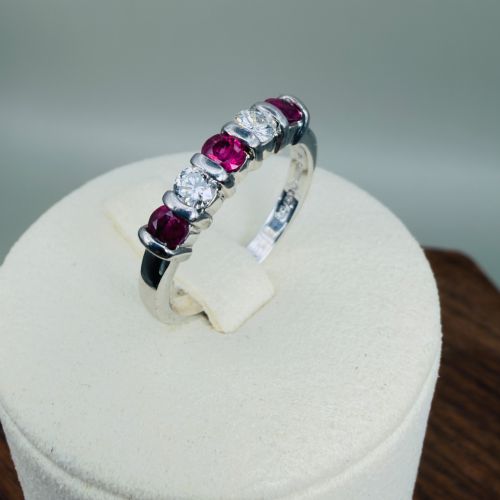
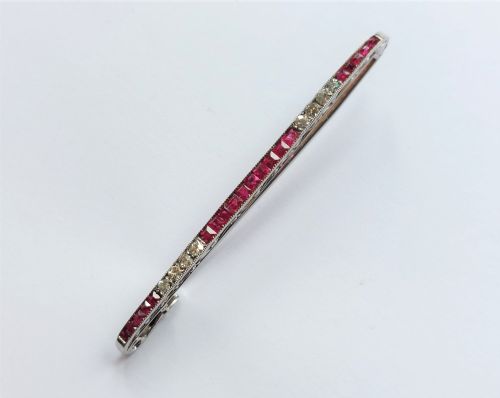
Red Gemstone Jewellery
Red gemstone jewellery brings together rubies, garnets, agates and carnelians set in gold, platinum and silver across periods from the Georgian era to the mid-twentieth century.
Red Gemstone Jewellery
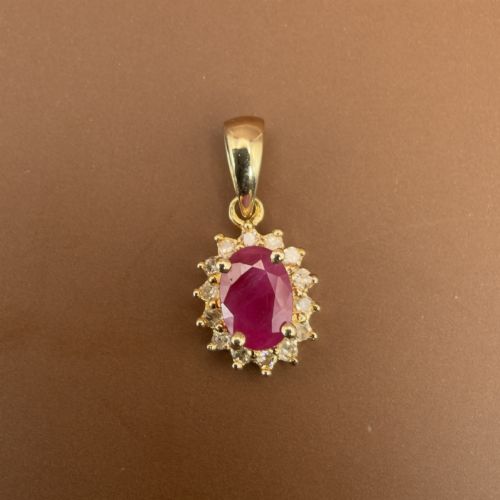
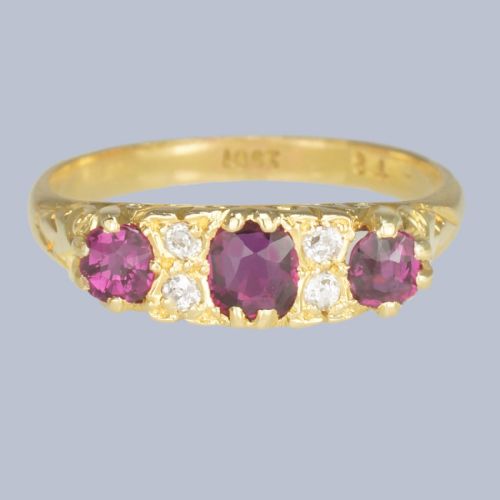
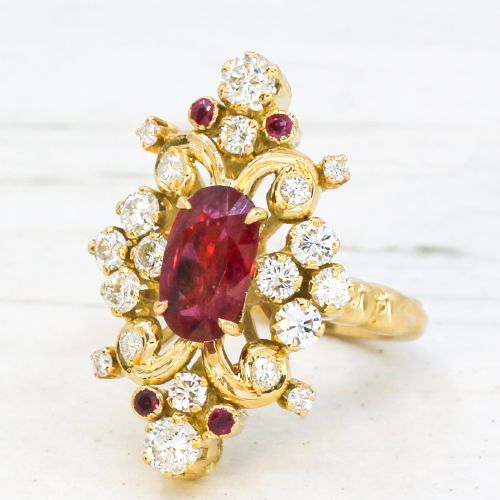
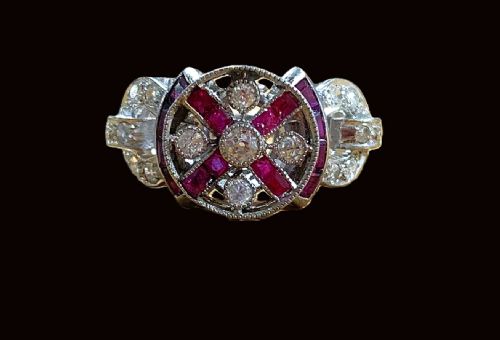
Red gemstone jewellery spans rings, bracelets, brooches, earrings and pendants shaped by Victorian, Edwardian, Art Deco and mid-century hands.
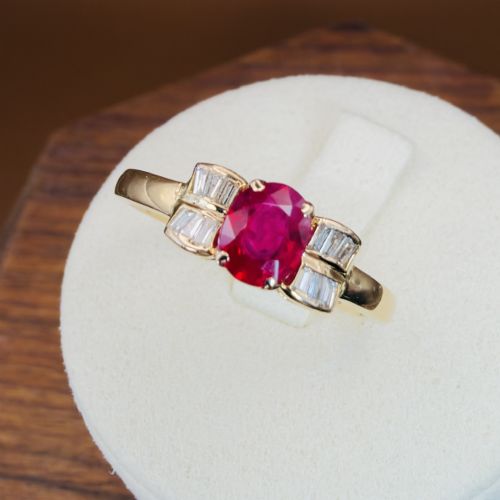
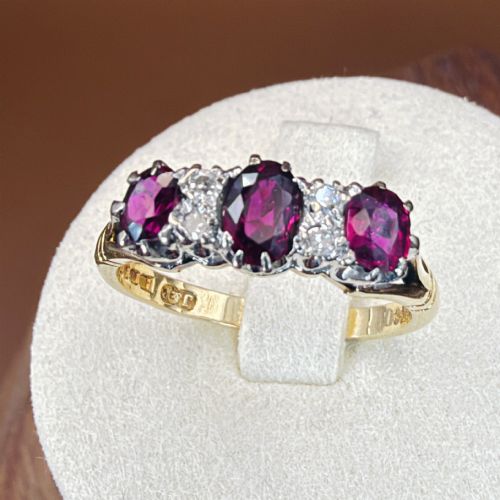
The pieces appearing most frequently on this page combine rubies and garnets with diamonds in gold and platinum settings.
Makers ranged from Georgian workshops working in yellow gold to twentieth-century designers employing white gold and platinum for cluster and band arrangements.
How they were made
Goldsmiths set stones into 9ct, 15ct and 18ct gold, platinum and silver using techniques like starburst surrounds, cluster arrangements and gypsy mountings.
Gemstones including rubies, almandine garnets, red agates and carnelians were shaped into oval, baguette, pear and cabochon cuts before mounting.
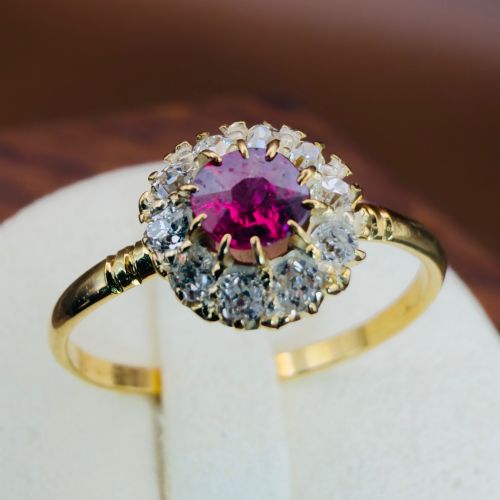
Artisans secured diamonds alongside red stones using claw, bezel and pavé methods to construct rings, brooches, bracelets and pendants.
Listings feature yellow gold, rose gold, white gold, platinum and silver combined with rubies, garnets, diamonds, agates and carnelians.
What varies in quality
Quality rests upon the natural origin and depth of colour in the central red stones, alongside the weight and clarity of accompanying diamonds.
Workmanship shows in the precision of the metalwork, from delicate starburst engravings to robust platinum cluster settings.
The integrity of the piece depends on how well the original mounts and stones have survived intact through successive generations.
The Red Gemstone Jewellery Glossary
- Cluster ring
- A ring featuring a central gemstone surrounded by a ring of smaller stones, typically diamonds framing a ruby. This design maximises visual impact and light reflection.
- Almandine garnet
- A deep red variety of garnet commonly utilised in Victorian and Edwardian gold rings and bracelets. These stones provide a dense, dark crimson hue.
- Gypsy ring
- A style where stones are flush-set directly into a heavy, tapering metal band. This secure setting gained popularity during the late nineteenth century.
- Cabochon
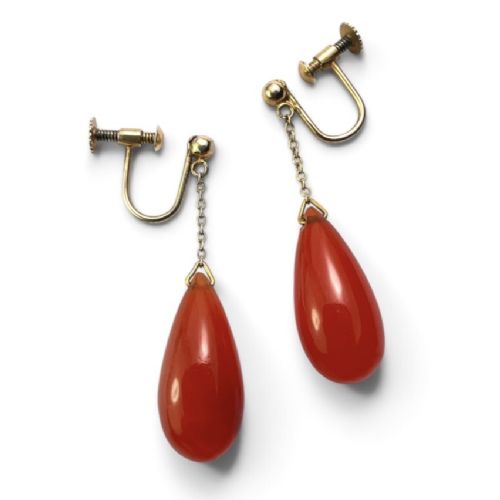
- A gemstone cut with a smooth, rounded, convex upper surface rather than faceted planes. This technique suits opaque red stones like carnelian and garnet.
- Navette ring
- A ring featuring an elongated, boat-shaped gemstone arrangement that sits lengthwise along the finger. The marquise outline creates a distinctive silhouette.
Red Gemstone Jewellery: Frequently Asked Questions
What periods do these pieces come from?
The selections span from the late Georgian era through Victorian, Edwardian and Art Deco periods into the mid-twentieth century. Each era brought distinct metal alloys and mounting styles to the red stones.
Victorian and Edwardian examples often feature rich yellow or rose gold, while mid-century pieces lean towards white gold and platinum settings.
How should I care for red gemstone jewellery?
These items require gentle cleaning with warm water, mild soap and a soft brush to preserve the integrity of the gold, platinum and silver settings. Avoid harsh ultrasonic cleaners, particularly with organic or softer stones like carnelian and agate.
Store pieces separately in lined boxes to prevent harder diamonds from scratching the softer red gems and precious metal bands.
What is the difference between a ruby and a garnet?
Rubies are a variety of corundum, prized for their vibrant red fluorescence and exceptional hardness on the Mohs scale. Garnets are a distinct mineral group offering deep, earthy crimson tones often seen in antique Victorian pieces.
Microscopic examination or gemmological reports usually confirm the exact mineral species when visual appearance alone leaves room for doubt.
Can these rings be resized easily?
Resizing depends primarily on the band material, such as 9ct gold or platinum, and whether the shoulders feature intricate engraving or closely set stones. Solid gold shanks without side stones adjust most straightforwardly.
Consult a skilled jeweller who can evaluate the structural integrity of cluster settings or starburst mounts before undertaking any alterations.