




Red Gem Ring
A red gem ring brings together deep crimson stones and bright precious metals in lasting Victorian, Edwardian, and mid-century designs.
Red Gem Ring
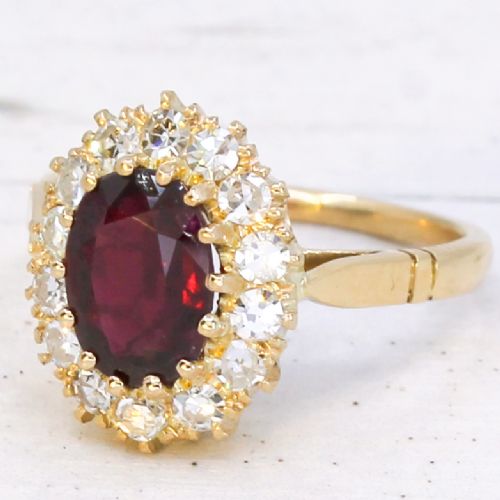
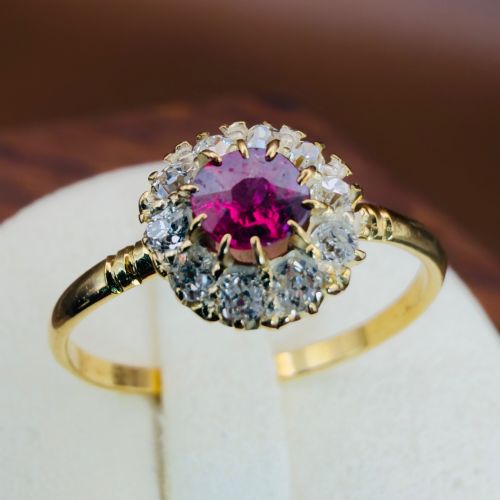
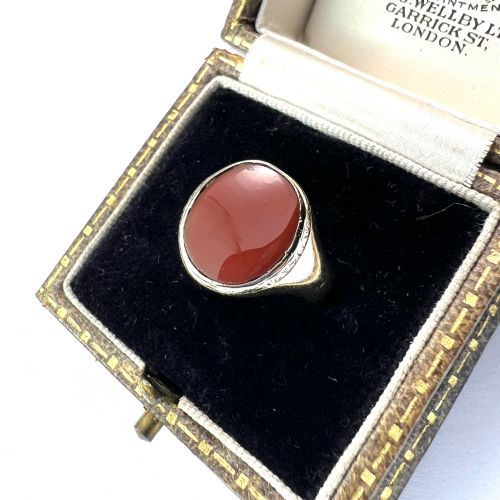
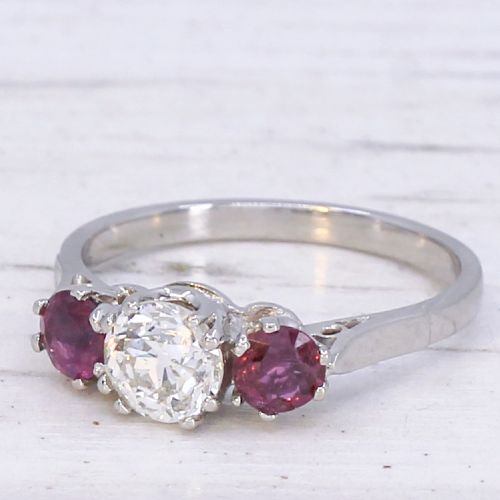
When you search for a red gem ring, you encounter a selection of antique and vintage jewellery spanning from the nineteenth century through the mid-century decades. The pieces on this page comprise cluster rings, three-stone configurations, starburst gypsy rings, solitaire signet designs, and full eternity bands.
Rubies dominate the selection, often paired with diamonds in halo or cluster arrangements, alongside examples featuring garnets or carnelian jasper. These items originate across distinct historical periods including the Victorian era, the Edwardian period, and the Art Deco style of the 1930s and 1940s.
Materials and construction methods
Craftsmen utilised various purities of gold, including nine-carat and eighteen-carat yellow and white gold, alongside platinum to mount the stones. Gemstones such as rubies, garnets, and carnelian jasper were shaped into oval, pear, and old-cut stones, then secured alongside diamonds.
The construction employs traditional setting techniques to support cluster, halo, trilogy, and starburst layouts. Metalwork ranges from simple signet bands to intricate platinum eternity channels and multi-stone cluster frames.
Red Gem Ring Retail Price Guide 2026
Typical asking prices for red gem ring among the pieces listed under this phrase on Sellingantiques today, from the lower quarter to the upper quarter. They describe what is for sale here now, not the wider market.
The listings span from Victorian nineteenth-century pieces through Edwardian, Art Deco, and mid-century 1960s designs.
Assessing quality in red gem jewellery
Quality separates pieces by the presence of unheated or Burmese ruby origins and the carat weight of accompanying old-cut diamonds. Higher tier examples demonstrate careful stone matching and substantial metal weights in eighteen-carat gold or platinum.
Design complexity also defines the range, moving from simpler nineteenth-century gypsy rings to elaborate Art Deco cluster formations. The distinction lies in the integration of the central red gem with its surrounding diamond work.
The Red Gem Ring Glossary
- Cluster ring
- A ring featuring a central prominent gemstone encircled by a group of smaller stones, typically diamonds. This arrangement maximises visual impact and light reflection.
- Gypsy ring
- A style where stones are flush-set directly into the thick metal band, creating a smooth surface. These were popular in the nineteenth century.
- Old cut diamond
- A precursor to the modern brilliant cut featuring a smaller table and larger facets, common in antique pieces. It produces a distinctive softer glow under candlelight.
- Trilogy ring
- A three-stone ring symbolising the past, present, and future, frequently combining a central ruby with flanking diamonds. The stones are usually graduated in size.
- Signet ring
- A solid metal ring traditionally engraved with a crest or monogram, sometimes set with a flat stone like carnelian jasper. It sits flat against the finger.
Red Gem Ring: Frequently Asked Questions
How do I care for a ruby ring?
Rubies are durable gemstones that withstand everyday wear, yet they still require gentle cleaning with warm soapy water and a soft brush.
Avoid harsh chemical cleaners and ultrasonic devices, particularly if the ring incorporates softer mounted stones or antique gold settings.
Are Victorian ruby rings durable?
Victorian ruby rings utilise solid eighteen-carat yellow gold and robust settings designed for daily nineteenth-century use.
Regular checks by a jeweller ensure the claws holding the ruby and diamonds remain secure over time.
What does a three-stone ruby ring mean?
A three-stone ruby ring traditionally represents a progression of time or sentiment, pairing a central red gem with two side diamonds.
This configuration spans various eras, appearing in both nineteenth-century gypsy mounts and mid-century platinum settings.