





Red Footstool
These red footstool examples combine mahogany, walnut, or oak frames with rich upholstery to provide practical comfort and period character.
Red Footstool
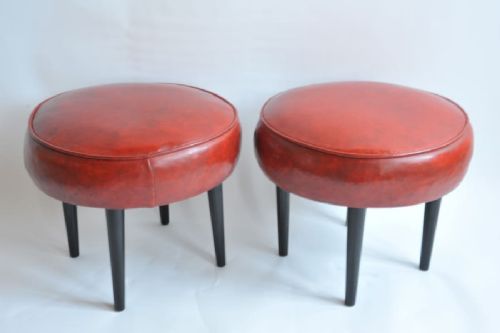
A red footstool is a low seating piece typically designed to support feet or serve as a low seat, appearing across eighteenth, nineteenth, and early twentieth-century periods.
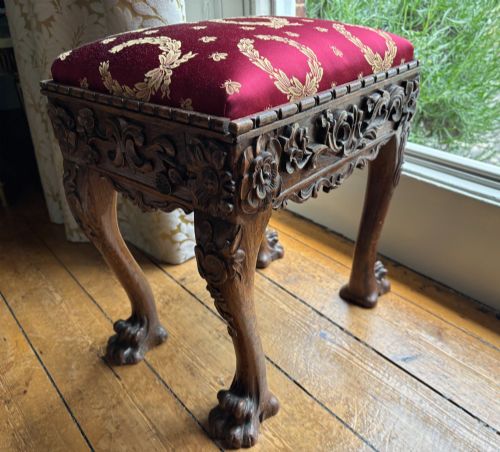
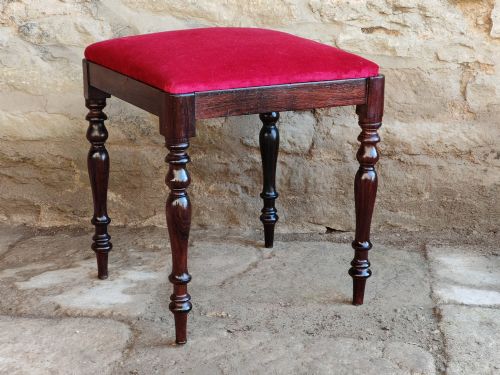
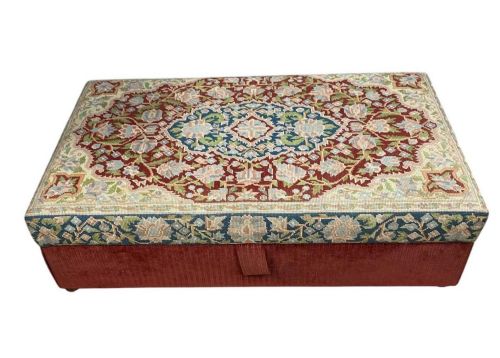
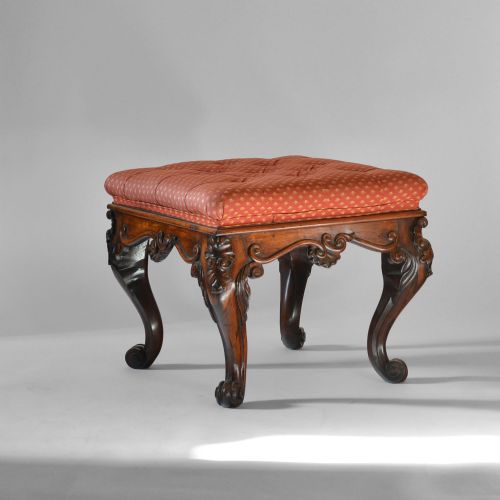
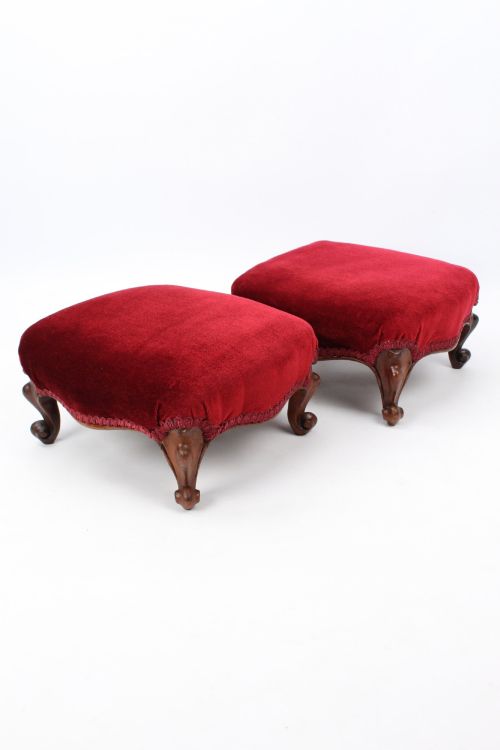
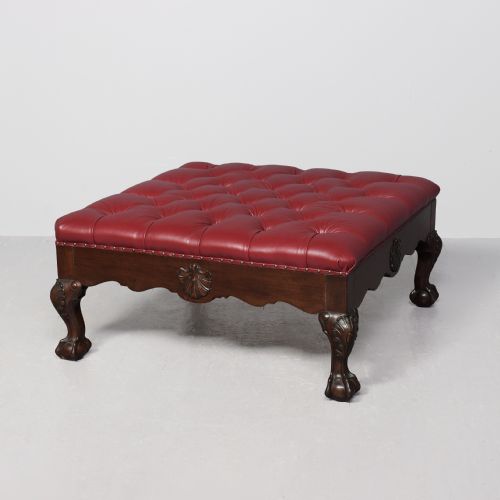
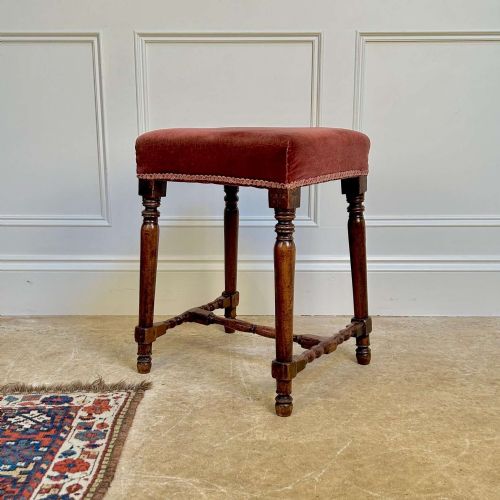
The versions most common here feature mahogany or walnut timber frames paired with red leather, hide, velvet, tapestry, or damask upholstery.
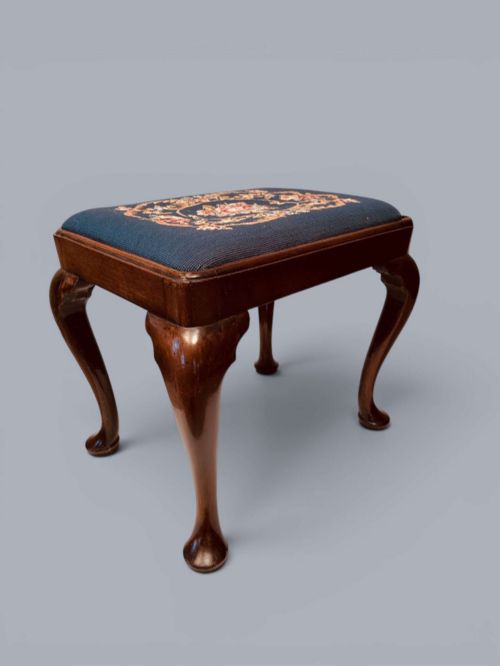
Makers utilised various traditional styles, ranging from Georgian and Victorian to Chippendale Revival, Queen Anne, and Anglo-Indian designs.
Construction and materials
Frames rely on hardwoods such as mahogany, walnut, oak, and rosewood, frequently shaped with carved cabriole legs, x-frames, or scroll tops.
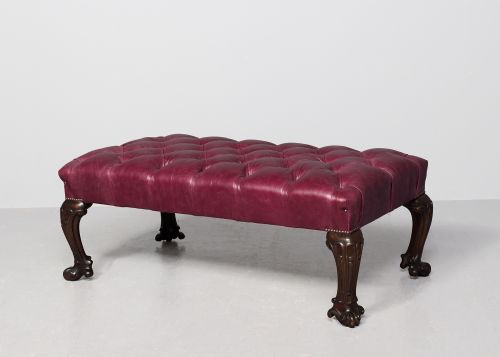
Upholstered surfaces employ buttoning, brass studs, and traditional textiles including needlepoint, damask, tapestry, and deep-coloured leather or hide.
Red Footstool Retail Price Guide 2026
Typical asking prices for red footstool among the pieces listed under this phrase on Sellingantiques today, from the lower quarter to the upper quarter. They describe what is for sale here now, not the wider market.
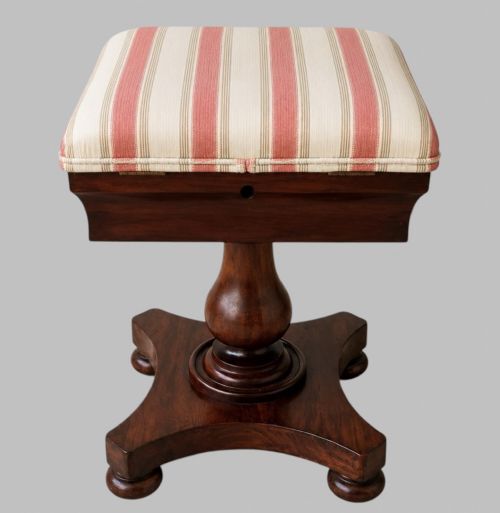
Some stools doubled as sewing boxes, hiding thread and needles beneath the seat for industrious Victorians.
Judging quality in frames and upholstery
Superior examples demonstrate refined timber carving, substantial scale, and robust framing using dense hardwoods like mahogany or walnut.
Quality rests equally in the upholstery work, where traditional buttoning, secure brass studding, and robust leather or textile coverings elevate the piece.
Hallett & Sons·Howard & Sons·Mathew Gregson·Awn Pugin
The Red Footstool Glossary
- Buttoned
- Upholstery secured with deep indentations held by buttons. This technique creates a distinctive padded diamond pattern across leather or fabric surfaces.
- Cabriole leg
- A furniture leg that curves outward and then tapers inward. It typically ends in a pad, claw, or ball foot.
- X-frame
- A structural furniture base formed by intersecting diagonal timbers. This configuration provides strong support for low stools and benches.
- Hide
- A heavy animal skin used for durable upholstery. It provides a smooth surface often accented with brass studs.
Red Footstool: Frequently Asked Questions
What periods do these footstools come from?
The pieces span from the eighteenth century through the Victorian era and into the early twentieth century. Styles include Georgian, Victorian, and various revival movements.
Craftsmanship reflects the prevailing aesthetic of each decade, utilising timbers such as mahogany and walnut alongside traditional upholstery techniques.
How were these stools originally used?
They served as footrests, piano stools, dressing table seats, and low resting places in period drawing rooms and chambers. Larger versions also functioned as low coffee tables or ottomans.
Their sturdy timber frames and cushioned tops offered versatile supplementary seating throughout domestic interiors.
How should I care for leather upholstery?
Leather surfaces benefit from regular dusting and occasional conditioning to maintain suppleness. Keeping them away from direct sunlight preserves the rich red tone.
Avoid excessive moisture and treat the hide gently to protect any original buttoning and brass studwork.
How can I tell a Georgian piece from a Victorian one?
Georgian examples often display restraint, finer timber carving, and classic lines associated with eighteenth-century cabinet making. Victorian pieces frequently introduce heavier proportions, buttoned upholstery, and revival ornamentation.
Examining the construction methods and wood types helps distinguish between these periods.