

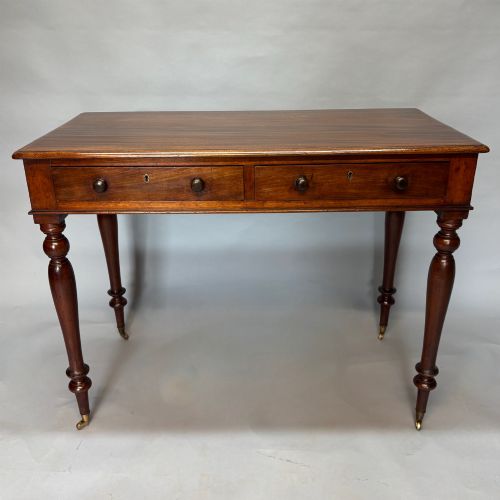
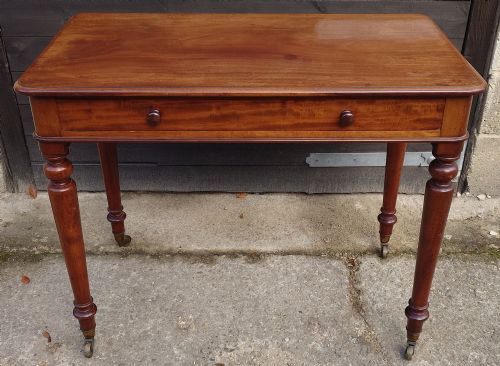
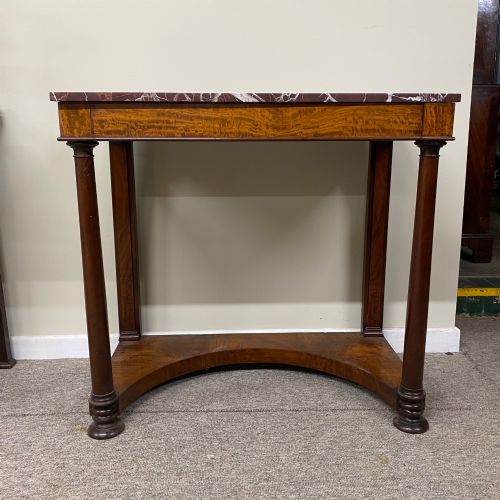
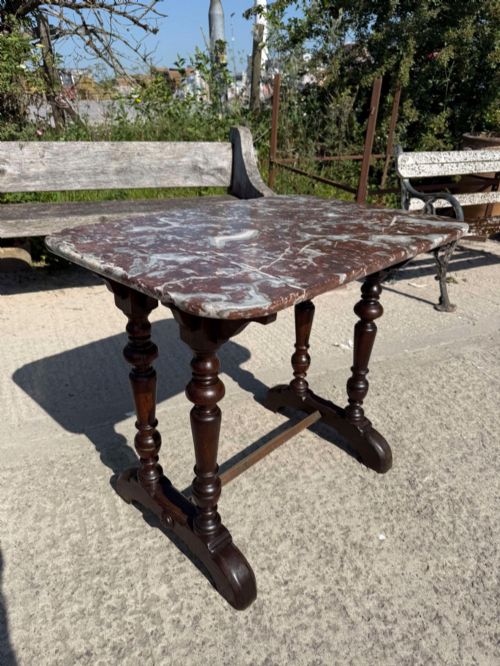
Red Console Table
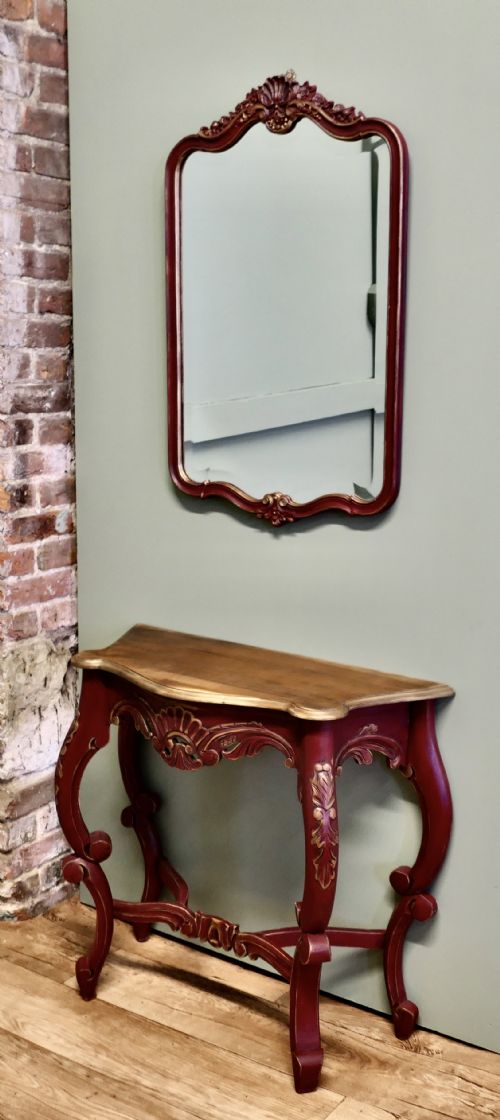
A red console table brings strong colour and period character to a hallway or reception room.
Red Console Table
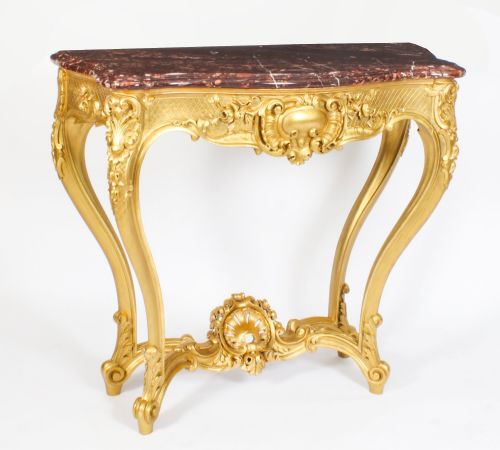
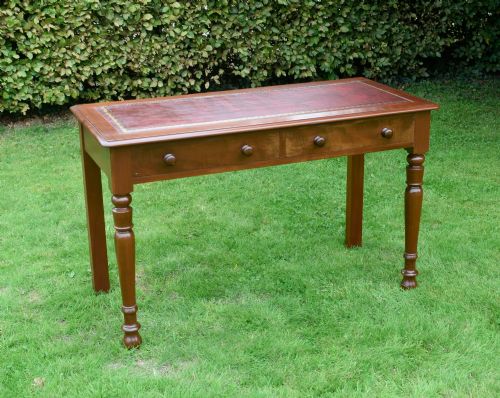
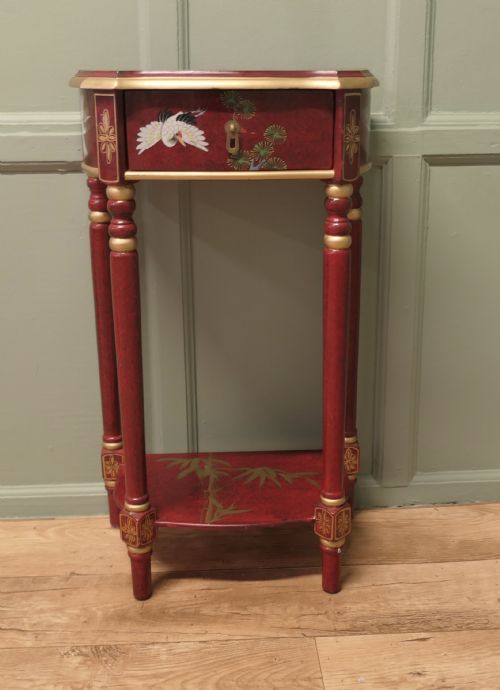
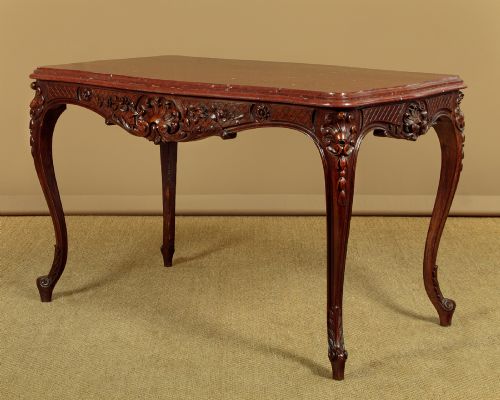
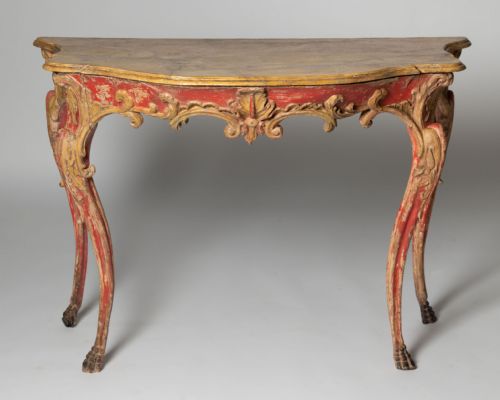
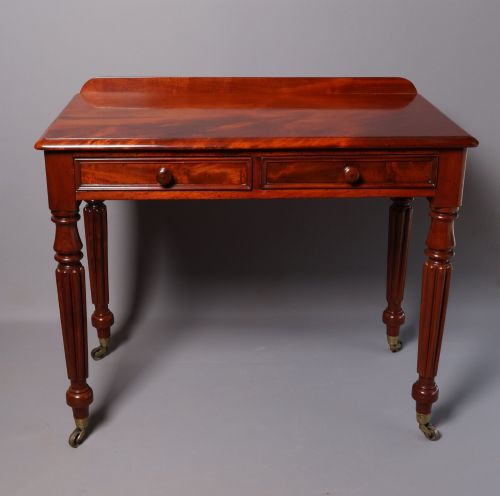
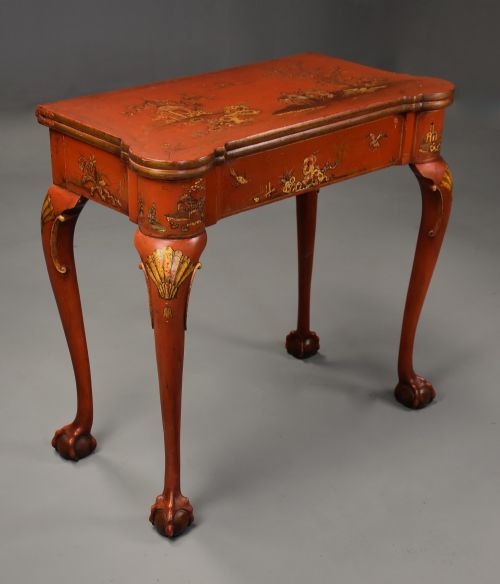
A red console table is primarily represented by striking painted surfaces and rich timber tones found across various historical periods. When searching for a red console table, buyers encounter pieces ranging from vibrant Chinoiserie lacquered items to George II red walnut tea tables.
The selection includes forms influenced by Georgian and Regency designs, alongside Italian neoclassical faux porphyry and marble-topped variants. These tables function both as practical hall furniture and decorative focal points within a room.
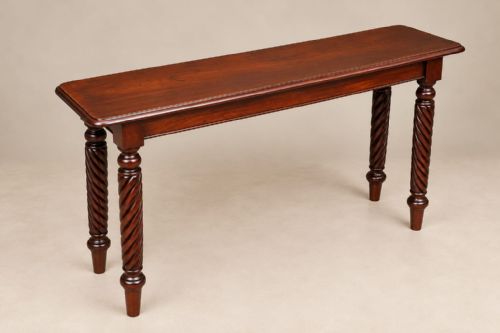
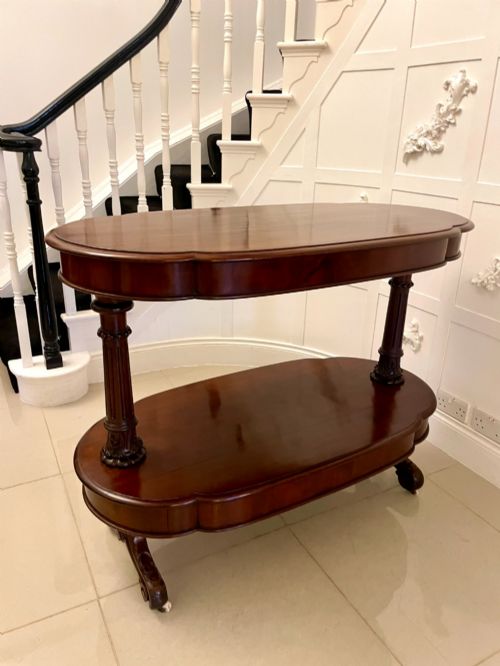
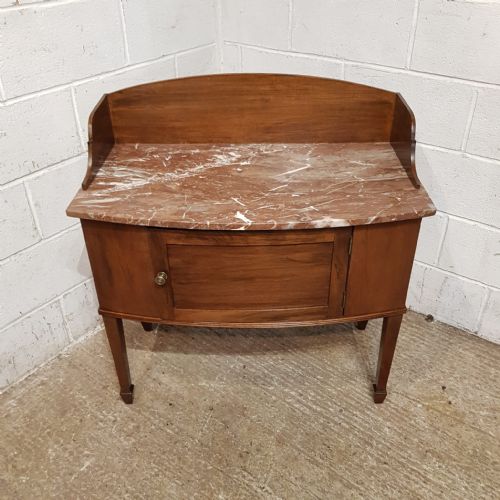
Originating from diverse eras including the eighteenth, nineteenth, and early twentieth centuries, these tables showcase varied proportions. Some feature slim profiles designed for narrow corridors, while others offer substantial oval or bow-fronted surfaces.
Materials and Construction
Cabinet makers utilised dense hardwoods such as mahogany, walnut, and oak to construct the foundational frames of these tables. Timbers were frequently turned, carved, or shaped into bow fronts and demi-lune forms.
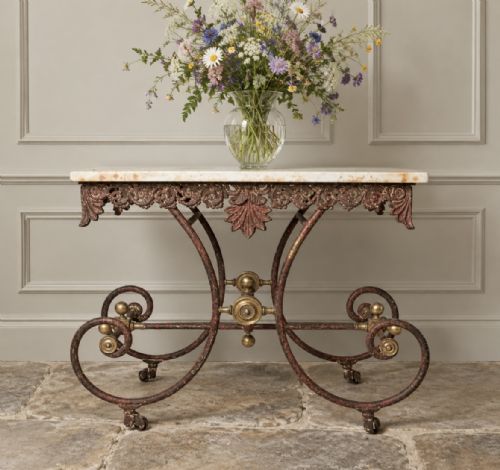
Decorative surfaces display specialised techniques including oriental red lacquer work and faux porphyry finishes. Marble tops, including rouge marble, were often fitted to provide durable and ornate upper surfaces.
Red Console Table Retail Price Guide 2026
Typical asking prices for red console table among the pieces listed under this phrase on Sellingantiques today, from the lower quarter to the upper quarter. They describe what is for sale here now, not the wider market.
Card tables among the selection retain secret folding mechanisms designed for eighteenth-century parlour games.
Assessing Quality and Execution
Quality in these tables rests on the precision of the timber joinery and the depth of the finished surface. Finer examples exhibit meticulous hand-carving and carefully applied lacquer layers rather than flat, uniform colour.
The integration of secondary materials like marble or brass hardware distinguishes superior production. A well-executed table maintains balanced proportions and structural integrity across its legs, apron, and top.
Edwards & Roberts
The Red Console Table Glossary
- Console table
- A table designed to stand against a wall, frequently supported by wall brackets or decorative legs. They often feature ornamental decoration on the front and sides.
- Chinoiserie
- A European decorative style that reflects Chinese artistic influences, commonly seen in lacquered furniture with gilt motifs. This technique gained prominence during the eighteenth and early twentieth centuries.
- Demi-lune
- A half-moon shape used for the tops and frames of side and console tables. This profile allows the furniture to sit flush against a wall while occupying minimal floor space.
- Faux porphyry
- A painted or treated finish designed to imitate the deep purple-red igneous rock used in antiquity. Artisans applied this technique to create decorative marble effects on wood.
- Fold-over table
- A table with a hinged top that opens to double its surface area, frequently utilised for card games or tea. These items often double as console tables when closed against a wall.
Red Console Table: Frequently Asked Questions
Where should I place a red console table?
A red console table works effectively in entrance halls, narrow corridors, or behind a sofa in a living room. Its vivid colour draws the eye and creates an immediate decorative impact upon entering a space.
Because many historical versions have shallow depths, they fit comfortably in circulation areas without obstructing movement. Pairing the table with a matching mirror or placing a lamp upon it completes the arrangement.
How do I identify the period of a red console table?
Dating relies on observing construction methods, timber choices, and decorative styles aligned with eras such as the Georgian, Regency, or Victorian periods. Details like hand-cut dovetails in drawers and traditional lacquer application offer key chronological clues.
Stylistic markers such as neoclassical faux porphyry or Chinoiserie motifs also point directly to specific decades of production. Comparing the leg shapes and edge mouldings against documented furniture types helps confirm the age.
Are these tables suitable for everyday use?
Most antique console tables are structurally robust enough for daily placement of keys, correspondence, or decorative objects. Lacquered and marble-topped varieties offer resilient surfaces that handle light handling well.
Care should be taken with older polished timber surfaces to avoid moisture marks or heat damage. Using coasters and placing the table out of direct sunlight preserves the original finish.
What is the difference between a console table and a side table?
Traditionally, a console table was designed to be fixed against a wall, sometimes supported by ornamental brackets beneath the top. A side table is a freestanding piece of furniture that can stand against a wall or float within a room.
Over time, the terms have become largely interchangeable in descriptions, with many side tables functioning effectively as console tables. Both types provide useful surface space in domestic interiors.