


Red Bokhara Rug
When you search for a red bokhara rug, you are looking for a central asian textile defined by repeating geometric guls and rich madder dye tones.
Red Bokhara Rug
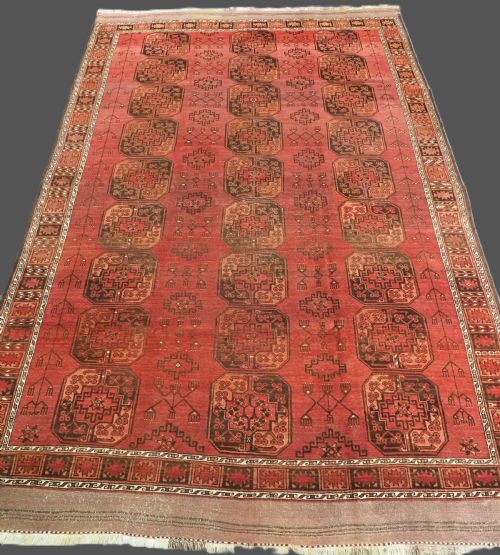
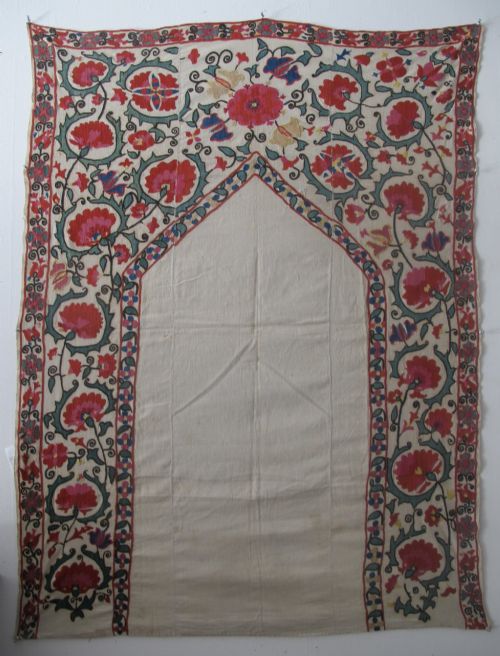
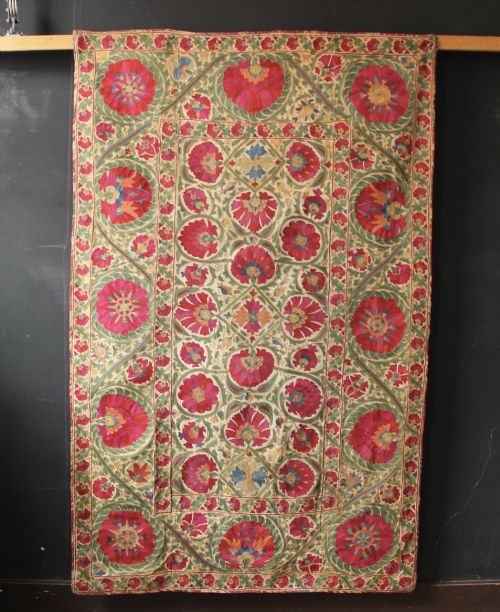
A red bokhara rug encompasses tribal weaving traditions originating from Central Asia, primarily associated with Turkmen groups such as the Tekke and Ersari tribes, alongside Uzbek suzanis. These pieces span from the mid-nineteenth century through the early twentieth century, taking the form of main carpets, dowry rugs, runners, and torbas.
The aesthetic is dominated by deep madder red, burgundy, and cochineal colourways, offset by geometric octagonal or ovoid guls arranged in strict rows. Buyers encounter smaller wedding and dowry pieces alongside larger room-size carpets woven for domestic use or export.
How they were made
Weavers utilised natural wool foundations combined with wool pile, occasionally incorporating cotton or silk highlights for specific decorative details in suzanis and dowry rugs. The construction relies on tight knotting techniques that produce a dense, hard-wearing pile designed to withstand generations of daily use.
Dyes were sourced from local plants and insects, yielding the characteristic warm red and cochineal hues that mature with age. Nomad and village workshops worked on horizontal or vertical looms, translating tribal iconography into structured, repeating patterns.
Several wedding dowry rugs tucked away in this collection carry small ovoid guls specifically woven to bless nomadic unions.
What varies in quality
The density of the weave and the precision of the geometric gul alignment set finer examples apart from standard village productions. Higher-grade pieces demonstrate superior handle through supple wool foundations and carefully saturated natural dye variations.
Completeness and structural integrity heavily influence the standing of older textiles, particularly with torba fragments or antique carpets that have endured heavy foot traffic. The subtlety of secondary accent colours, such as ivory, dark blue, and gold highlights, adds complexity to the finer works.
The Red Bokhara Rug Glossary
- Gul
- A repeating medallion or octagonal motif central to Turkmen and Central Asian carpet design. Different tribes utilised distinct gul shapes to signal lineage and regional identity.
- Suzani
- An embroidered textile originating from Uzbekistan, typically worked in silk on a cotton or linen ground. These pieces often feature bold floral and architectural motifs rather than tribal guls.
- Torba
- A small utilitarian bag face woven by Turkmen tribes for domestic storage within a yurt. Surviving examples are often preserved as collector panels.
- Madder
- A natural red dye derived from the root of the Rubia plant, yielding the characteristic warm red ground colour seen across these carpets.
- Cochineal
- A natural dyestuff producing vibrant crimson or purplish-red highlights on select tribal rugs. Its presence often indicates a higher grade of dyeing work.
Red Bokhara Rug: Frequently Asked Questions
What is a bokhara rug?
A bokhara rug is a traditional Central Asian carpet, historically associated with Turkmen tribes like the Tekke and Ersari, characterised by geometric gul patterns and deep red wool fields.
The term historically described rugs traded through the market city of Bukhara, though the actual weaving took place across wider tribal regions.
How old are these rugs?
The pieces available on this page generally date from the mid-nineteenth century up to the early twentieth century. Nineteenth-century examples reflect traditional tribal weaving methods before the introduction of commercial aniline dyes.
Items from the early twentieth century often include village carpets and export pieces produced under shifting economic conditions in Central Asia.
Where were they made?
These textiles originate from Central Asia, spanning regions inhabited by Turkmen tribes, Afghan village communities, and Uzbek textile centres. Each region developed distinct variations in gul geometry, palette, and format.
Nomadic and settled tribal groups produced them for domestic dowries, everyday floor coverings, or trade through regional markets.
How do I care for an antique rug?
Protect the textile by placing it in a low-traffic area or utilising a quality underlay to prevent sliding and fibre abrasion. Gentle vacuuming without a rotating brush roll helps remove embedded dust.
Keep the piece away from direct sunlight to preserve the natural madder dyes, and consult a specialist textile conservator for professional cleaning.