

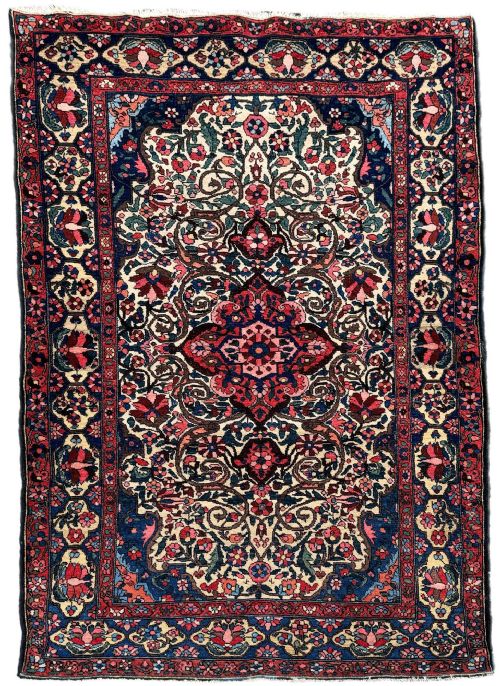
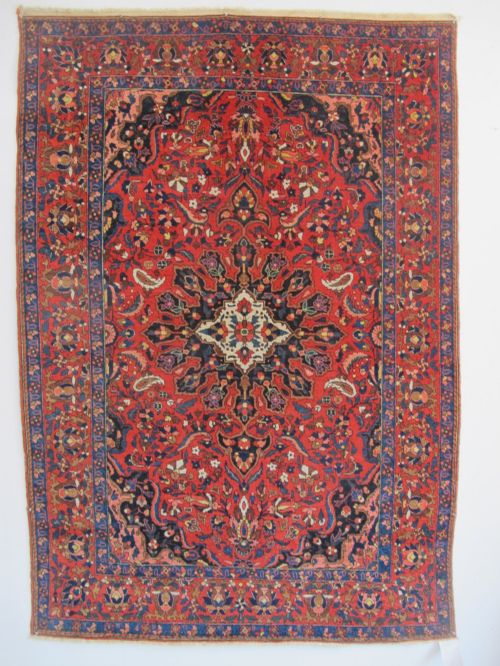
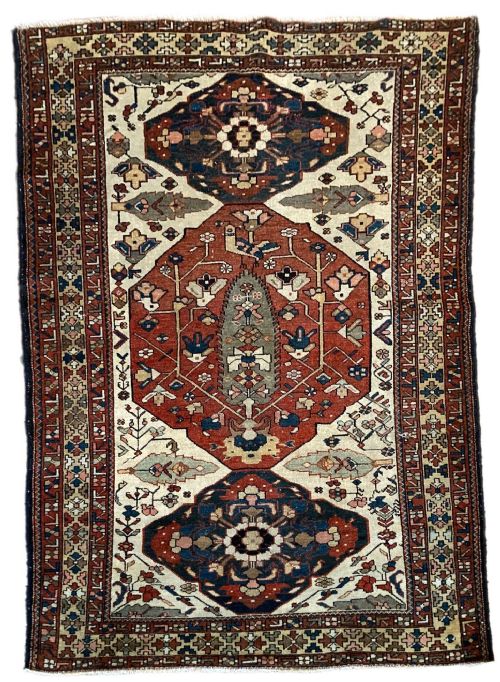


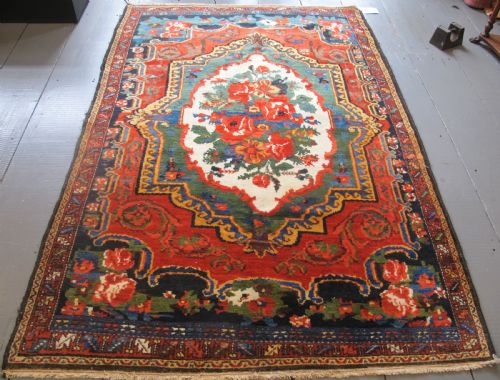
Red Bakhtiar Area Rug
A red bakhtiar area rug brings centuries of Persian weaving tradition into a room through rich wool carpets.
Red Bakhtiar Area Rug
A red bakhtiar area rug is a floor covering originating from Persia, categorized under styles such as Persian Bakhtiar, Persian Tribal, and Traditional Persian. These textiles span the late nineteenth and early twentieth centuries, specifically covering the years eighteen ninety through nineteen twenty.
Buyers will encounter various formats on this page, ranging from standard area rugs to larger carpets. The predominant forms recorded are antique rugs and carpets, reflecting traditional Persian craftsmanship.
How they were made
These pieces are constructed primarily using wool pile on cotton foundations, as recorded in the material evidence of the listings. This combination provides both durability for floor use and structural stability for the intricate patterns.
The technique relies on traditional hand-knotting methods native to Persian workshops and tribal weavers. Weavers utilised natural materials to achieve the distinct red palette and durable foundations visible in these historic carpets.
Current listings feature pieces exclusively dated between eighteen ninety and nineteen twenty.
What varies in quality
Quality differences in a red bakhtiar area rug stem from the fineness of the knotting and the handling of the wool. Finer knots allow for sharper definition within traditional Persian motifs.
The handling of the wool pile and the consistency of the cotton foundation dictate the longevity and drape of the carpet. Older examples from eighteen ninety display distinct nuances in material preparation compared to pieces from nineteen twenty.
The Red Bakhtiar Area Rug Glossary
- Pile
- The surface of the rug formed by the upright ends of thread. This element defines the soft texture underfoot.
- Foundation
- The underlying structure of warp and weft threads supporting the knots. Cotton is commonly utilised for this purpose.
- Warp
- The vertical threads stretched on the loom before knotting begins. These form the skeleton of the textile.
- Weft
- The horizontal threads passed through the warps to secure the rows of knots. This binds the structure together firmly.
Red Bakhtiar Area Rug: Frequently Asked Questions
How do I clean a red bakhtiar area rug?
Professional specialist cleaning is essential for antique Persian wool carpets to preserve the natural fibres and dyes.
Regular gentle vacuuming without a rotating brush helps remove surface dust safely between professional washes.
Can I place these rugs in high traffic areas?
Wool and cotton construction provides natural durability suitable for placement in moderate traffic zones within a home.
Using an appropriate underlay prevents slipping and reduces friction between the rug and the floorboards.
How do I date an antique bakhtiar rug?
Dating relies on stylistic analysis, material examination, and structural characteristics recorded in pieces from eighteen ninety to nineteen twenty.
Comparing knot density and palette variations helps place an individual carpet within this historical production window.
What is the difference between a rug and a carpet?
Size generally distinguishes the two terms in historical listings, with larger formats classified specifically as carpets.
Both share identical construction methods utilising wool pile and traditional Persian weaving techniques.