


Red Art Pottery
Red art pottery brings together striking earth-toned ceramics from the late nineteenth and early twentieth centuries, prized for their rich glazes and distinct forms.
Red Art Pottery
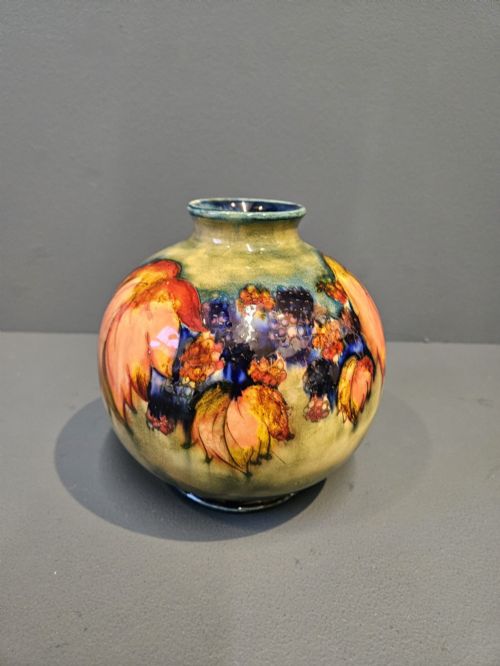
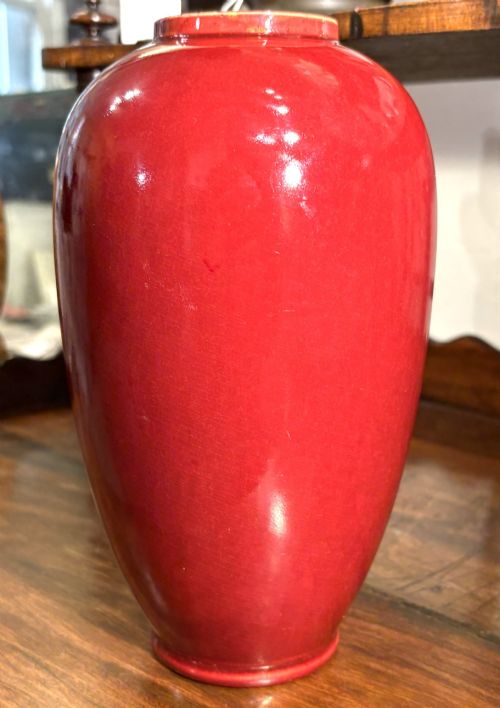
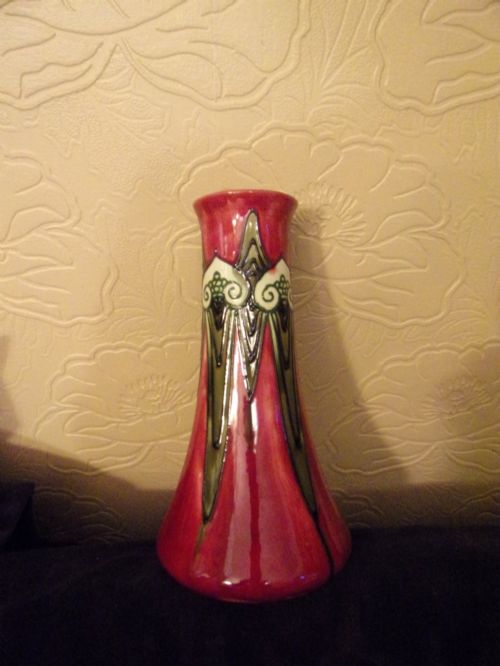
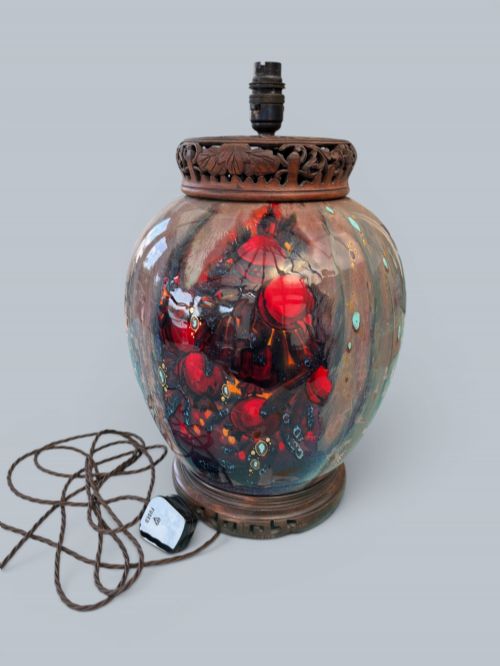
Red art pottery encompasses a diverse selection of decorative ceramics, ranging from large Victorian and Edwardian vases to Art Deco figurines and table lamps. When exploring red art pottery, buyers encounter pieces defined by intense crimson, maroon and terracotta hues, often shaped during the Arts and Crafts, Art Nouveau and Art Deco periods.
Materials and Techniques
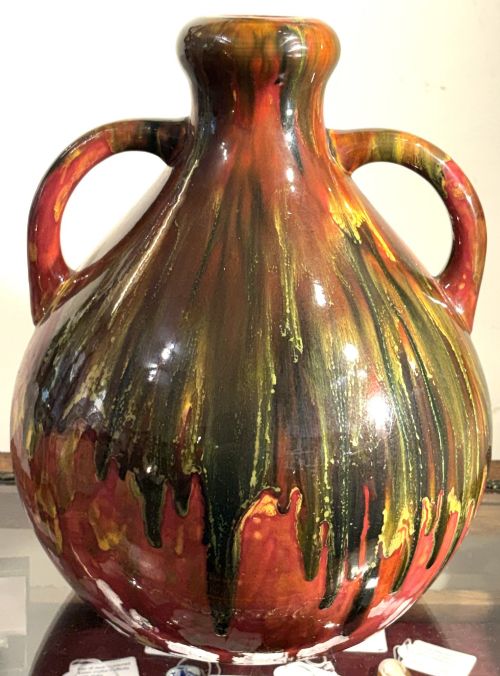
Makers shaped these vessels from earthenware, terracotta, porcelain and ceramic bodies before applying heavy, viscous glazes and enamel. Techniques like tube-lining created raised outlines to contain pools of rich colour, while high-fired kilns produced mottled flambe and drip effects across the surfaces.
Makers also integrated secondary elements such as brass mounts or wooden bases, particularly on sculptural table lamps and decorative bowls. The interaction between the clay body and the chemical makeup of the glaze determines the final depth of the red coloration.
Red Art Pottery Retail Price Guide 2026
Typical asking prices for red art pottery among the pieces listed under this phrase on Sellingantiques today, from the lower quarter to the upper quarter. They describe what is for sale here now, not the wider market.
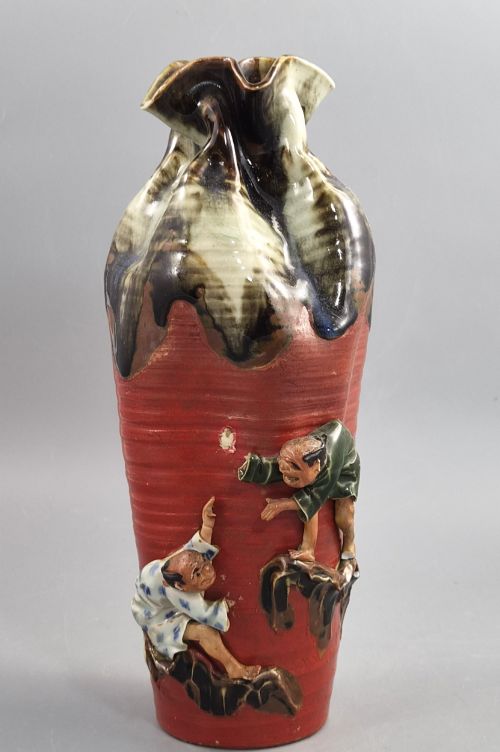
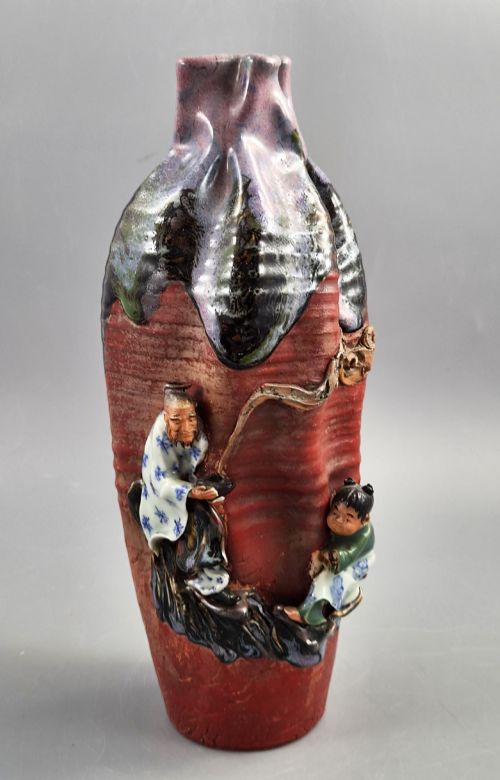
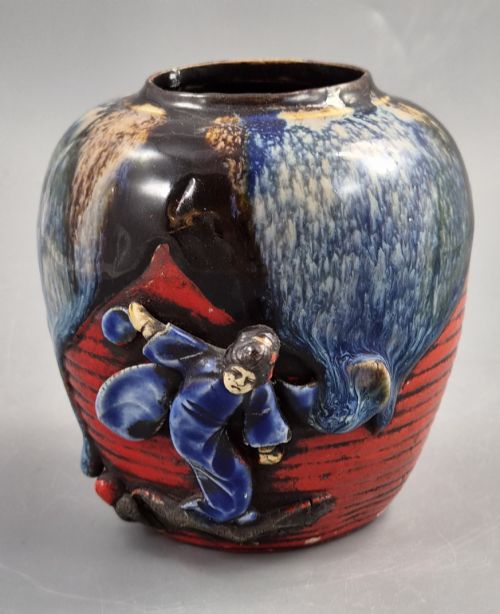
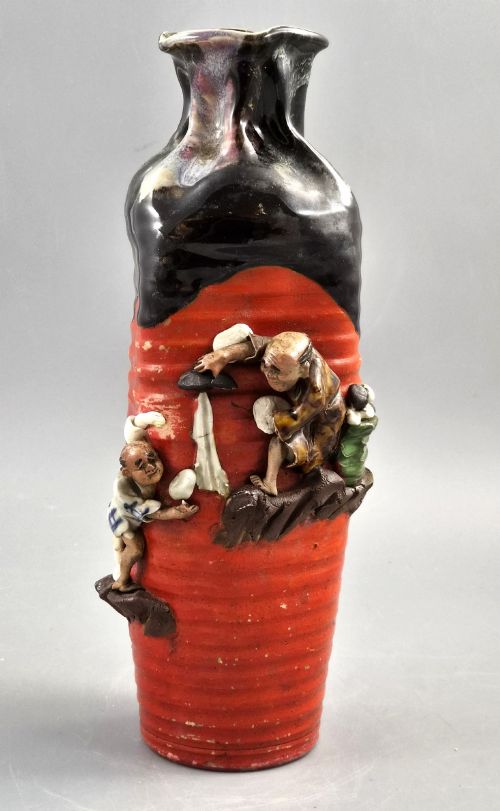
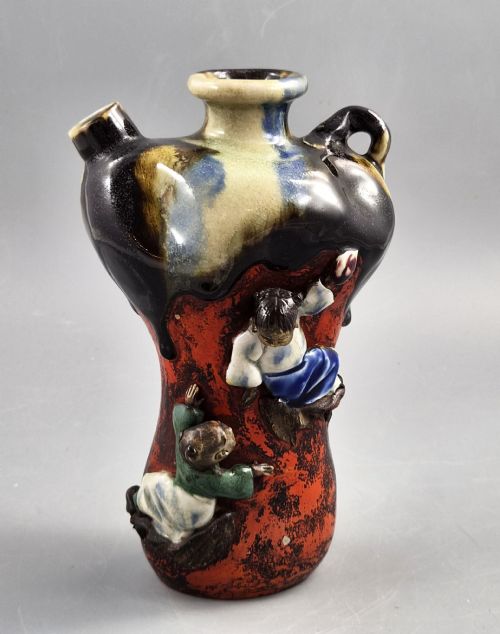
Several pieces feature adventurous ceramic figures climbing persistently up the sides of vases, seemingly determined to escape the red glaze entirely.
Assessing Quality and Execution
Quality in these ceramics rests on the control of the glaze and the precision of the hand-applied decoration, whether tube-lined, painted or carved. Pieces that display a deliberate, balanced relationship between the form and the colour gradient stand apart from simpler production wares.
The sophistication of the modelling on figural works and the depth achieved in high-fired flambe surfaces mark the distinction between standard factory output and premier studio design.
Burmantofts·Moorcroft·Royal Doulton·Guido Cacciapuoti·Inoue Ryosai
The Red Art Pottery Glossary
- Flambe
- A glazed ceramic finish characterised by streaked, mottled, or opalescent colour effects achieved through reduction firing in a kiln. This technique produces unpredictable, fiery red and blue pools across the surface.
- Tube-lined
- A decorative ceramic technique where a thin line of slip is squeezed through a nozzle onto the clay body to outline a pattern. The resulting raised compartments are then filled with coloured glazes.
- Earthenware
- Porous pottery fired at relatively low temperatures, commonly used as the base body for Victorian, Edwardian and Arts and Crafts decorative wares. It requires a glaze to become completely watertight.
- Terracotta
- Unglazed or glazed fired clay of a brownish-red natural hue, utilised historically for sculptural figures, vases and architectural pottery. The warm earth tone forms the foundation for many red art pottery pieces.
- Okimono
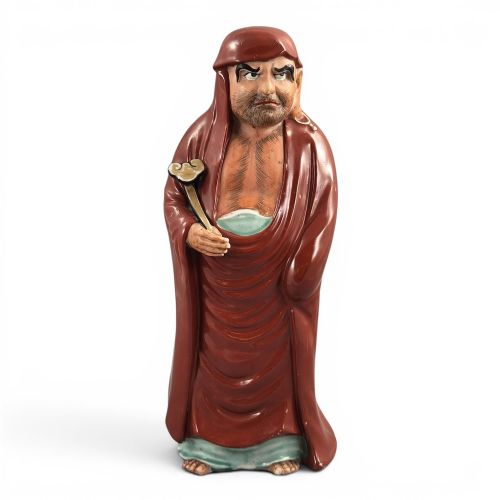
- A small Japanese decorative carving or figurine intended for display on a shelf or in a tokonoma alcove. These porcelain and ceramic figures often depict traditional subjects or mythological characters.
Red Art Pottery: Frequently Asked Questions
What defines red art pottery?
Red art pottery covers decorative ceramics featuring prominent crimson, terracotta and maroon glazes, produced primarily during the late nineteenth and early twentieth centuries. These objects include vases, table lamps and figural sculptures shaped by prominent potteries and studio artists.
Items range from British Arts and Crafts earthenware to Japanese Sumida Gawa wares with flambe finishes. The unifying element is the emphasis on rich red tones and textured glazing techniques.
How do I identify a flambe glaze?
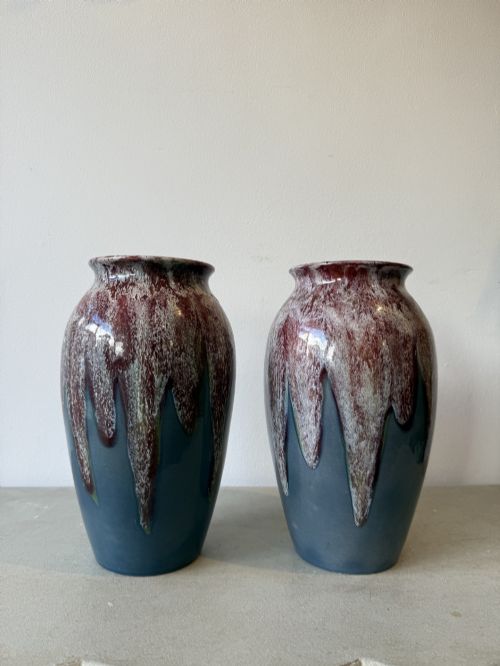
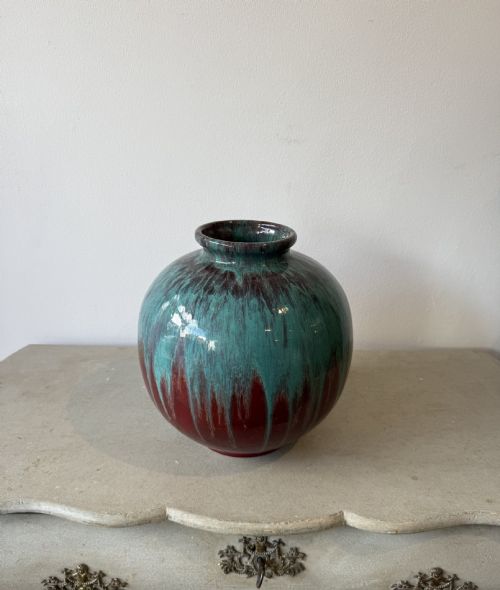
A flambe glaze exhibits a streaked, highly glossy surface where different colours, typically deep reds, purples and blues, bleed into one another during high-temperature firing. This unpredictable chemical reaction creates a vibrant, molten visual depth.
Potters utilised this technique to give flat ceramic surfaces a sense of movement and layered complexity. Each flambe piece possesses a distinct pattern resulting from its specific placement within the kiln.
Where were Sumida Gawa ceramics made?
Sumida Gawa ceramics originated in Japan during the Meiji and Taisho periods, often associated with workshops near the Sumida River in Tokyo. These vessels are distinguished by heavy, dripping flambe glazes and applied clay figures climbing along the rims and walls.
Many pieces were created for export, combining traditional Japanese sculpting techniques with Western decorative tastes. Makers such as Inoue Ryosai produced notable examples within this distinct tradition.
How do I care for antique art pottery?
Antique art pottery requires gentle maintenance, limited to dusting with a soft, dry cloth to protect fragile glazes and applied decorations. Avoid using water or chemical cleaners on pieces with delicate enamel, brass elements or wooden bases.
Keep ceramics away from direct, prolonged sunlight to prevent fading in coloured glazes and pigments. Stable indoor environments prevent thermal shock to older earthenware and terracotta bodies.