


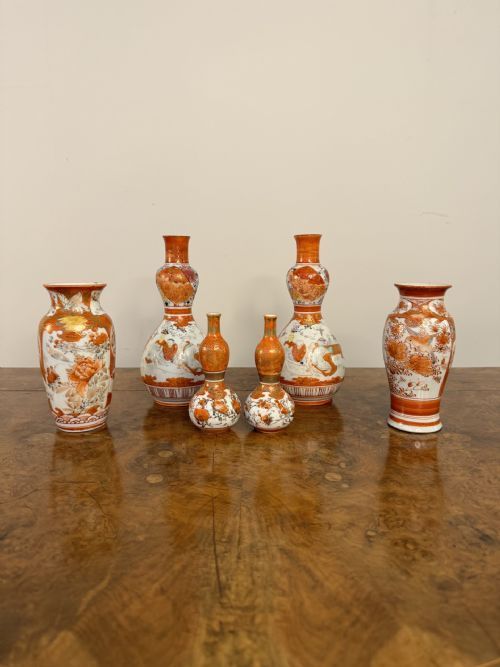


Red and Gold Ceramics
These red and gold ceramics bring together rich iron red pigments and gilt detailing across Japanese Imari, Kutani, and English porcelain forms.
Red and Gold Ceramics
Red and gold ceramics span nineteenth-century English factories and Japanese Meiji period workshops, offering plates, vases, and incense burners decorated in striking palettes. Buyers encountering these pieces will most frequently find Japanese Imari and Kutani wares alongside Victorian and eighteenth-century English porcelain.
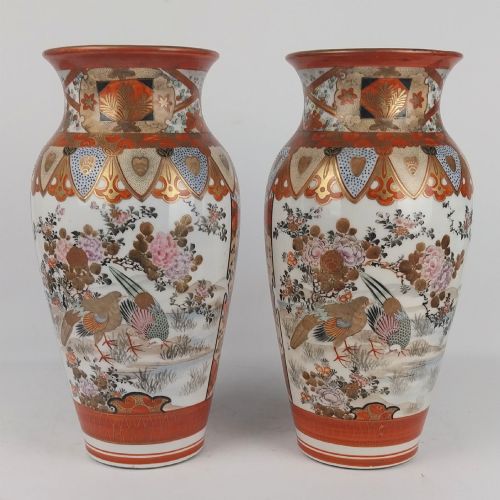
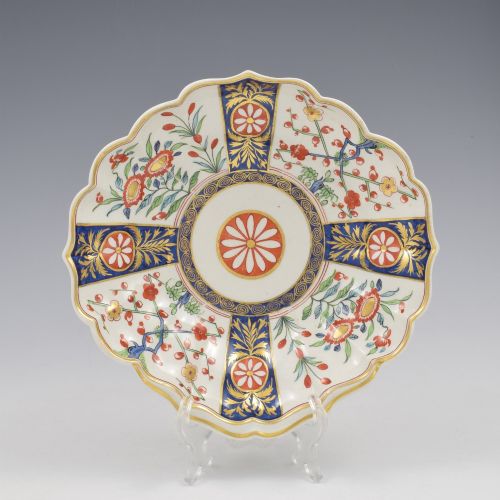
The objects take practical and decorative shapes, ranging from lidded vases and shell-shaped dessert dishes to large chargers and shallow crane-shaped plates. These forms reflect both traditional Japanese craftsmanship and classic English table services from the eighteenth and nineteenth centuries.
Originating across distinct periods from the late seventeenth century onwards, the selection encompasses Edo period Japanese pieces as well as Victorian and earlier Georgian wares. Each item displays the characteristic interplay of iron red pigments and gold leaf or gilding that defines this group.
Materials and Techniques
The makers utilised porcelain, soft-paste porcelain, and enamel, applying rich iron red and black pigments alongside extensive gold leaf and gilding. These materials form the foundational canvas for both hand-painted Japanese Kutani pieces and English factory productions.
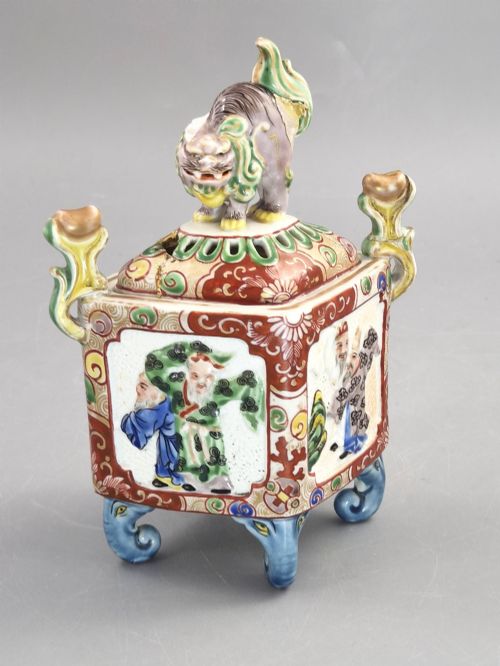
Moulding in shallow relief and hand-painting techniques allow artisans to create intricate decorative surfaces on items such as bottle vases, koro incense burners, and dessert dishes. The application of gold detailing directly over or alongside the enamel provides the characteristic dual-tone finish.
Red and Gold Ceramics Retail Price Guide 2026
Typical asking prices for red and gold ceramics among the pieces listed under this phrase on Sellingantiques today, from the lower quarter to the upper quarter. They describe what is for sale here now, not the wider market.
Several Japanese Kutani vases incorporate whimsical elephant head feet and fierce Karashishi finials to guard the incense within.
Assessing Quality
The distinction between standard production and the finest items rests upon the precision of the hand-painted brushwork and the refinement of the moulded or shaped ceramic bodies. Superior examples display crisp details, such as finely rendered figural or floral motifs, and well-executed relief work.
The richness and application of the gilding and iron red pigments further differentiate the pieces, with higher-quality works showing deeper saturation and skilful placement of gold leaf. Maker attribution and workshop origins also contribute to the standing of individual pieces within the range.
Royal Worcester·Kinrin Workshop·Davenport
The Red and Gold Ceramics Glossary
- Imari
- A style of Japanese porcelain decorated in underglaze blue, iron red, and gold, highly influential in both Eastern and Western markets. The palette relies on deep red and gilt highlights.
- Kutani
- A style of Japanese coloured porcelain typically featuring vibrant iron red and gold designs, often produced during the Meiji period. These wares frequently depict complex pictorial scenes or detailed botanical motifs.
- Soft-paste porcelain
- A ceramic material composed of clay and glass frit, fired at lower temperatures than hard-paste porcelain. It is characteristic of many eighteenth-century English factories.
- Gilding
- The application of gold leaf or gold dust to the surface of ceramics to create reflective metallic ornamentation. This technique provides the gold highlights seen alongside iron red pigments.
Red and Gold Ceramics: Frequently Asked Questions
What are red and gold ceramics?
Red and gold ceramics are decorative and functional porcelain pieces from English and Japanese traditions, united by their use of iron red pigments and gilt ornamentation.
They include items such as Imari plates, Kutani vases, and Worcester dessert dishes produced across the eighteenth and nineteenth centuries.
How were these ceramics used?
Many of these pieces served practical functions in dining and domestic rituals, from serving dishes and teacups to incense burners used for scenting rooms.
Others were created purely for display, including large chargers, lidded vases, and decorative plates designed to adorn interiors.
How do I live with red and gold ceramics?
These pieces integrate easily into traditional and contemporary interiors, where their warm iron red and gold tones add rich colour and texture to tabletops or open shelving.
Because they feature delicate enamel and gilt decoration, they require careful placement away from direct friction and gentle cleaning without harsh abrasives.
How can I tell periods apart?
Distinguishing periods relies on examining the ceramic body, glaze characteristics, and painting styles, comparing Edo and Meiji Japanese techniques with Georgian and Victorian English manufacturing methods.
Maker marks, where present, alongside specific forms like shallow moulded crane dishes or cylindrical Kutani vases, also help anchor pieces to their historical eras.