

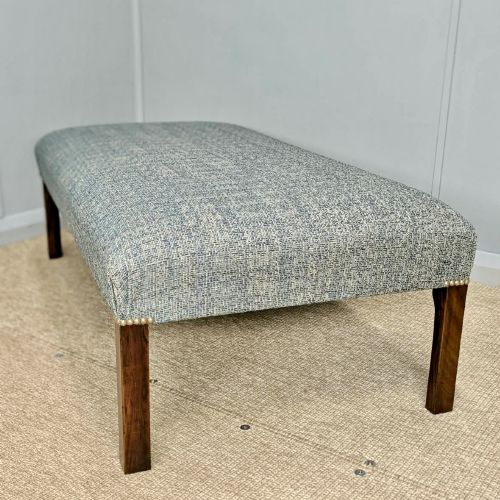
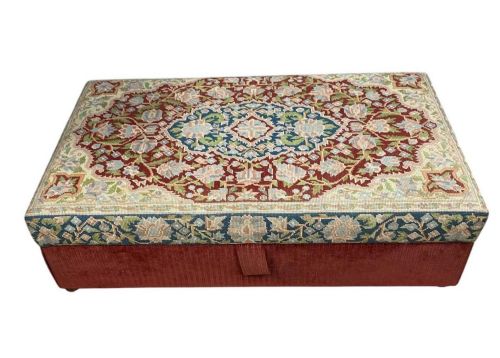
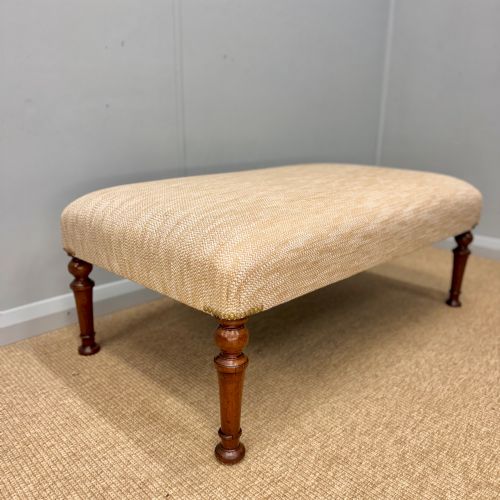
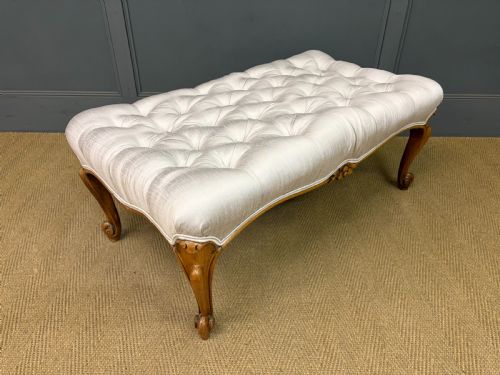




Rectangular Stool Bench
These rectangular stool bench pieces provide versatile seating and footrests, bringing period character and practical function to traditional and modern interiors alike.
Rectangular Stool Bench
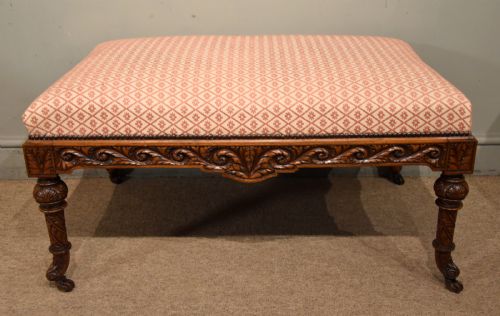
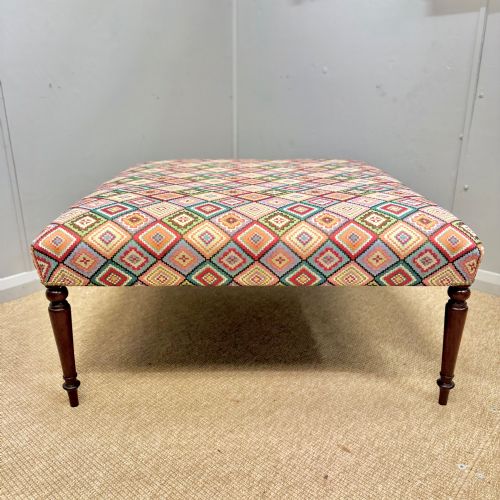
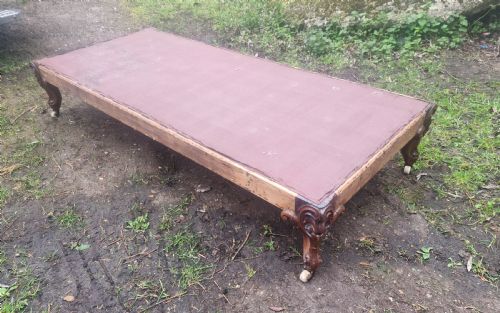
A rectangular stool bench serves various domestic purposes, functioning primarily as a footstool, dressing table seat, piano stool, or low coffee table ottoman. When searching for a rectangular stool bench, buyers encounter diverse forms ranging from compact Victorian rosewood dressing stools to large English country house ottomans and long oak framed cane footstools.
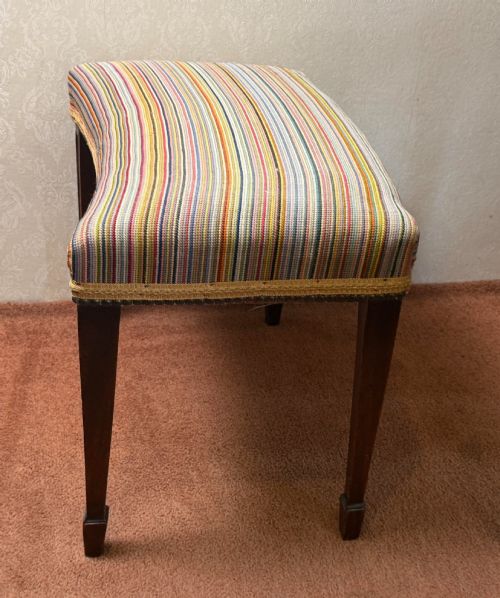
The materials and construction reflect distinct periods, spanning from eighteenth-century mahogany examples with square tapering legs to nineteenth-century walnut, teak, and giltwood pieces. Many items feature upholstered tops in fabrics, chenille, tapestry, buttoned leather, or woven cane and rattan, supported on square legs or brass castors.
Materials and construction methods
Cabinet makers utilised heavy timbers such as mahogany, rosewood, walnut, and oak to build sturdy rectangular frames, often incorporating carved details, giltwood finishes, or simple square tapering legs. These structural woods provide the necessary durability for items designed to support weight or endure daily placement in salons, bedrooms, and drawing rooms.
Upper surfaces combine traditional upholstery techniques with diverse textile coverings including wool, chenille, tapestry, and leather, alongside woven cane and rattan inserts. Certain pieces feature lift-out upholstered seats or buttoned leather work, demonstrating standard joinery and upholstery methods of the eighteenth and nineteenth centuries.
Rectangular Stool Bench Retail Price Guide 2026
Typical asking prices for rectangular stool bench among the pieces listed under this phrase on Sellingantiques today, from the lower quarter to the upper quarter. They describe what is for sale here now, not the wider market.
Listings feature woods including mahogany, rosewood, walnut, oak, and teak, alongside upholstered surfaces in leather, chenille, tapestry, and woven rattan.
Judging quality and craftsmanship
Superior quality pieces display refined timber selection and precise carving, particularly in period details such as George III or Baroque Revival styling. The integrity of the foundational wood frame and the quality of the original joinery dictate the longevity and structural stability of the bench.
The standard of upholstery and the choice of covering material significantly influence the overall presentation of the piece. Well-drawn proportions, robust framing, and careful integration of decorative elements like brass castors distinguish finer examples from standard utility seating.
The Rectangular Stool Bench Glossary
- Ottoman
- A low upholstered seat or bench without a back or arms, often utilised as a footstool or coffee table. These pieces frequently feature large proportions and decorative fabric or leather tops.
- Dressing stool
- A small seat designed for use at a dressing table or piano, typically matching the height and style of bedroom furniture. They often incorporate walnut, mahogany, or rosewood frames with upholstered or leather seats.
- Giltwood
- Timber that has been coated with a thin layer of gold leaf or gilt paint for decorative effect. This finish appears frequently on Baroque style and revival pieces.
- Cane seat
- A woven panel made from rattan or peeled cane, providing a resilient and breathable surface for seating. This technique appears on specific oak and teak frames.
- Castor
- A small wheel mounted on a swivel assembly attached to the base of furniture legs for ease of movement. Many large nineteenth-century footstools utilise brass castors to facilitate repositioning.
Rectangular Stool Bench: Frequently Asked Questions
What was a rectangular stool bench used for?
These pieces served multiple functions in period homes, acting as footstools for warming feet near fires, seats for dressing tables, or low tables for holding objects.
Larger versions functioned as ottomans or centre stools in drawing rooms and country house interiors, accommodating casual seating or resting feet.
How do I date a wooden stool bench?
Dating relies on examining the timber species, leg geometry, and framing construction techniques. Eighteenth-century examples often feature mahogany with square tapering legs, while Victorian pieces utilise rosewood or walnut with carved details.
Later nineteenth and early twentieth-century designs incorporate diverse materials like teak, oak, and cane, reflecting the shifting aesthetic preferences of those periods.
Are these benches suitable for daily use?
Sturdy timber frames and robust joinery make these pieces durable for everyday seating and footrest duties in contemporary rooms. Many nineteenth-century examples were built from dense hardwoods like oak and mahogany to withstand regular weight.
Upholstered surfaces may require occasional reupholstering depending on the condition of the fabric or leather top, while wooden frames generally remain stable.
Can I use an ottoman as a coffee table?
Large rectangular footstools and ottomans adapt well to serving as coffee tables when paired with a sturdy tray placed on the upholstered surface. Their low profile and generous proportions offer a softer alternative to traditional wooden tables in a living space.