






Recording Barograph
A recording barograph is a brass-mechanised weather instrument that traces atmospheric pressure onto paper charts, housed in a glazed timber case.
Recording Barograph
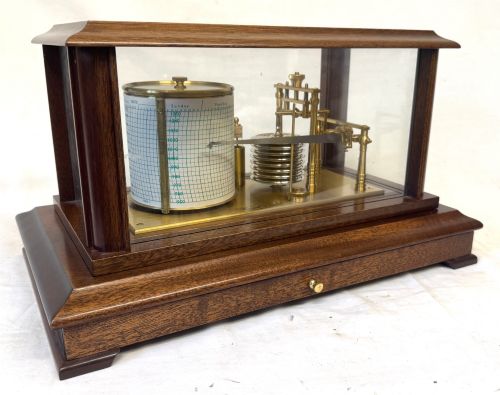
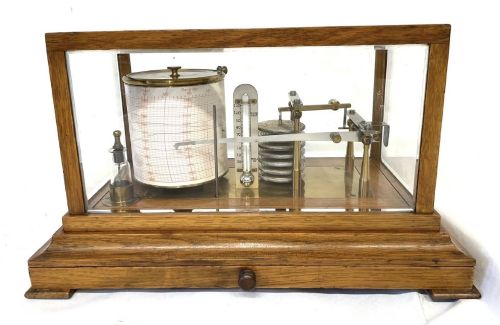
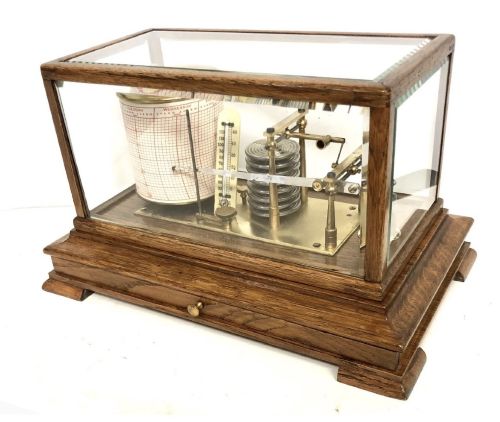
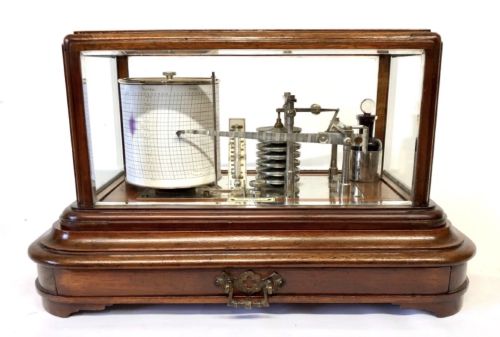
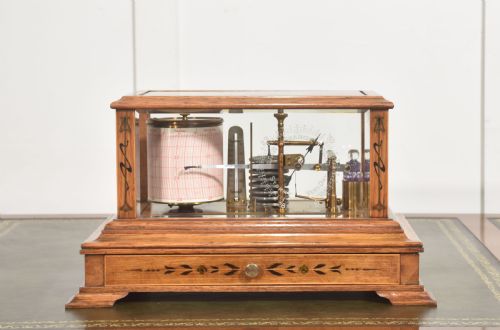
A recording barograph translates air pressure fluctuations into a continuous ink line on a rotating drum, operating as a self-writing barometer. The pieces seen on this page span the late nineteenth century through to the mid-twentieth century, covering Victorian, Edwardian, and interwar periods.
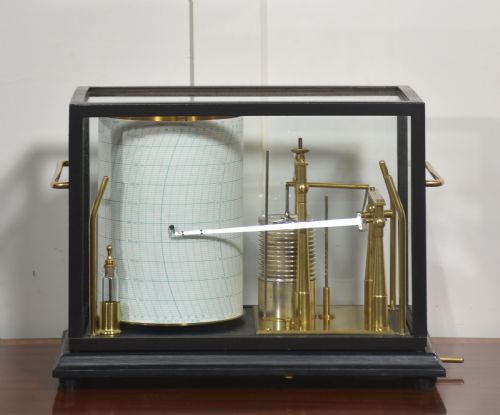
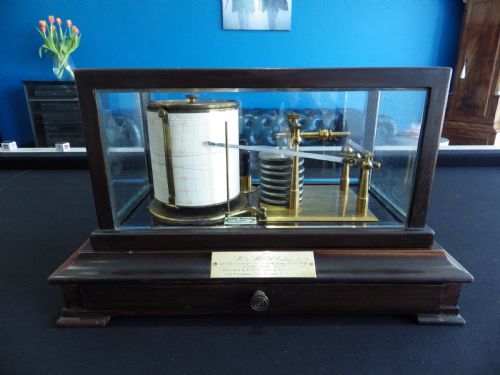
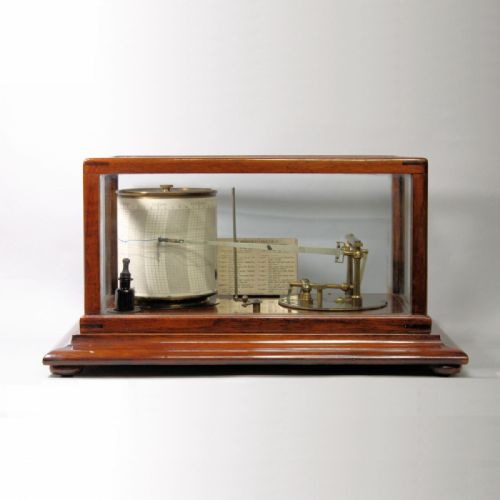
The form most frequently met is an oak or mahogany five-glass case enclosing brass levers, metal bellows, and a clockwork drum. Many examples incorporate a thermometer mounted on the bed and a base drawer for spare weekly paper charts.
Materials and Construction
Cases utilise dense hardwoods including mahogany, oak, and walnut, frequently joined with craftsmanship that accommodates bevelled glass panels for viewing the mechanism. Metal components combine polished brass linkages with steel springs and delicate paper charts.
The internal movement relies on stacked vacuum chambers that expand or contract with barometric pressure, moving a pen arm across a clockwork-driven drum.
Recording Barograph Retail Price Guide 2026
Typical asking prices for recording barograph among the pieces listed under this phrase on Sellingantiques today, from the lower quarter to the upper quarter. They describe what is for sale here now, not the wider market.
Some models squeeze extra forecasting into a compact footprint by pairing the rolling drum with a supplementary wall-mounted barometer dial.
Judging Quality and Execution
Quality rests in the precision of the maker's signature, the weight and finish of the brass mechanism, and the selection of cabinet timbers. Signed movements by notable instrument makers command attention over anonymous workshop output.
Refined cabinetwork, such as Art Nouveau inlay or integrated barometer dials alongside the main drum, distinguishes higher-grade examples from utilitarian models.
Short and Mason·Negretti and Zambra·Casella London·Richard Freres·Jules Richard
The Recording Barograph Glossary
- Aneroid
- Operating without liquid. An aneroid barograph measures atmospheric pressure using flexible metal bellows rather than mercury columns.
- Chart drawer
- A shallow compartment built into the wooden base. It stores spare weekly recording papers and ink bottles.
- Drum
- The cylindrical clockwork mechanism. It rotates once a week beneath the pen arm to record pressure over time.
- Bellows
- The stacked metal chambers that expand and contract. They sense changes in barometric pressure and drive the recording arm.
Recording Barograph: Frequently Asked Questions
How does a recording barograph work?
Stacked vacuum metal capsules expand and contract as atmospheric pressure shifts. This movement transfers through brass levers to an arm holding an ink nib.
The nib rests against a paper chart secured around a clockwork rotating drum, producing a continuous line of weather trends over seven days.
Where should I place a barograph?
Position the instrument on a stable, level surface away from direct sunlight, central heating vents, and open windows. Sudden temperature shifts affect the internal metal chambers.
A sideboard or desk in a main room provides adequate protection while allowing guests to observe the clockwork drum turning.
How do I read the paper charts?
Vertical lines indicate days of the week and hours, while horizontal lines measure atmospheric pressure in millibars or inches of mercury. A rising ink line signals improving weather.
A falling line points towards approaching rain or wind, allowing owners to forecast local atmospheric changes by checking the drum daily.
How do I maintain the mechanism?
Wind the clockwork drum gently using its attached key once every week when changing the paper chart. Avoid over-winding the spring to prevent internal damage.
Keep the brass linkages clean and ensure the ink nib flows freely without digging into the paper surface during rotation.