





Reclining Female Figure
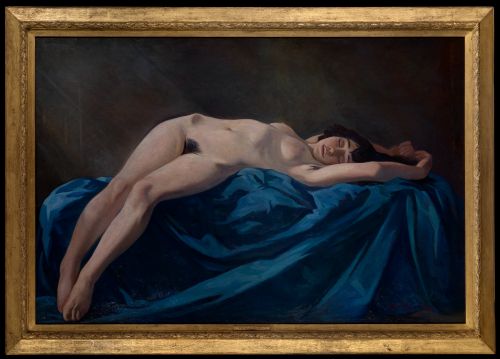
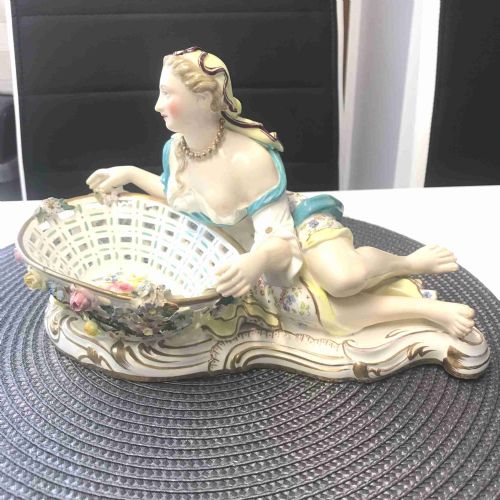
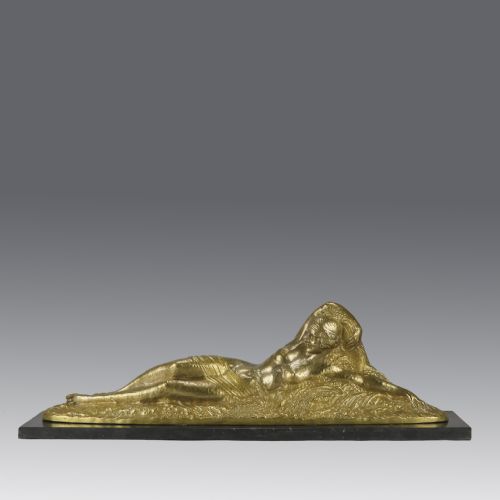
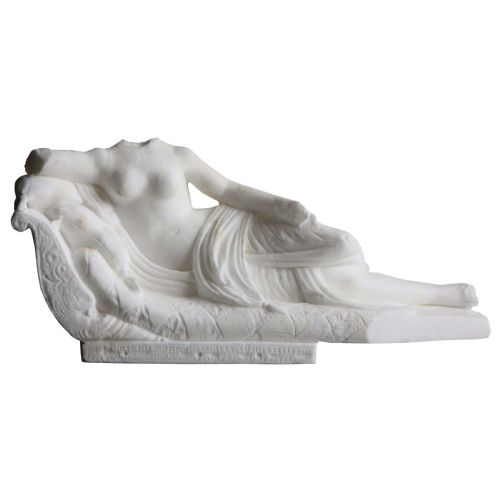
When you search for a reclining female figure, you encounter sculpted bronzes and painted canvases capturing repose across several centuries.
Reclining Female Figure
A reclining female figure encompasses both sculptural forms and oil paintings, stretching from eighteenth-century porcelain sweetmeat dishes down to mid-century British figural studies. The selection on this page relies heavily on early twentieth-century bronze and marble works, alongside oil paintings on canvas and board.
Makers and artists working across the nineteenth and twentieth centuries adopted the reclining posture for mythological subjects, allegories of seasons, and intimate life studies. Whether cast in patinated bronze, carved from alabaster and Carrara marble, or rendered in oil paint, these pieces centre entirely on the relaxed human form.
Stylistic shifts trace a clear path from neoclassical and rococo compositions through art nouveau and art deco movements to modern British painting. A buyer exploring this search phrase will find that European sculpture dominates the physical objects, while British artists provide the painted studies.
Materials and methods of creation
Foundry-cast bronze and carved stone form the backbone of the three-dimensional pieces, utilising metals like patinated bronze and gilt bronze alongside soft stones such as alabaster and Carrara marble. Sculptors employed traditional casting and hand-chiselling techniques to define the contours of the body and the drapery surrounding it.
Painters relied on oil paint applied to canvas, often laid on to board in later twentieth-century examples, while draughtsmen worked in charcoal and chalk for intimate life studies. Each medium dictates the surface texture, from the polished gleam of marble to the tactile brushwork of an oil painting.
The object types recorded here range from large oil paintings and fine art to intricate ring jewellery and sweetmeat dishes.
Distinctions in craftsmanship
Quality rests in the fidelity of the cast and the sensitivity of the hand-carving, where superior patination or precise chisel work brings vitality to the skin and drapery. Lesser examples display rigid lines and flat surfaces that obscure the natural weight of a resting body.
In painted works, the dexterity of the brush and the accuracy of the anatomical proportions separate accomplished compositions from ordinary life studies. The dialogue between the subject and the surrounding material dictates the overall presence of the piece.
Demetre Chiparus·Josef Lorenzl·Sibylle May·Antonio Canova·James Pradier·Ugo Cipriani·Frank Dobson
The Reclining Female Figure Glossary
- Patinated bronze
- Bronze treated with chemical solutions to produce a specific surface colour and finish. This process protects the metal and enhances the sculptural depth.
- Carrara marble
- A type of white or blue-grey marble quarried in the city of Carrara in Tuscany. Sculptors prize it for its uniform texture and subtle translucency.
- Spelter
- An alloy of zinc and other metals often used as a substitute for bronze in decorative figures. It takes a metallic finish well but is softer and lighter than genuine bronze.
- Sweetmeat dish
- A small ornamental container or basket designed for sweet confections. Eighteenth-century examples often incorporate delicate porcelain figures.
- Alabaster
- A fine-grained, translucent stone that is relatively soft to carve. It allows sculptors to achieve a smooth, warm finish reminiscent of human skin.
Reclining Female Figure: Frequently Asked Questions
What periods do these pieces span?
The works stretch from the eighteenth century through the nineteenth and twentieth centuries, capturing major shifts in European and British art.
Twentieth-century movements such as art deco and modern British painting are particularly well represented alongside nineteenth-century classical bronzes.
Are these works original?
The selection includes period originals, ranging from signed bronze sculptures by known artists to oil paintings and life studies on canvas.
Each piece reflects the materials and techniques specific to its date of creation, from cast metal to hand-carved marble.
How do I care for a bronze figure?
Bronze sculptures require minimal intervention, benefiting mainly from gentle dusting with a soft, dry cloth to protect the patinated surface.
Avoid using liquid cleaners or abrasive materials that can strip away the chemical finish applied by the foundry.
What is the difference between bronze and spelter?
Bronze is a durable copper and tin alloy prized by sculptors for its strength and ability to hold fine detail over centuries of handling.
Spelter is a softer zinc-based alloy used predominantly in decorative art deco figures, offering a lighter weight and a different metallic resonance.
How do I display a marble sculpture?
Marble pieces require a sturdy, stable surface capable of supporting considerable weight, particularly when dealing with solid stone or alabaster.
Position the piece away from direct heat sources and sudden temperature changes to preserve the integrity of the stone.