





Reclaimed Door Handles
These reclaimed door handles bring character to a room, spanning periods from Regency to the twentieth century in metals like brass and bronze.
Reclaimed Door Handles
Reclaimed door handles are architectural hardware items salvaged from period properties, offering authentic details for restoration projects. When you search for reclaimed door handles, you encounter functional fittings salvaged from domestic and public buildings spanning several architectural epochs.
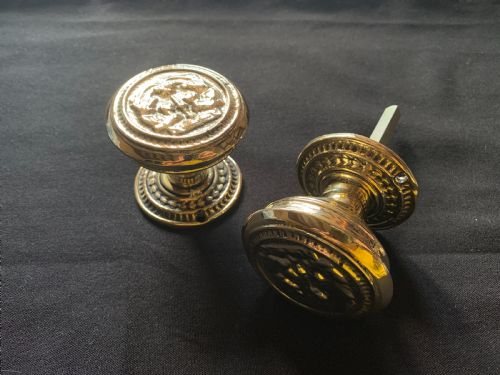
The selections you meet on this page lean heavily toward Victorian examples, alongside Edwardian, Regency, and Arts and Crafts pieces. Common forms include paired knobs, pull handles, and finger plates, often cast in brass or bronze.
You also find variants incorporating ceramic, nickel, and wood elements such as walnut and ebony. These hardware items range from simple domestic fixtures to ornate designs suited for principal rooms.
How they were made
Makers utilised casting techniques for metals, producing durable brass, bronze, and copper alloy hardware that withstands daily use. Molten metal poured into moulds allowed for both plain functional shapes and decorative motifs.
Woodworking skills appear in components shaped from walnut and ebony, while ceramic elements demonstrate specialised glazing and firing processes. Metal parts were frequently hand-finished, pairing cast backplates with matching knobs or levers.
The listings span Victorian, Edwardian, Regency, and Art Nouveau styles, utilising brass, bronze, nickel, ceramic, walnut, and paint.
What varies in quality
Quality in these hardware pieces rests on the weight of the metal and the crispness of the casting. Heavier cast bronze or brass items demonstrate a solid construction that lighter pressed alternatives lack.
Refinement in the surface ornament separates standard production items from finer examples. Sharp relief work on Victorian or Art Nouveau plates indicates superior tooling and skill during manufacture.
The Reclaimed Door Handles Glossary
- Finger plate
- A protective metal or ceramic panel mounted behind a door handle to prevent fingerprints on the paintwork. These plates often match the decorative style of the accompanying knob.
- Cast bronze
- An alloy formed primarily of copper and tin poured into a mould to create durable hardware. This material yields substantial weight and patinates richly over decades.
- Centre door knob
- A stationary handle fixed to the middle of a front door rather than the side latch. Such pieces served a decorative purpose and assisted in pulling heavy entrance doors.
Reclaimed Door Handles: Frequently Asked Questions
How do I clean tarnished brass handles?
Clean tarnished brass gently with warm soapy water and a soft cloth to preserve the underlying metal and patina. Avoid harsh chemical abrasives that strip away the aged character accumulated over decades.
Dry the metal thoroughly after washing to prevent water spots. Light application of a neutral wax can help protect the surface from further oxidation.
Can I install old handles on modern doors?
Installing vintage hardware on modern doors often requires checking spindle sizes and backset measurements. Older mechanisms may utilise different dimensions compared to contemporary mortice latches.
A joiner can sometimes adjust the door mortice or source a compatible spindle. Careful measurement ensures the vintage fittings operate smoothly without straining the historic components.
What is the difference between brass and bronze?
Brass is an alloy of copper and zinc, typically yielding a brighter golden hue when polished. Bronze consists mainly of copper and tin, producing a darker, warmer tone with high durability.
Both metals were widely used for architectural hardware due to their corrosion resistance. Over time, each develops a distinct surface patina depending on handling and exposure.
How do I date an old door knob?
Dating hardware involves examining the manufacturing technique, screw types, and prevailing artistic styles. Victorian and Edwardian pieces often display registration marks or specific stylistic motifs associated with the era.
Comparing the form against known period designs helps narrow the decade of production. Materials like nickel plating or specific ceramic glazes also point to particular manufacturing windows.