
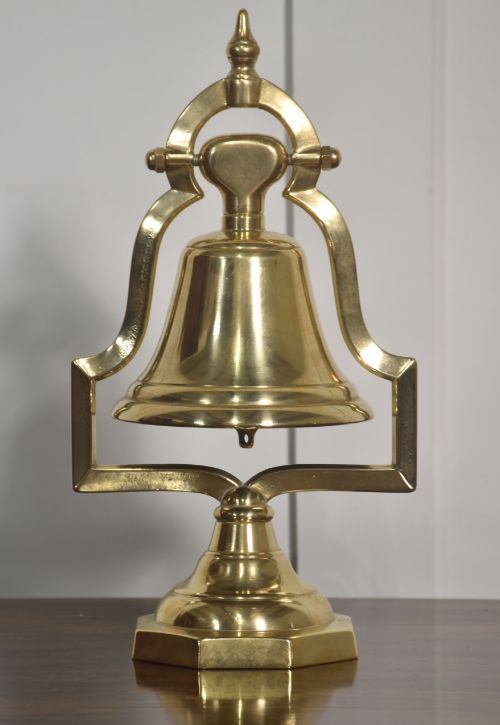
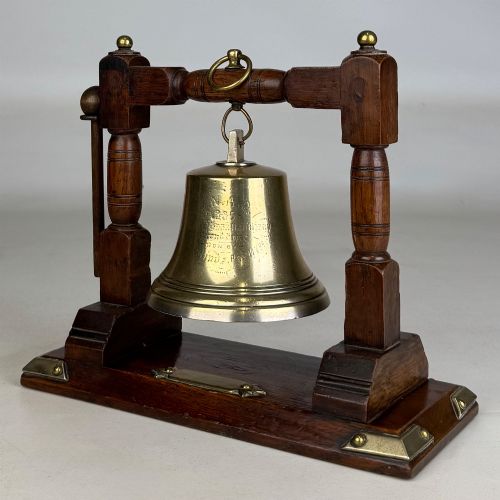
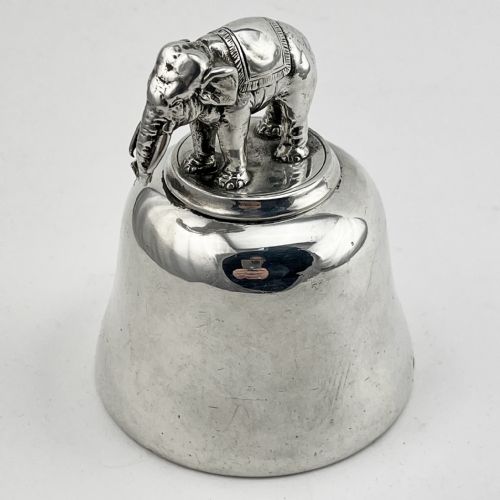


Reception Desk Bell
A reception desk bell summons service with a crisp, clear ring, combining utility with fine metalwork.
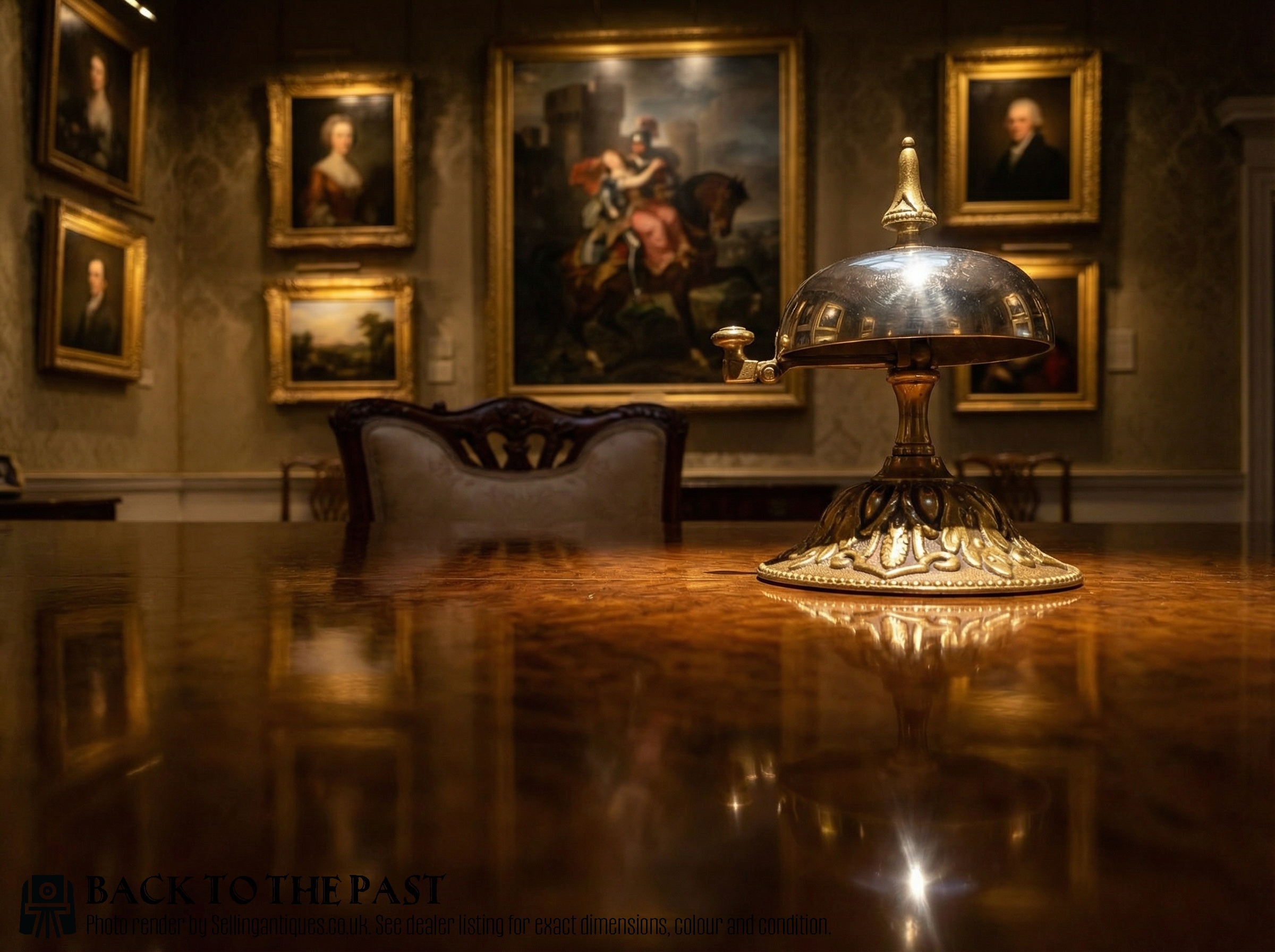
Reception Desk Bell
When you search for a reception desk bell, you find functional metal and wooden desk accessories designed for counters and tables. The examples on this page span the Victorian and Edwardian eras through to the mid-twentieth century.
Brass is the material you meet most often on this page, frequently paired with oak stands or cast in heavy counter bell forms. Silver and silver-plated varieties also appear, ranging from English sterling pieces to continental silver work.
The objects take the form of table bells, desk bells and counter bells, built to sit steadily on a surface while delivering a distinct tone when pressed or struck.
How they were made
Metalworking dominates the construction of these items, utilising cast brass, polished brass, bronze, steel, and sterling silver. Many of the heavy counter bells rely on solid brass castings combined with internal steel springs and clappers to project sound.
Woodworking also plays a distinct part, with turned and polished oak stands supporting brass and silver bells. Silver examples showcase silversmithing techniques including piercing, embossing, and hallmarks denoting origin and date.
Listings for a reception desk bell feature materials including oak, sterling silver, bronze, and polished brass across the Victorian and Edwardian periods.
What varies in quality
The weight of the metal forms the primary division between standard utility items and heavier, substantial pieces. Solid sterling silver and heavy cast bronze or brass bases provide a resonant acoustic quality that lighter plated metals cannot match.
Finishing detail separates mass-produced counter accessories from finer decorative desk pieces. Ornate brass bases, carefully polished surfaces, and the integration of fitted wooden stands elevate the craftsmanship of the bell.
The Reception Desk Bell Glossary
- Counter bell
- A bell designed to sit on a shop or hotel counter for summoning staff. These heavy items are built for frequent daily use.
- Sterling silver
- An alloy containing silver and other metals, traditionally marked with hallmarks indicating standard and origin. Many desk bells use this metal for its bright appearance and substantial weight.
- Silver plate
- A thin layer of silver applied to a base metal such as brass or copper. This technique allowed makers to produce bright decorative items at a lower cost than solid silver.
- Cast brass
- Molten brass poured into a mould to create solid bases and bell domes. This method produced durable items capable of enduring decades of heavy service.
Reception Desk Bell: Frequently Asked Questions
What is a reception desk bell?
A reception desk bell is a functional table accessory designed to summon attention in hotels, shops, and offices. They rely on a spring-loaded plunger or a swinging hammer to strike a metal dome.
These pieces combine practical utility with decorative metalwork, serving as both working instruments and desk ornaments.
How do I date a brass desk bell?
Dating a brass desk bell involves examining the manufacturing methods, turnery style of any wooden base, and the overall design period. Victorian and Edwardian pieces often display heavier cast construction and hand-finished details.
Design motifs and style revivals also offer clues, helping to distinguish nineteenth-century examples from later twentieth-century productions.
Were silver desk bells used in homes?
Solid silver table bells found use in domestic reception rooms, dining rooms, and studies as well as commercial desks. They served to summon household staff or announce service.
Many bear hallmarks that record the year and city of their creation, reflecting the high status of silver desk accessories.
How do I care for an antique brass bell?
Caring for an antique brass bell involves gentle cleaning with a soft cloth to remove dust without disturbing the aged patina. Excessive polishing can remove historical wear and soften crisp cast details.
Wooden stands benefit from occasional treatment with appropriate furniture wax to preserve the finish of the oak.