

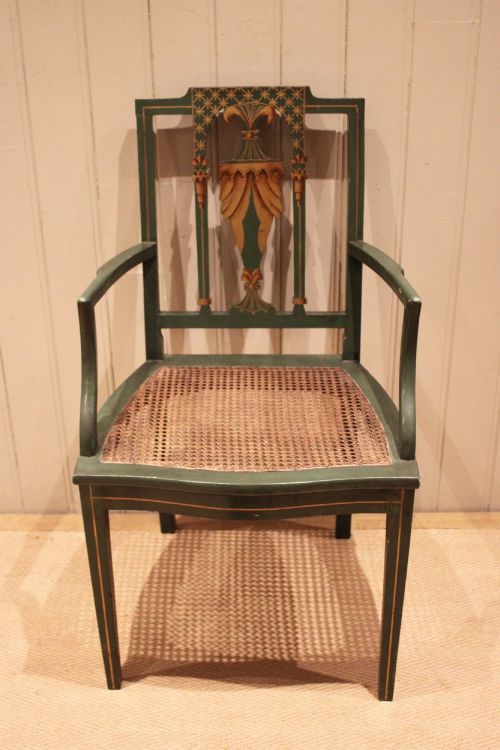
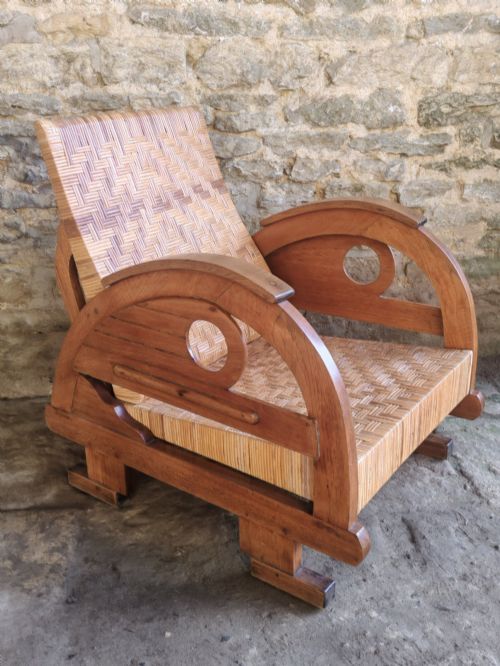
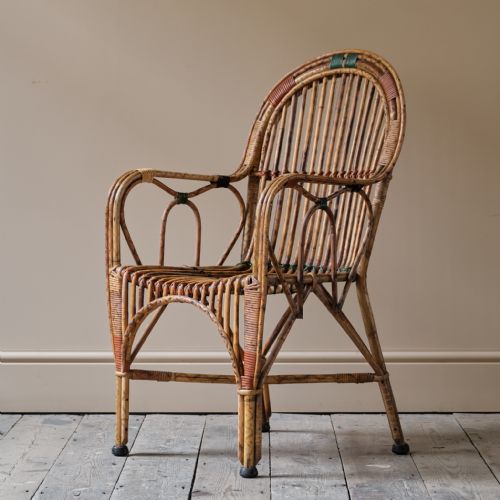


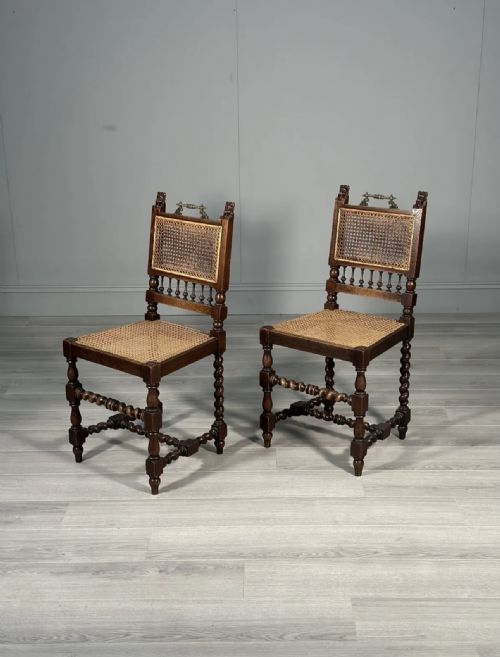
Rattan Seat Chairs
These rattan seat chairs combine resilient natural woven seating with timber frames across periods from Regency to mid-century.
Rattan Seat Chairs
Rattan seat chairs span various forms and eras, offering functional seating supported by woven cane or rattan panels. The selection on this page includes armchairs, side chairs, rocking chairs, and library chairs reflecting traditional and modernist designs.
Buyers frequently encounter examples from the Victorian and Edwardian periods alongside earlier Regency pieces and later 1930s or 1940s modernist creations. These seating options range from formal mahogany library chairs to rustic painted side chairs and export designs.
Different styles emerge across the inventory, including Hepplewhite, Art Deco, Arts and Crafts, and Chinese export pieces. Each style dictates the silhouette of the wooden frame and the specific manner in which the woven seat integrates into the overall structure.
How they were made
Makers constructed the supporting frames of these chairs using hardwoods such as mahogany and oak, occasionally applying paint finishes or utilising bentwood techniques for curved components. Brass accents sometimes appear on specific library or desk chairs to complement the timber structure.
The seating panels rely on cane and rattan woven through drilled holes along the wooden seat rails or set within channeled grooves. This technique provides a flexible, breathable surface that distributes weight evenly across the open frame.
Rattan Seat Chairs Retail Price Guide 2026
Typical asking prices for rattan seat chairs among the pieces listed under this phrase on Sellingantiques today, from the lower quarter to the upper quarter. They describe what is for sale here now, not the wider market.
Listings feature oak, mahogany, and bamboo frames paired with woven cane and rattan across the Victorian, Regency, and mid-century periods.
What varies in quality
The refinement of the wooden frame separates standard utilitarian seating from superior cabinet-making. Well-drawn proportions, elegant curves, and precise joinery distinguish finer library and parlour chairs from simpler side seating.
The tightness and regularity of the woven rattan or cane surface indicate the level of craftsmanship involved. Uniform strand spacing and secure edge binding demonstrate superior execution in the seating panels.
Dryad of Leicester·Thonet
The Rattan Seat Chairs Glossary
- Bergere
- An enclosed upholstered armchair with wooden framing where the sides and back are frequently filled with cane or rattan work.
- Bentwood
- Wood softened by steam and bent into curved shapes, commonly utilised in Thonet production.
- Cane
- Strips derived from the outer bark of the rattan palm, traditionally used for woven chair seats and backs.
- Hepplewhite
- A late eighteenth-century furniture style characterised by graceful proportions, shield-back chair designs, and tapered legs.
Rattan Seat Chairs: Frequently Asked Questions
How do I care for a rattan seat?
Keep woven seats clean by dusting them regularly with a soft brush and maintaining moderate humidity levels to prevent the natural material from becoming brittle.
Avoid placing these chairs in direct sunlight or near direct heat sources, which can dry out the cane and weaken the strands over time.
Can I use these chairs daily?
Most of these chairs are structurally sound for everyday seating, provided they are used with reasonable care and placed on even surfaces.
Heavier frames like library armchairs offer robust support, while lighter side chairs suit occasional dining or desk use.
How do I identify the period of a chair?
Examine the timber species, joinery methods, and stylistic details such as Regency curves or Art Deco geometry to determine the likely era of manufacture.
Comparing the overarching design against known historical periods helps narrow down the decade or century in which the piece was produced.
Are rattan seats comfortable without cushions?
The woven cane or rattan naturally yields slightly under weight, providing a supportive and flexible surface that adapts to the sitter.
Many period examples were originally designed for use without padding, though loose squabs or cushions are frequently added for extra comfort.