


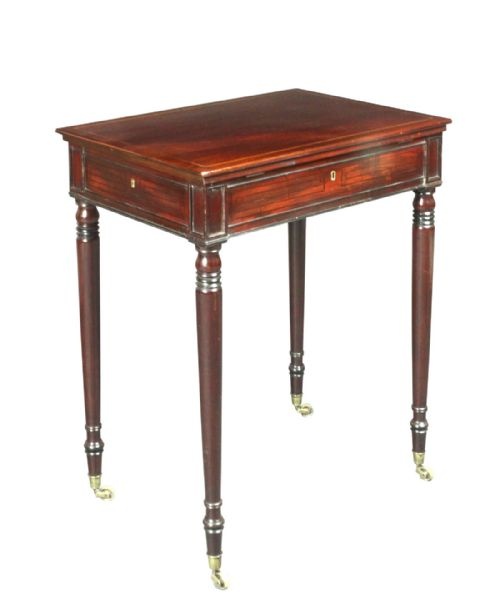

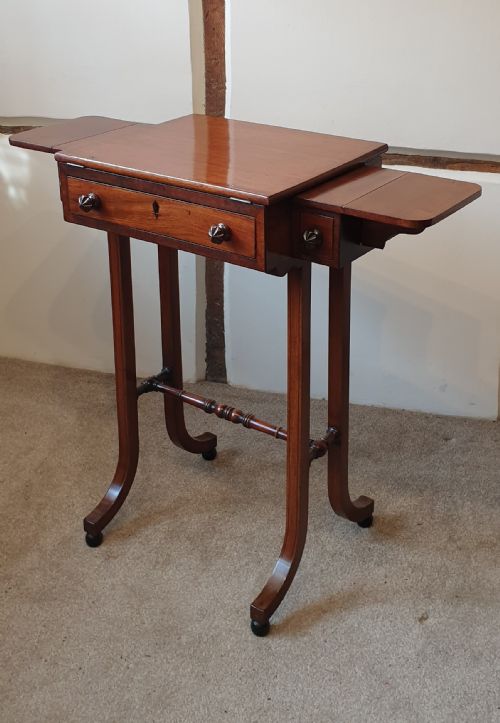
Ratcheted Writing Table
A ratcheted writing table provides a mechanical surface for work, offering adjustable heights that suit drafting, reading, and writing.
Ratcheted Writing Table
A ratcheted writing table is a versatile surface designed for drafting, reading, and architectural work through adjustable mechanisms. When buyers search for a ratcheted writing table, they encounter forms originating from the eighteenth and nineteenth centuries.
The pieces appearing on this page span Georgian, Regency, and Victorian periods, showcasing traditional craftsmanship in mahogany, rosewood, and fruitwood. Desks, reading tables, and occasional tables dominate the selection, often featuring leather inserts and brass fittings.
Makers adapted these writing surfaces for specific professional needs, resulting in architect's desks, cartographer's tables, and library secretaires. The integration of mechanical ratchets allows the top to tilt to various angles for practical utility.
Materials and construction
Cabinetmakers utilised dense timbers such as mahogany, Cuban mahogany, and walnut to construct the primary frames and surfaces. Inlays of boxwood and marquetry appear on select examples, demonstrating detailed decorative techniques.
Functional elements rely on brass for hardware and mechanisms, alongside leather panels inset into the writing surfaces. Secondary woods like fruitwood support the internal framework of these tables.
Ratcheted Writing Table Retail Price Guide 2026
Typical asking prices for ratcheted writing table among the pieces listed under this phrase on Sellingantiques today, from the lower quarter to the upper quarter. They describe what is for sale here now, not the wider market.
Listings feature woods including mahogany, Cuban mahogany, walnut, fruitwood, boxwood, and rosewood.
Distinctions in quality
The refinement of the mechanical ratchet mechanism separates standard examples from superior pieces, particularly regarding smooth adjustment and secure positioning. Finely engineered hardware, such as Bramah locks, indicates higher workshop standards.
Timber selection and secondary wood usage define the structural integrity and visual depth of each table. Intricate details like marquetry inlay, ebony stringing, and well-preserved leather inserts reflect greater artisanal investment.
Gillows·Marsh and Tatham
The Ratcheted Writing Table Glossary
- Rachet
- A mechanical device consisting of a gear wheel and pawl that allows movement in only one direction. This mechanism enables the adjustable tilt on writing surfaces.
- Secretaire
- A desk or cabinet containing a concealed writing drawer or fold-down writing flap. These often incorporate multiple internal compartments.
- Marquetry
- Decorative veneer applied to furniture in patterns using different woods, metals, or shells. This technique creates pictorial or geometric designs on the surface.
- Stringing
- Inlay of a contrasting wood cut into thin strips to outline drawers, legs, or table tops. It accentuates the linear geometry of the furniture.
- Campaign
- Portable furniture designed for travel, typically featuring recessed brass handles and robust construction. These pieces often dismantle or fold for transport.
Ratcheted Writing Table: Frequently Asked Questions
How do I adjust the reading surface?
The internal ratchet mechanism engages with a support arm beneath the top, lifting to the desired angle and locking into place. Lowering the surface typically requires lifting the top to release the pawl before guiding it back down.
Care should be taken to support the weight of the surface during adjustment to protect the wooden tracks and brass components from sudden strain.
What were these tables originally used for?
Architects, draftsmen, and cartographers utilised these adjustable tables to hold large drawings, maps, and books at comfortable reading angles. The tilt reduced neck strain during detailed handwork and technical drawing.
In domestic libraries, readers used them for heavy folios and reference books, taking advantage of the adjustable ledge to prevent volumes from sliding.
How do I clean the leather top?
Leather inserts require gentle dusting with a soft, dry cloth to remove surface particles without scratching the material. Conditioning balms formulated for antique leather help maintain suppleness and prevent cracking over time.
Water and harsh chemical cleaners should be avoided, as moisture causes permanent staining and damages the underlying wood.
How can I identify a Regency period table?
Regency pieces often feature architectural motifs, classical proportions, and dark timbers like mahogany and rosewood with contrasting brass or ebony details. Simple, clean lines replace the ornate carvings of earlier Georgian furniture.
Hardware on Regency pieces frequently includes recessed brass rings and patinated campaign-style mounts, reflecting the era's preference for functional elegance.