



Railway Lantern Lamps
Railway lantern lamps are robust working lights built for transport service, sought after by collectors for their authentic industrial character and utilitarian design.
Railway Lantern Lamps
Railway lantern lamps encompass a range of functional lighting equipment produced across the Victorian, Edwardian, and mid-twentieth-century eras for transport networks. These pieces serve specific duties on trains, at stations, and along tracks, reflecting the robust standards of British and international railway operations.
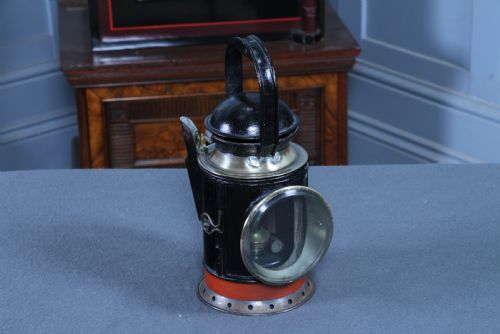
The versions most commonly met on this page include hand lanterns, hanging lanterns, carriage lamps, and signal oil lamps from companies and regions such as the Great Western Railway and the London and North Eastern Railway. Makers like Eli Griffiths & Sons also feature, alongside general industrial and maritime adaptations.
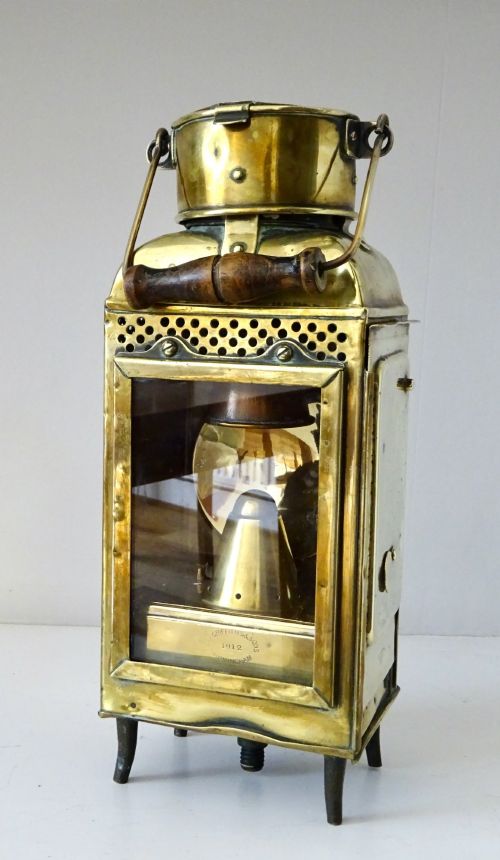
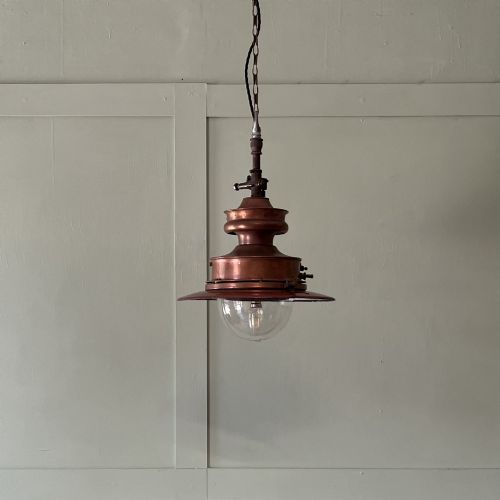
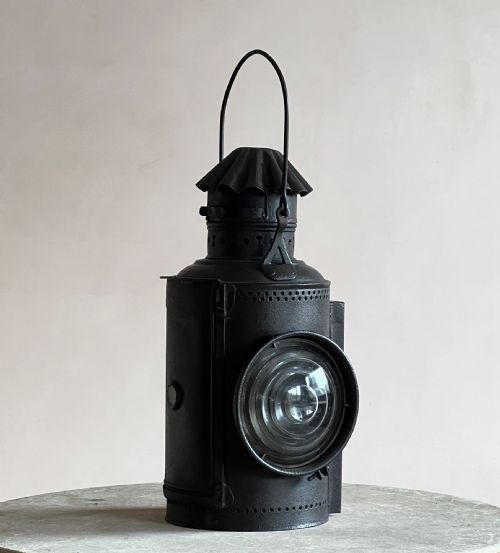
Forms span from brass gimbal lamps and copper hanging lights to painted steel signal lamps equipped with multi-coloured lenses. Each object demonstrates the practical engineering required for signalling and illumination in harsh outdoor environments.
How they were made
Construction relies heavily on durable metals such as copper, brass, painted steel, iron, and silver, chosen for resilience against weather and vibration. These materials are shaped through heavy-duty panel beating, riveting, and soldering to create airtight and weather-resistant bodies.
Optics and lenses form a crucial part of the manufacture, incorporating thick moulded glass and specialised tri-colour mechanisms for signalling purposes. Oil reservoirs and burners are integrated securely into the base or frame to ensure steady combustion during transit.
Listings span multiple decades, incorporating Edwardian, Victorian, and mid-twentieth-century production eras alongside mixed metal and glass constructions.
What varies in quality
Quality in these items is determined by the integrity of the original construction and the survival of maker's marks, company stamps, and complete mechanical components. Pieces retaining their original lenses, burners, and mounting brackets hold greater historical interest.
The grade of materials and the subtlety of utilitarian detailing separate standard issue items from superior examples produced by specialist makers like Eli Griffiths or major railway companies. Patina built up from active service also contributes to the visual depth of the metalwork.
Eli Griffiths and Sons·Dressel
The Railway Lantern Lamps Glossary
- Gimbal lamp
- A lighting fixture suspended in a ring system that keeps the flame and oil reservoir level despite the movement of a train or ship.
- Tri-colour lens
- A mechanical lens assembly allowing the operator to switch between different coloured lights for signalling commands.
- Signal oil lamp
- A specialised lighting unit utilised along tracks and on locomotives to communicate operational status to train drivers.
- Carriage lamp
- A specific interior or exterior lighting fixture designed to illuminate passenger compartments or guard vans.
- Inspector's hand lantern
- A portable lighting device carried by railway officials for checking rolling stock and reading timetables.
Railway Lantern Lamps: Frequently Asked Questions
What were railway lantern lamps used for?
These lamps served multiple operational duties across the transport network, including track signalling, illuminating station platforms, and lighting guard vans or passenger carriages.
Operators relied on them for clear communication and visibility during night operations and in adverse weather conditions.
How do I identify the period of a lamp?
Dating relies on examining company stampings, structural design, and the evolution of materials such as the transition from heavy brass and copper to painted steel.
Makers' marks and specific railway company acronyms also provide precise chronological markers for pieces produced from the Victorian era onwards.
Can I still burn oil in these lamps?
Many surviving examples retain their original oil burners and reservoirs, though restoration or cleaning of the fuel chambers is often necessary before use.
Collectors generally assess the internal burner components to ensure they remain structurally sound and capable of safe operation.
How should I display a railway lantern?
These pieces suit industrial and traditional interiors, whether placed on a tabletop or hung securely from original mounting brackets.
Positioning them to catch natural light highlights the thick moulded glass and the authentic patination of the copper or brass frames.