
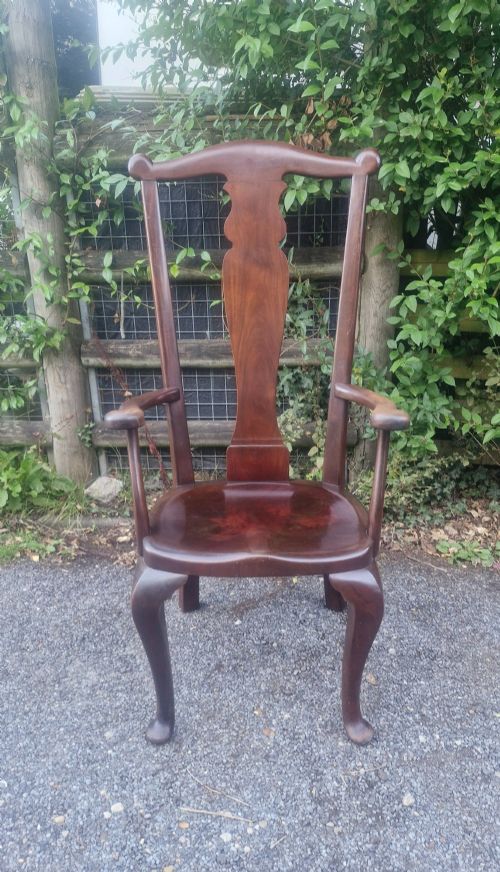


Queen Anne Office Chair
A queen anne office chair brings classical proportion and deep walnut warmth to a study, offering sturdy comfort for daily work.
Queen Anne Office Chair
A queen anne office chair combines the graceful cabriole lines and splat backs of early eighteenth-century design with the practical swivel or open-arm seating required for a desk. Buyers examining this page encounter pieces originating from the Victorian, Edwardian, and early twentieth-century revival periods.
The dominant forms include mahogany or walnut desk armchairs and library chairs, often featuring upholstered pads or full leather seats. These variants reflect the heavy demand for comfortable, period-correct seating in professional and domestic studies over the past two centuries.
How they were made
Cabinetmakers constructed these frames primarily from solid walnut and mahogany, selecting dense hardwoods capable of supporting intricate carving without losing structural integrity. Brass components, including castors and swivel mechanisms on later iterations, added mobility and durability to the heavy wooden frames.
Upholstery techniques varied from traditional horsehair stuffing beneath durable leather to patterned upholstery fabric secured with brass tacks. Wood surfaces received hand-rubbed finishes that accentuated the natural grain and deep colour of the timber.
Several chairs feature stubborn brass castors that have spent over a century faithfully rolling across heavy study carpets.
What varies in quality
The distinction between standard commercial production and superior craftsmanship rests in the depth and crispness of the wood carving, particularly along the knees of the cabriole legs and the shaping of the splat back. Finer examples display harmonious proportions where the grain of the walnut or mahogany is carefully matched across the crest rail and arms.
Originality of components and the integrity of the timber frame dictate lasting value. Pieces retaining their period leather, substantial brass hardware, and uncompromised joinery demonstrate the superior standards maintained by leading late-nineteenth and early-twentieth-century workshops.
HOWARD & SON'S·COOPER & HOLT
The Queen Anne Office Chair Glossary
- Cabriole leg
- A furniture leg that bends outward in a convex curve and tapers inward in a concave curve, ending in a pad or claw foot. This characteristic shape defines much of the revival seating from the Victorian and Edwardian eras.
- Splat
- The vertical central strip of wood in the back of a chair, often vase-shaped in revival pieces. It provides crucial back support while carrying decorative carving.
- Library armchair
- A comfortable upholstered seat designed for reading rooms and studies, frequently adapted with desk-chair proportions. These chairs prioritise padded armrests and supportive back heights.
- Carver
- An armchair, particularly one designed for the head of a dining table or for use at a partners desk. The term distinguishes armed seating from simpler side chairs.
- Revival
- A nineteenth or twentieth-century design movement that reinterprets historical styles such as the early eighteenth-century Queen Anne aesthetic. Makers utilised older decorative vocabularies to satisfy contemporary tastes for traditional furniture.
Queen Anne Office Chair: Frequently Asked Questions
Are these chairs comfortable for daily desk work?
Most examples provide generous proportions and supportive curved backrests designed for extended periods at a desk or in a library. Their solid wooden frames and upholstered seats offer a sturdy, upright seating posture.
While they lack the pneumatic height adjustments of modern office seating, their ergonomic design suited the administrative tasks of the Edwardian and Victorian periods very well.
How do I distinguish a Victorian revival piece from an original?
Revival pieces from the Victorian and Edwardian eras typically display machine-sawn timber framing, standardised brass castors, and nineteenth-century construction methods beneath the classic silhouette. True eighteenth-century examples are exceptionally scarce and show distinct hand-tool marks and timber shrinkage consistent with early cabinetmaking.
The listings on this page consist entirely of later interpretations and revival pieces dating from the late nineteenth century onward.
What is the difference between a desk chair and a library chair?
Desk chairs often feature swivel bases or compact arm configurations designed to slide easily beneath writing tables and partner desks. Library chairs tend to be wider, fully upholstered armchairs intended for relaxed reading rather than active writing.
Many listings blur this distinction by offering open-arm timber frames that function equally well in either setting.
How should I care for the leather upholstery?
Leather seats benefit from periodic application of specialist nourishing balms to prevent the natural hide from drying and cracking. Keeping the leather clean with a soft, dry cloth preserves the original finish and patina.
Avoid placing these chairs in direct sunlight or near heat sources, which can warp the timber frame and dry out both the wood and the upholstery.