

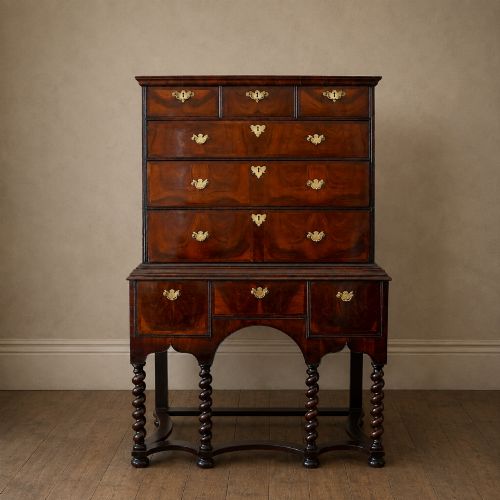
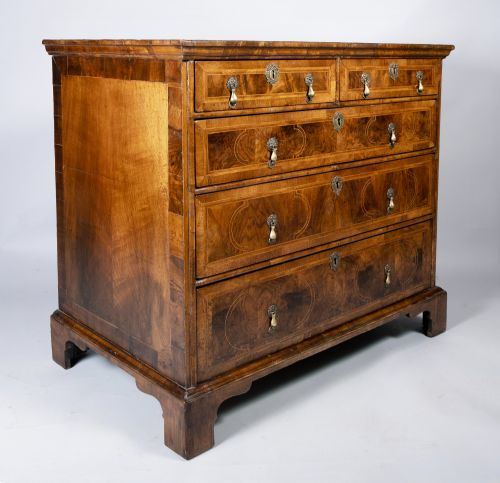


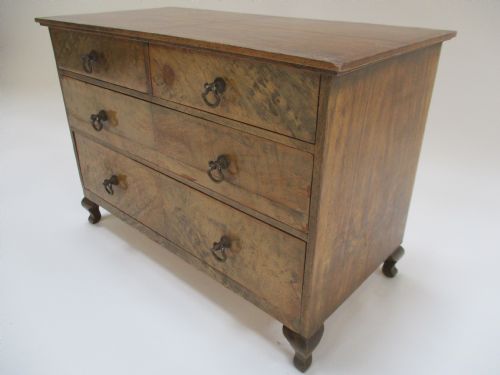
Queen Anne Coffer
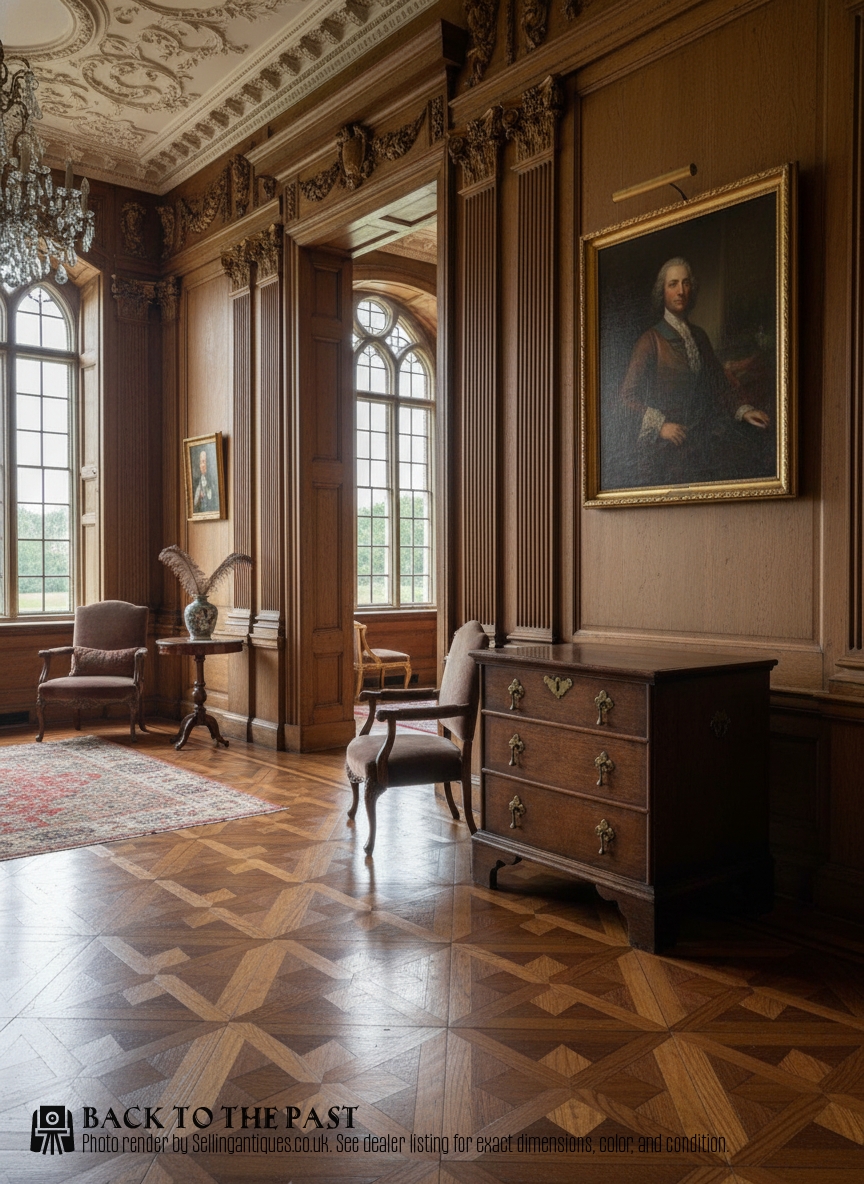
A queen anne coffer brings solid domestic storage from the turn of the eighteenth century into a modern room with plain panelled timber and honest proportions.
Queen Anne Coffer
A queen anne coffer is a solid storage chest or blanket box originating primarily around seventeen hundred, taking simple forms such as the traditional six plank construction or joined oak frameworks. These pieces serve as practical household trunks that double as decorative furniture with historical weight.
The version most commonly met on this page is the oak coffer or mule chest, often built in regional workshops with straightforward joined timber or elm planks. Alongside these traditional blanket boxes, the listings frequently include miniature chests, boxes, and chests of drawers carrying related period characteristics.
Materials and construction methods
Makers built these pieces primarily using native English oak and elm, shaping boards into robust six plank trunks or joined framework chests. Walnut and burr walnut appear alongside fruitwood inlay on finer pieces, bringing richer grain patterns to chests of drawers and tabletop formats.
Joinery relied on traditional pegged joints, panelled construction, and simple board assembly designed for durability. Hardware typically involved brass keyplates and hinges that complemented the dark patinated timber surfaces.
Queen Anne Coffer Retail Price Guide 2026
Typical asking prices for queen anne coffer among the pieces listed under this phrase on Sellingantiques today, from the lower quarter to the upper quarter. They describe what is for sale here now, not the wider market.
At least one clever maker turned a small elm box into a multi tasking coffee table stool.
Factors that distinguish individual examples
Quality rests upon the choice of timber and the depth of the natural patina accumulated over centuries of use. Dense, well figured oak and richly grained burr walnut elevate an example above plain, utilitarian utility boxes.
Proportion and surface preservation separate ordinary pieces from exceptional survivals. Untouched boards, crisp edge mouldings, and original brasses indicate a higher grade of craftsmanship than heavily restored or altered surfaces.
The Queen Anne Coffer Glossary
- Coffer
- A large wooden box or chest used for storing valuables, blankets, or household goods. Most examples feature a hinged lid and sturdy timber construction.
- Six plank
- A box construction method utilising six individual boards joined simply at the edges to form a rectangular trunk. This represents one of the oldest and most direct ways of making a storage chest.
- Mule chest
- A storage chest featuring one or two drawers beneath the main lift up compartment. It bridges the design gap between a simple blanket box and a full chest of drawers.
- Joined chest
- A piece of furniture constructed using a frame and panel technique rather than simple boards nailed together. This method allows the timber to expand and contract naturally without splitting.
- Patina
- The surface sheen and deep colour developed by wood over long periods of handling, polishing, and ageing. A good surface shows the warm character of the underlying grain.
Queen Anne Coffer: Frequently Asked Questions
What is a queen anne coffer?
A queen anne coffer is a traditional wooden storage chest or blanket box produced around the seventeen hundreds. These pieces provide deep internal space beneath a hinged lid.
They reflect the domestic joinery of the period, using solid oak, elm, or walnut timbers designed to withstand daily household use.
How were these coffers used originally?
Households utilised these chests primarily for storing heavy textiles, blankets, linen, and personal valuables. Their robust build meant they could also function as seating benches or tables in smaller rooms.
Over time, the introduction of drawers beneath the main compartment turned some coffers into mule chests for better organisation.
Where should I place a coffer at home?
A coffer fits well at the foot of a bed, acting as a practical blanket box and a surface for sitting or dressing. They also serve effectively in hallways and living spaces as focal storage units.
Their restrained proportions allow them to sit comfortably against plain walls without dominating a modern interior.
How do I care for antique oak and walnut?
Maintain the wood by keeping it away from direct heat sources and sudden humidity changes that can cause timber to split. Regular dusting with a soft cloth and occasional application of appropriate wax helps preserve the finish.
Avoid synthetic polishes that build up a hazy film over the historic patina of the timber.