






Quartetto Coffee Table
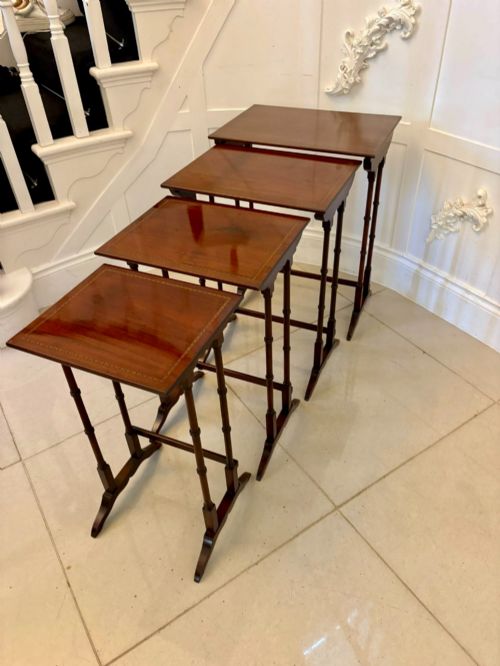
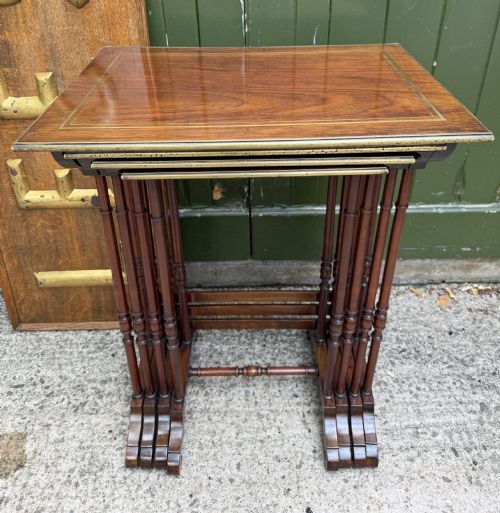
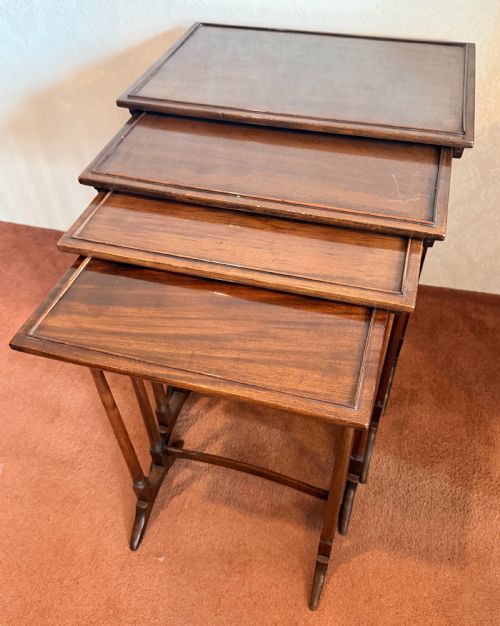
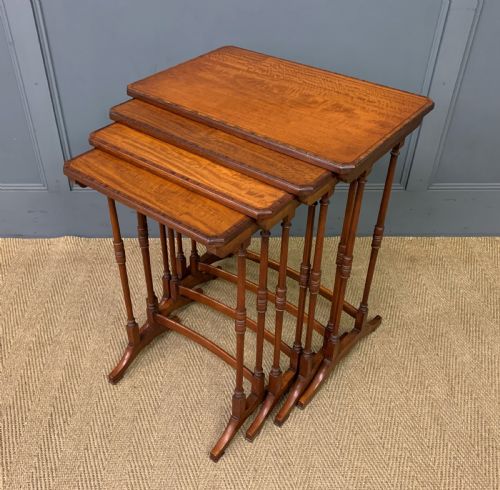
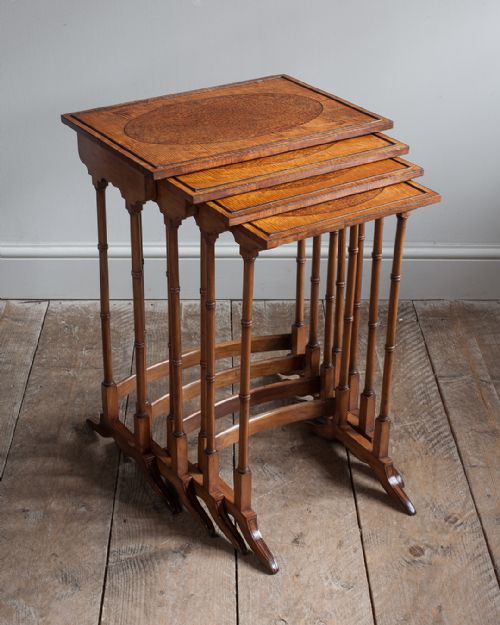
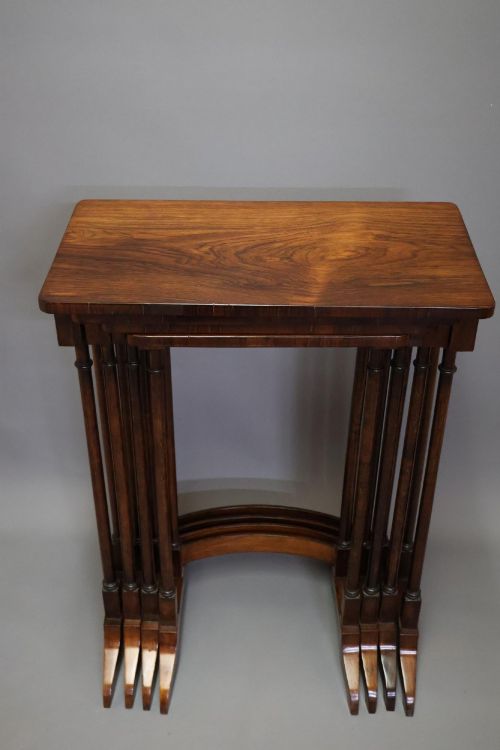
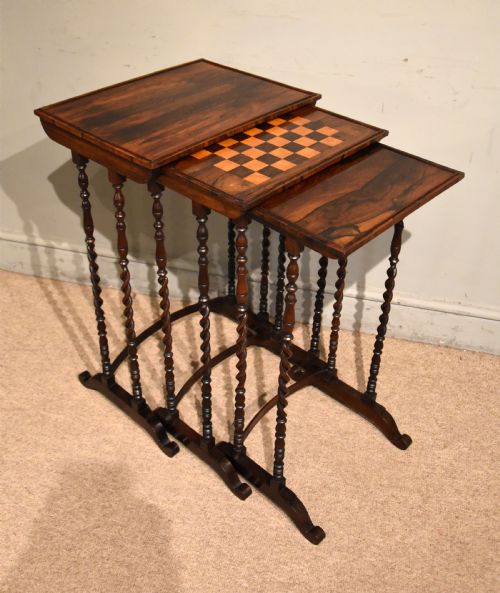
These quartetto coffee table sets offer a clever interlocking design that saves space while providing four distinct surfaces.
Quartetto Coffee Table
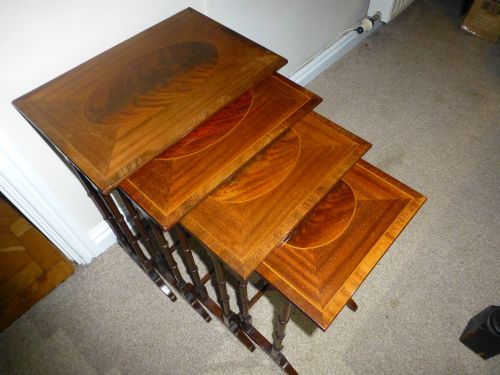
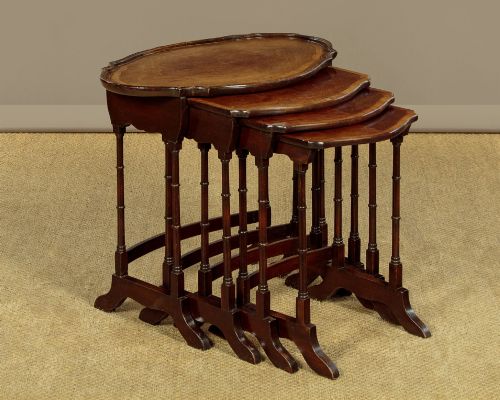
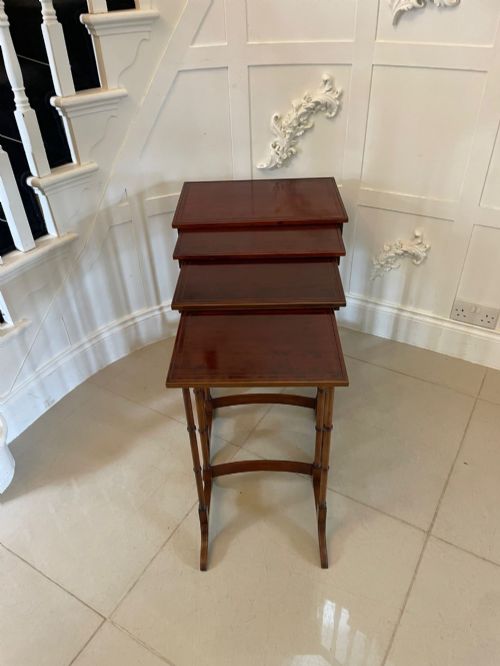
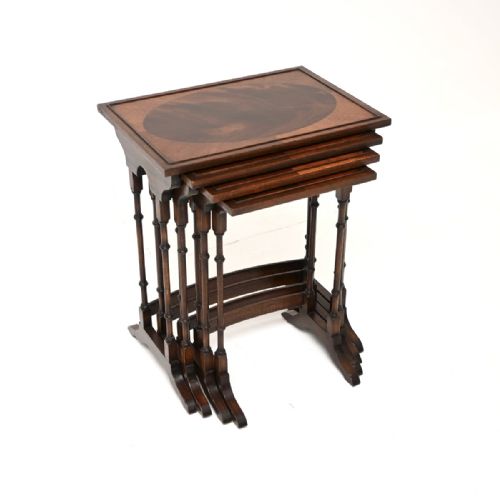
A quartetto coffee table is actually a nest of four tables designed to slide neatly beneath one another when not in use. The most common examples on this page date from the Edwardian period and the nineteenth century, constructed primarily in mahogany.
These pieces function as versatile occasional furniture, serving easily as lamp, wine, or side tables. Makers historically intended them for drawing rooms where flexible surface space mattered during social gatherings.
Assessing quality
Quality rests primarily on the crispness of the inlay work and the depth of figure within the mahogany or satinwood timber. Superior sets maintain structural stability across all four tiers without looseness in the joints.
The degree of hand-crafting distinguishes standard production from exceptional pieces signed by makers or attributed to prominent workshops. Heavier framing and thoughtful timber selection elevate the status of a set significantly.
Quartetto Coffee Table Retail Price Guide 2026
Typical asking prices for quartetto coffee table among the pieces listed under this phrase on Sellingantiques today, from the lower quarter to the upper quarter. They describe what is for sale here now, not the wider market.
Listings span multiple eras from the nineteenth century through the 1930s, featuring mahogany, satinwood, and rosewood.
Gillows·E.Daligny
The Quartetto Coffee Table Glossary
- Quartetto
- A matched set of four stacking tables designed to nest together. This term appears frequently in nineteenth and early twentieth-century descriptions.
- Satinwood
- A durable, lustrous timber native to India and Sri Lanka, often used for contrasting stringing and geometric inlay. Its yellow sheen brightens tabletop surfaces.
- Inlay
- A decorative technique where contrasting pieces of wood, brass, or shell are fitted into depressions within the primary surface. This method creates geometric or floral motifs.
- Occasional table
- A light, movable table intended for specific, intermittent use rather than central placement in a room. These adapt easily to varying domestic layouts.
Quartetto Coffee Table: Frequently Asked Questions
How do you use a quartetto table set?
You can keep the four tables stacked tightly together as a single compact unit against a wall or beside a sofa. When guests arrive, simply pull out the individual tables to provide separate surfaces for drinks or books.
Because they graduate in size, they occupy minimal floor space when stored. This arrangement makes them exceptionally practical for smaller sitting rooms.
What is the difference between a nest of tables and a quartetto?
A quartetto specifically denotes a set of precisely four tables designed to slide sequentially one inside the other. Standard nests of tables might contain only three pieces or vary in their stacking configuration.
Historical British furniture makers applied the term quartetto particularly during the Regency and Edwardian eras. It signals a formal design lineage rooted in space-saving ingenuity.
How can I tell an Edwardian set from a nineteenth-century one?
Edwardian versions often feature lighter satinwood inlay and sometimes incorporate walnut or gilt-painted accents. Nineteenth-century examples typically rely on heavier solid mahogany or rosewood construction with deeper natural patination.
Examining the underside and the internal framing joints helps reveal the period manufacturing methods. Earlier pieces tend to show hand-cut elements rather than uniform factory production.
Are these tables sturdy enough for daily use?
The smaller tiers are inherently lightweight by design, meaning they suit gentle placement of items like lamps and cups rather than heavy loads. Their original purpose was occasional domestic use rather than robust everyday service.
Properly maintained joints ensure the tables remain stable when resting on level flooring. Regular checking of the frame keeps the nesting mechanism functioning smoothly.