


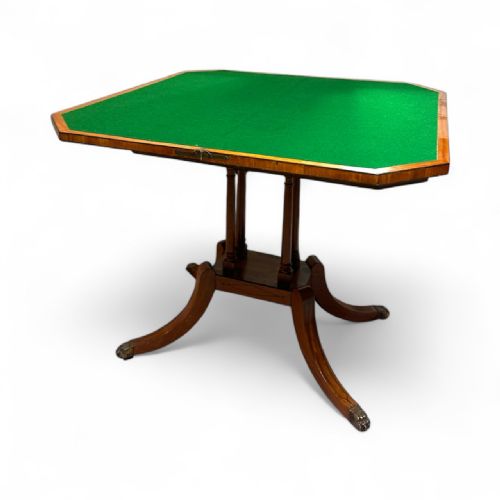

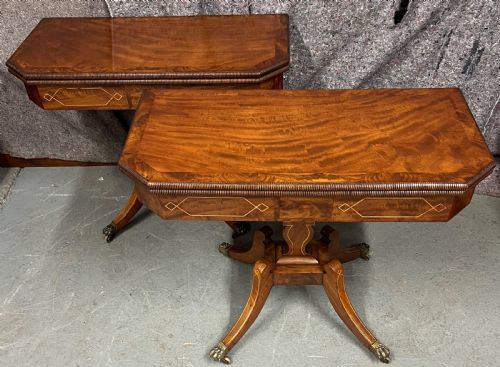


Quadruped Games Table
A quadruped games table provides a folding surface for play, built on four distinct supports.
Quadruped Games Table
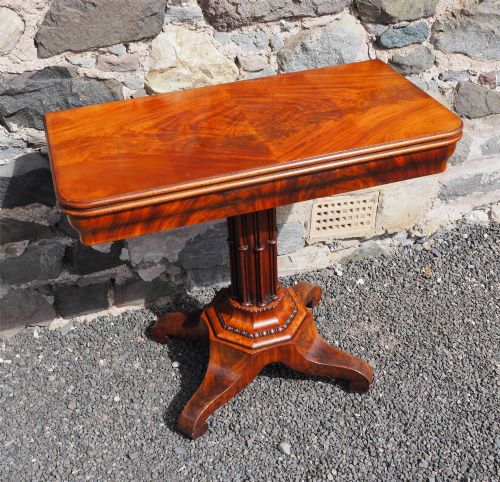
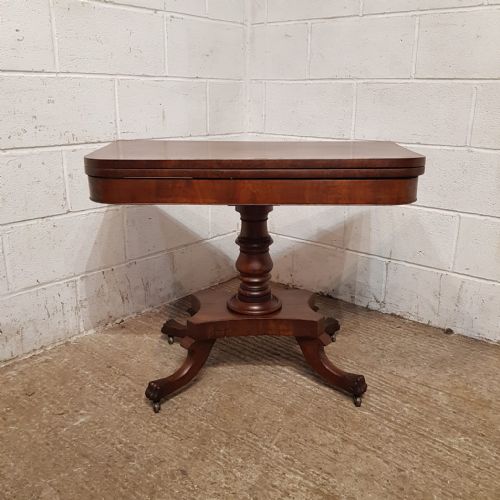
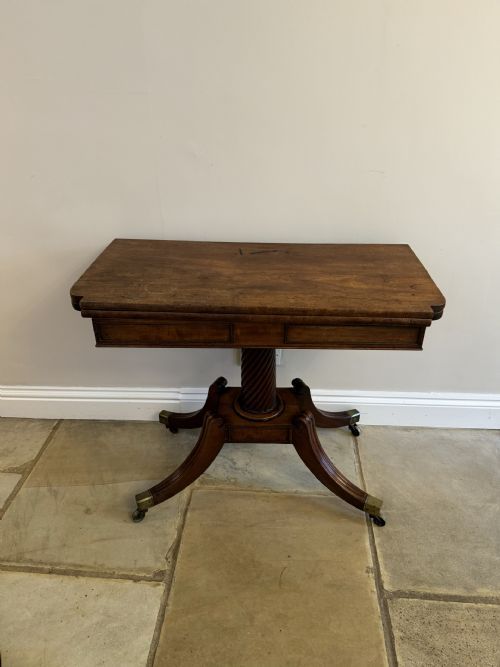
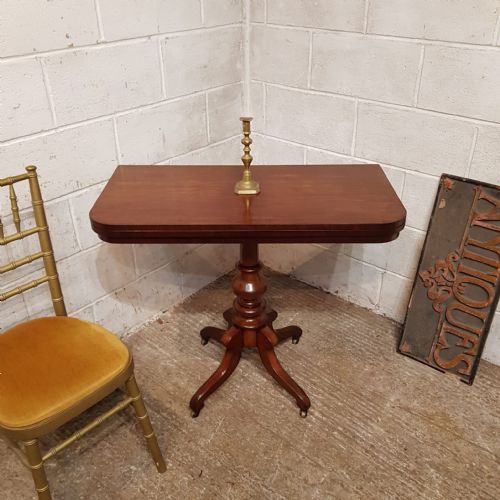
A quadruped games table is a piece of furniture designed for card playing and social entertainment, featuring a folding top that opens to reveal a playing surface. These items appear primarily from the Regency and Victorian periods, spanning the nineteenth century.
The versions met most frequently on this page take the form of card tables, tea tables, and side tables with fold-over mechanisms. They combine utility as occasional surfaces with the formal presence of a parlour centrepiece.
Materials and construction
Cabinet makers constructed these tables from dense timbers such as mahogany, rosewood, walnut, and burr walnut, frequently applying flame mahogany veneer to the primary surfaces. Finer examples incorporate contrasting elements of satinwood and detailed marquetry.
Metal detailing appears in the form of brass mounts and inlay, particularly on Regency period pieces where metal lines accent the timber. Structural support relies on sturdy four-pillar bases, sometimes featuring lyre supports beneath the folding top.
Listings span the Regency and Victorian eras, utilising mahogany, rosewood, walnut, and brass.
Distinctions in quality
The standard of a quadruped games table depends on the selection of timber veneers, where highly figured flame mahogany or richly grained rosewood elevates the visual weight of the piece. Craftsmanship shows in the precision of brass inlay and the clean execution of floral marquetry.
Execution of the folding mechanism and the stability of the four-legged base determine structural integrity. Finer tables display sharper carving on supports and more harmonious proportions between the top and the underframe.
William Trotter
The Quadruped Games Table Glossary
- Quadruped
- A table supported by four feet or a four-pillared base rather than a single central pedestal.
- Fold-over
- A table top hinged to double its surface area when opened out for play or dining.
- Marquetry
- Decorative veneer patterns formed by fitting together small pieces of various woods.
- Lyre support
- A table base shaped in the formal outline of a stringed musical instrument.
- Flame mahogany
- Timber veneer showing a distinct feather-like flame pattern in the grain.
Quadruped Games Table: Frequently Asked Questions
What is a quadruped games table?
A quadruped games table is a nineteenth-century folding table designed for cards and social gatherings, supported by a four-legged or four-pillar base.
These pieces typically feature a swivel or fold-over top that conceals a well or playing surface lined with baize or polished wood.
How were these tables used?
Households utilised them in parlours and drawing rooms as occasional furniture during the day, opening them up in the evening for card games.
Their dual function made them practical for entertaining guests without permanently occupying the centre of the room with a large table.
Which woods are most common?
Mahogany and rosewood dominate the listings, particularly from the Regency period, often enhanced with brass inlay or mounted details.
Victorian examples frequently introduce walnut and burr walnut, sometimes decorated with floral marquetry or satinwood highlights.
How do I identify a Regency table?
Regency pieces often display rosewood or mahogany with precise brass stringing, inlay, and classical architectural proportions.
They date from the early nineteenth century and frequently incorporate lyre-shaped supports or formal pillar bases.